The past six years have been a remarkable, exciting, and somewhat disconcerting time for Artificial Intelligence. Since the rise of ChatGPT, it’s no longer the realm of science fiction and doomsday scenarios. It’s here. It’s already a multi-billion-dollar industry. It’s likely to become a trillion-dollar industry by the end of the decade.
I’ve certainly done plenty to make my opinions on the present and future of AI apparent. At the moment, AI is not close to become as smart or as capable as an average human. I still don’t think that capability is likely until the 2030s at the earliest. However, AI doesn’t need to be superintelligent in order to be useful. It can still do many amazing things as it evolves to that state.
Now, we can officially add Kung Fu to that list. In a video posted by Unitree, a Chinese robotics company, we’ve actually created a robot with the dexterity and capabilities that allow it to do Kung Fu.
Thus far, there’s no indication that this is a hoax, CGI, or some guy in a suit. This is real. This is an actual robot doing Kung Fu.
Now, before you start making Terminator or Skynet jokes, take comfort in knowing that this robot is not running on pure AI. It’s more likely that it’s simply following a set of scripted moves that were pre-programmed. The fact that the video also has some obvious cuts for editing indicate that its operation was less than perfect.
Even so, let’s at least agree it’s inherently awesome, as a concept. Seriously, it’s a robot doing Kung Fu! If you can’t find any joy or astonishment in that, then you’re just being fatalistic.
Also, in terms of AI that should seriously concern you, this isn’t it. A robot like this has some serious limitations that aren’t going to be overcome anytime soon. Beyond the fact that it can only work on pre-programmed moves means it’s not a threat to anyone, regardless of their fighting experience. At most, it’s just a cool demonstration of how far robotics technology has progressed.
It’s also a technology that is likely to develop alongside artificial intelligence. We’ve had robots for decades, but their usage is limited to a narrow range of tasks. Pre-programming a robot, be it a human android or an arm, is not that difficult. There are robotics labs for high school students in some areas.
For now, that’s more than enough to make robots useful. They can function perfectly well in certain industries and even as toys for kids. They really don’t need advanced AI to be functional at the moment.
That is most likely to change in the coming years. A robot with the dexterity and reflexes to do Kung Fu would be very useful if it could also have a measure of general intelligence. Such a robot wouldn’t be restricted to one pre-programmed task. It could actually learn a whole host of tasks, which would make it useful in any number of industries, including a few in which robots have never ventured.
That time is likely coming in the near future, but it’s hard to say when. I still believe robots need a ChatGPT-like moment to really enter the mainstream. But with companies like Unitree pushing their capabilities to new lengths, it’s possible that moment will come sooner rather than later.
And when it does, we’ll have far more pressing concerns than a robot’s ability to do Kung Fu.
Years ago, I found myself caught up in the first Pokémon craze. And I am not ashamed to admit that I fueled that craze in my own special way.
For a couple of years, I put played the game for hours on end on my Gameboy, so much so that I would buy packs of AA batteries to ensure I never ran out. I was not just content with beating the game. I wasn’t even content trying to “catch ’em all.” From red to blue to yellow to silver to gold, I wanted to master every last bit of those games.
Even after all these years, I regret nothing. Those were hours well spent.
But I’m not just bringing up Pokémon for the sake of nostalgia. Recently, it became relevant for an unexpected, but intriguing reason. And it has to do with artificial intelligence.
I know AI has been in the news a lot in recent years, for betterand for worse. But it’s definitely newsworthy because this technology is advancing at an incredible pace. It’s no longer this novelty gizmo that can win at games like chess, Go, or pong. Even if it doesn’t have human level intelligence, AI is changing the world. And the pace of that change is likely to accelerate.
It’s now at a point where gauging the advancing capabilities of AI is increasingly difficult. For years, the Turing Test was considered the primary means of testing an AI. But even that has proven limited and incomplete.
That’s where Pokémon comes in. I know that sounds like a weird segway, but it’s actually appropriate. I would even argue that this is a better way to measure the capabilities of an AI.
At this very moment, an AI model called Claude is being tasked with playing the classic version of Pokémon Red. There are even occasional livestreams of it. Having played that game multiple times and beaten it in every way possible, I am genuinely in favor of this. The fact that Claude has been struggling to beat this game, sometimes in hilarious ways, only proves that test has merit.
That’s because Pokémon, as a game, is very different from other games that AI has played. It’s not linear in that the point is to get a character from Point A to Point B, like in Mario, Metroid, or Donkey Kong. It also doesn’t have straightforward rules like Jeopardy, Go, or chess. Pokémon games are a lot more open ended. They’re also a lot more random.
There’s no one way to assemble, train, and develop a team of Pokémon that help you beat every gym and defeat the Elite 4. There are also multiple options on how to start the game. Your first choice is to pick a starter Pokémon in Squirtle, Charmander, or Bulbasaur.
From there, you deal with numerous random encounters in certain areas. And if you try rushing into a match against a gym leader or Team Rocket, you’re likely to lose, even if you use perfect strategy.
It’s also not enough to simply know the map and understand where everything is located. It also takes a measure of planning, patience, and resource management. You need to know which Pokémon to train, which skills to teach, and which matchups are most advantageous.
These are all capabilities that AI has not developed beyond a certain point. There’s a complexity to the game and its mechanics that it has yet to grasp. It shows in just how much the AI has struggled thus far. As I’m writing this, no AI has been able to beat Pokemon in terms of defeating the Elite Four. At times, it has even gotten completely stuck.
That doesn’t mean the AI is a failure or in some ways flawed. It just means that it’s incomplete. It’s not yet at a level where it can process tasks of a certain scope and compelxity. It’s like a child that has learned to walk, but can’t run at a sustained pace. That’s likely to change and change quickly. It’s only a matter of time before an AI like Claude finally beats Pokemon. But after that, what next?
That’s a difficult question to answer at the moment. There are plenty of other games out there that have more compelx mechancis than classic versions of Pokemon. But at some point, playing games just isn’t going to be enough for an AI. Even if it gets to a point where it can beat any video game, that doesn’t mean we’ve achieved a superhuman level of AI. It just means we’ve got an AI that is capable of more complex tasks.
That has many possibilities and implications. But for now, we can only speculate. In the meantime, we can also watch as our best AI tries to catch ’em all. Some might be cheering for it. Others may hope it keeps failing. We don’t yet know when or whether an AI will achieve the coveted title of Pokemon Master. But if it ever does, then chances are it’ll be ready to become a master at many other challenges.
Henry Ford did not invent the car, but he did create a model that made the car affordable, useful, and accessible to the masses. He was also despicable racist and bigot, but that’s neither here nor there.
Nintendo didn’t create the first gaming console, but they did create a model that made gaming fun, endearing, and accessible to the masses. Now, they’re so successful that they can make a billion dollar movie as a side-project.
I make this point because technology and the products created from it don’t always become successful by their creators. Sometimes, an advancement is just not adequately refined, poorly marketed, or just too ahead of its time. We can never truly know if some new technology is ready for the mainstream until we have the benefit of hindsight.
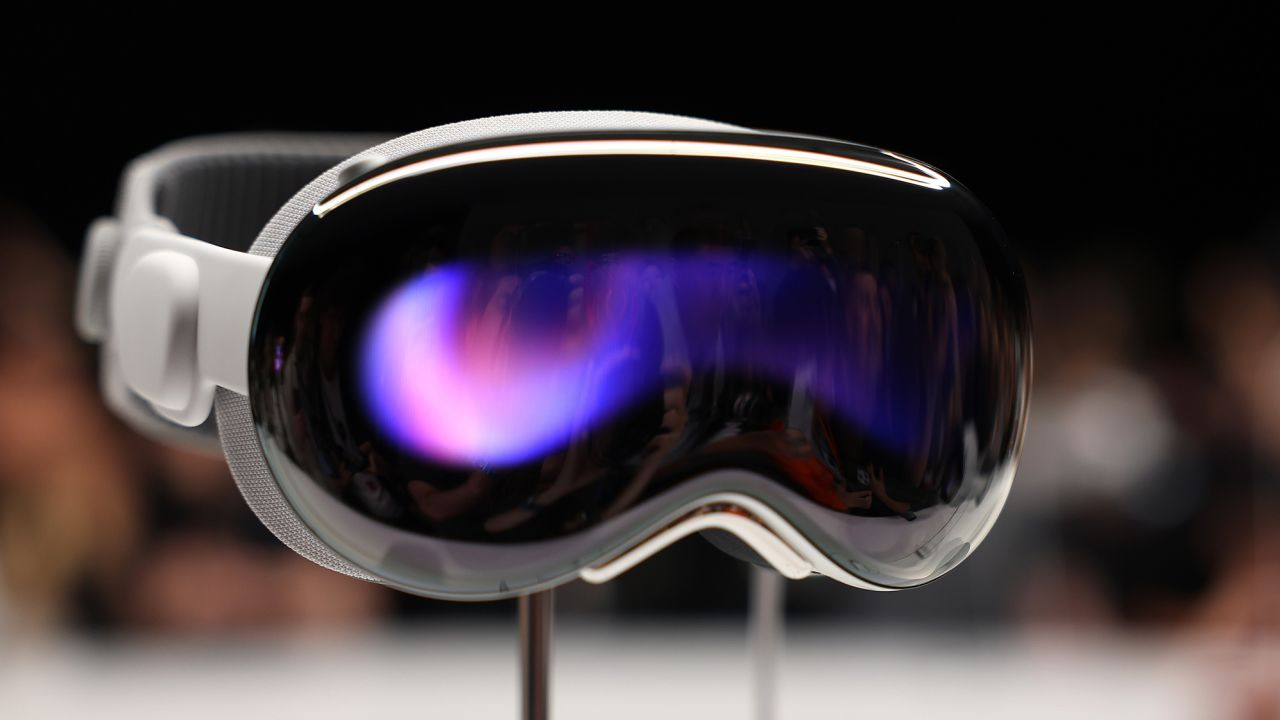
With all this in mind, I’m still comfortable saying with confidence that Apple’s recently announced Apple Vision Pro will be a game-changer on so many levels. And a decade from now, when I might be writing something like this while using one, we may see this announcement as important as the original iPhone.
I know that sounds like me buying into mindless tech hype, which is something I’ve been guilty of before. I freely admit that I am not qualified to judge what technology is overhyped and what will truly change the world. So, do not take me as an expert in that regard.
However, I’ve seen enough major technological changes and overhyped failures in my lifetime to see certain patterns. And with the Apple Vision Pro, I genuinely believe this will change how we see computers, virtual reality, augmented reality, and reality in general.
Apple didn’t invent the smartphone or the MP3 player, but they created products that were so superior to the competition that they fundamentally changed the industry around them. If you need proof, just try finding a Tower Records in your area.
This is not a company that regularly to create strange, ambitious products that the public has never seen before. This is a company that sees what’s going on within an emerging industry, poaches the talented individuals working in that industry, and creates a product that goes onto dominate that industry in its own unique way.
You can certainly make the case that Apple’s tactics in this endeavor aren’t always ethical. They’re a multi-billion-dollar tech company. You don’t have to look hard to uncover some of their less savory practices.
But when it comes to producing a product that works better than anything that came before it, Apple is second to none. And I’ve been hoping for years that someone would find a way to perfect the many flaws in the virtual reality and augmented reality fields.
I may be dating myself here, but I remember years ago when Nintendo tried to create a VR gaming console called the Virtual Boy. I even tried it at a toy store a few times. I thought it was amazing, even though it was uncomfortable at times and gave me a headache. I genuinely hoped it was the start of a new trend.
But it didn’t happen.
Over the years, other companies tried to make better VR and AR hardware. I’ve used products like the Oculus Rift and the Playstation VR headset. They’re both good, but limited. They don’t do much other than run a few niche programs and games.
But Apple’s Vision Pro promises to do so much more. It won’t just run a few distinct programs. It won’t just be a novelty meant for a few specific tasks. In the demonstration Apple released, this product promises to integrate multiple features from multiple fields, from the stuff you’d usually do on a desktop to immersive gaming to watching 4K video content.
Even if you’re very skeptical about VR and AR technology, you can’t deny that’s a very different approach compared to others in the field. And you also can’t deny that Apple has a proven track record of making clunky technology work.
Watching this demonstration, I couldn’t help but imagine what it would be like to watch a football game with this thing. I also imagined what it would be like to play a game like Skyrim, interact with friends and family, or just relax in my bed while enjoying beautiful scenery and music.
I want to try this thing.
I want it to succeed on the same level as the iPad and iPhone, two products that have been a huge influence over my everyday life.
However, I’ll also go on record as saying that I probably won’t buy this first model and not just because the price tag is $3,500. But my reason for that has little to do with my faith in the technology or Apple. This is just how I usually approach embracing new tech gadgets, in general.
I was not among those to buy an iPod or iPhone when it first came out. That’s because I prefer to wait until the early kinks and bugs are worked out. And even for Apple’s most successful product line, there was a refinement period. Just go back and look at the features of the original iPhone. It was pretty limited in many ways. It also had its share of growing pains.
But over time, with further investment and refinement, it became more polished. By the time the third generation came along, it was so polished and so well-developed that that the value was immense, despite the inflated price. When I finally bought my first iPhone, it worked so well that it felt like a massive upgrade by default.
That’s what I hope will occur with the Apple Vision Pro. It may take several years. But eventually, it’ll get to a point where the software, the hardware, and the experience are such that it’ll exceed any alternative, present or future. When that time comes, I will gladly buy in.
Yes, I realize I may still end up paying a hefty price for the experience.
But if that experience means watching the Super Bowl in an immersive, 4K experience or reading comics on a screen that feels like IMAX, then I say that’s a price worth paying.
Every now and then, a story slips under the radar of a much larger, but closely related story. The larger story makes more headlines and attracts more attention, but the smaller story might end up having a far more lasting impact.
That seems to be happening a lot with news involving artificial intelligence and the various AI tools that have emerged in recent years. I’ve already talked about plenty, giving my opinion on the rise of ChatGPT and showing off some AI-Generated artwork I made. There’s so much going on in this field that it’s hard to keep up with, let alone discuss.
But recently, one of those little stories caught my attention. It involves the same AI-Generated art I mentioned earlier and comic books, something for which I’ve shared my passion for in many forms. And it’s a story that I don’t think is getting enough attention.
It has to do with a comic called Zarya of the Dawn, a comic created by Kris Kashtanova. It’s not published by Marvel, DC, Dark Horse, Image, or any other mainstream comic publisher. You can actually download it right now for free. But what makes this comic different isn’t the story, writing, or style. It’s how it was made.
This comic was written by a person.
However, all the artwork inside was created with AI-generating art tools, most notably MidJourney.
That, in and of itself, is quite remarkable. The visuals within this book are certainly eye-catching. They might not rank on the same level as a Jim Lee or a Jack Kirby, but it’s a solid visual spectacle that brings to life a story.
For people like me, who cannot draw and don’t have the money to pay artists to depict the stories we want to tell, this is truly remarkable. I would go so far as to say it’s genuinely exciting. It shows just what’s possible with these tools. A writer with no drawing skills was able to produce this comic using only an AI art generating tool with text prompts. And the end result is stunning.
But this is where the story takes a turn. When Kashtanova attempted to copyright this comic, the US Copyright Office issued a surprising decision that might very well set a major precedent moving forward. Because the comic used AI to create the artwork, it could not be granted copyright protection. This was the exact statement, according to Ars Technica:
“We conclude that Ms. Kashtanova is the author of the Work’s text as well as the selection, coordination, and arrangement of the Work’s written and visual elements. That authorship is protected by copyright. However, as discussed below, the images in the Work that were generated by the Midjourney technology are not the product of human authorship.”
That bolded part is my doing because that’s the section with the biggest implication. This is the US Copyright Office stating outright that images and artwork created by AI can’t get copyright protection. That means that every piece of AI art you create for whatever reason can’t be owned by you in any legal sense. Because technically, you didn’t make it. The program made it for you.
Without getting too deep into the legal issues, I don’t think enough people realize the ramifications this might have for the future of the comics industry and for the art industry as a whole. On the comics side, there are actually two sides to consider.
On one, this technology will allow ordinary people with little to no art skills to produce comics with quality artwork. People who never once had the skills or means to make comics could suddenly start producing them on their own without a publisher or a skilled artist.
That means many great comics that wouldn’t have otherwise been made can be made. Great stories that once only existed with words could be brought to life through beautiful renderings.
But on the other side, the absence of copyright protection is an issue. Yes, these comics could bring to life amazing stories. However, the creators won’t be able to monetize their work, nor would they be able to stop others from using it for their own ends.
That means that, in theory, you or I could create a beautiful comic with this technology. It could find a massive audience and become a beloved story with countless fans. Then, a big company like Disney or Warner Brothers could come in, take the story and the depictions, and basically turn it into their own entertainment product. And since they have more resources and better lawyers, the creators likely wouldn’t get a penny of the profits.
This story also doesn’t account for how those same companies might use this technology to further undercut their workers and creators. Comic companies already have a not-so-great reputation for screwing over writers and artists who create iconic characters. Just look at what happened between Jack Kirby and Marvel for a hint of those issues.
If these same companies can use this same AI technology to produce more comics while not having to pay their artists or writers as much, they will do it. They’re a business. They’ll jump at any chance to pay less to get more. It’s cold, callous, and uncreative. But that’s the world we live in.
Add other tools like ChatGPT into the mix and it’s entirely possible that an AI could create an entire comic from scratch. And everything within it, from the art to the story to the characters, could not be copyrighted in any way. At a certain point, the AI might get so good that it would be hard to tell if there was ever a human creator to begin with.
These are all strange scenarios, equal parts exciting and distressing. We’re already seeing so much change as a result of these new tools, but I don’t think we’ve even seen a fraction of what’s possible. As AI technology improves, art generation and storytelling will change a great deal. The comics industry is more vulnerable than most, as Zarya of the Dawn just proved.
It’s hard to know what this will lead to. But whatever happens, it all started with this story and the precent it set.
I’ve been meaning to touch on this topic for a while now. For someone who writes a lot about and makes multiple videos on the subject of artificial intelligence, it might be somewhat surprising that I haven’t talked much about ChatGPT. I promise there’s a reason for that. I don’t claim it’s a good reason, but I think it’s relevant because it has to do with perspective.
Now, I’ve been following the sudden surge in interest surrounding ChatGPT since it started making headlines. I actually became aware of it when I saw this video on YouTube from a channel called Cold Fusion. For reference, here’s the video.
From here, I started following numerous newsfeeds about ChatGPT, how it’s being used, and how people are coming to perceive it. It has been amazing to watch. I honestly can’t remember the last time a piece of software getting this much hype. And the incredible pace of user growth it’s had in the past few months is nothing short of remarkable.
People have been talking about the potential for artificial intelligence for years, myself included. But we’ve never seen that potential manifest beyond a certain point. ChatGPT has changed that because it’s a real, tangible product that ordinary people can use. For an entire generation, it’s likely to be the first interaction with an artificial intelligence that can do more than your typical virtual assistant.
I don’t think it’s hyperbole to say that this technology could change the world in profound ways. It has the potential to radically alter how we work, learn, create, and do business with one another.
At the same time, it has raised a lot of concerns and not just with respect to how it might displace large segments of the job market. There’s genuine concern it’ll facilitate cheating, help scammers, or add to ongoing issues surrounding misinformation. I think those concerns are plenty warranted.
There’s already some major concern that ChatGPT is somehow the precursor to Skynet and we’re actively creating something that will eventually turn against us. Those concerns aren’t quite as warranted.
Let’s get one thing clear. ChatGPT is not an artificial intelligence on par with Skynet or any other fictional AI we’re familiar with. That’s not how it’s programmed. It can’t become Skynet any more than your cell phone can become a dishwasher. The hardware and software just aren’t there yet.
That being said, ChatGPT is a manifestation of how far artificial intelligence has come. This isn’t something that just uses algorithms to link us to new web pages. This is a system that can actually interact with people in a way that feels familiar. Talking to ChatGPT is less like doing a web search and more like talking to another person. That person just happens to be capable of culling through massive amounts of data and presenting it in a useful, legible form.
I admit that’s not a trivial difference. I also don’t doubt that entire industries and tech companies are rightly concerned about what ChatGPT could lead to, with respect to the future of the internet. But that’s where having a balanced perspective really matters.
For me, personally, I look at ChatGPT the same way I look at the first iteration iPhone. If you get a chance, just go back and look at old videos and news stories about the first iPhone. That too was touted as something revolutionary and world-changing. And in the grand scheme of things, it was. But looking at the specs of that first model today, it’s easy to forget how long it took for that impact to take hold.
Granted, that first iPhone was a bit overhyped and most did not see the potential of this device at first. However, that potential was realized more and more over time as people began refining how they used. Then, as later models came out that improved on what the first one did, it really began to have an impact.
I wouldn’t expect ChatGPT to follow the exact same path. For one, this program was developed by a non-profit research laboratory and not some multi-billion dollar tech company. The purpose, intentions, and incentives are all very different with this technology compared to that of the iPhone.
But, like all emerging technology, there will be updates and refinements. Another version of ChatGPT is already being teased. Like the second iPhone, it promises to improve and expand on the function of the first. In time, another version will come out and another one after that. Each time, the use and utility will grow. It won’t happen all at once. It might not even be noticeable at the time. But the impact will be felt in the long run.
That’s probably the most balanced perspective I can offer for ChatGPT at the moment. I don’t doubt for a second that this perspective will change with future updates and capabilities. There’s a chance ChatGPT ends up being a popular fad that simply falls out of favor because nobody can figure out how to utilize it beyond a certain point. It could become the AI equivalent of Windows Vista.
But there’s also a chance that ChatGPT could lead to some truly unprecedented growth and change in the world of artificial intelligence. It could completely upend how we interact with technology. And ultimately, it could lead to the development of a functioning artificial general intelligence capable of matching and exceeding an average human. If that does happen and ChatGPT was the catalyst for it, then it might go down as one of humanity’s most important technological developments.
At this point, I honestly don’t know how it’ll play out. And I question anyone who claims to know. Nobody truly knew how the iPhone would change the world until that change became apparent. We probably won’t know the true extent of ChatGPT’s impact until a similar change takes hold.
Who knows what the world will be like when that time comes?
While a part of me is nervous about it, I’m also genuinely curious to see where ChatGPT will lead us,
As a general rule-of-thumb, you should never take news of a “scientific breakthrough” at face value. It’s not that the science is flawed or that the media reporting it are uninformed or misguided. It’s just incomplete. The rhetoric rarely matches the results, nor does it fully grasp the implications.
To some extent, that’s unavoidable. People who actually do science rarely use terms like “breakthrough” or “revolutionary.” Despite what popular media might depict, science doesn’t make giant leaps like that. It usually makes gradual steps full of small, but meaningful advances. It rarely makes for attention-grabbing headlines, but that’s how most scientific progress is made. It’s like building a house brick-by-brick. One brick alone is not a breakthrough. It’s the totality of the structure that garner’s the most vlaue.
When it comes to any news on nuclear fusion, it helps to be even more restrained. I’ve been following tech news for most of my life. During that time, I’ve seen plenty of articles and news releases from mainstream sources claiming some major breakthrough. Some give the impression that we’re just a few years away from using fusion to power starships to Mars. That’s a very flawed, very uniformed perspective.
In that same mold, I’ve also seen plenty of news articles saying nuclear fusion is an impossible dream that nobody will see in their lifetime. There’s a common refrain among these skeptics. They’ll often say something along the lines of “Nuclear fusion is 30 years away and always will be.” It’s a very cynical, very narrow-minded understanding of the issue. It also paints a flawed perspective of where we actually are in the science.
With those two perspectives in mind, how do we make sense of the latest news purporting a fusion breakthrough? In case you haven’t heard, the news came courtesy of Lawrence Livermore National Laboratory, which is not some fringe company or organization. This is something they’ve been working on for decades and this was a big moment for them, according to the Financial Times.
US government scientists have made a breakthrough in the pursuit of limitless, zero-carbon power by achieving a net energy gain in a fusion reaction for the first time, according to three people with knowledge of preliminary results from a recent experiment.
Physicists have since the 1950s sought to harness the fusion reaction that powers the sun, but no group had been able to produce more energy from the reaction than it consumes — a milestone known as net energy gain or target gain, which would help prove the process could provide a reliable, abundant alternative to fossil fuels and conventional nuclear energy.
The federal Lawrence Livermore National Laboratory in California, which uses a process called inertial confinement fusion that involves bombarding a tiny pellet of hydrogen plasma with the world’s biggest laser, had achieved net energy gain in a fusion experiment in the past two weeks, the people said.
Although many scientists believe fusion power stations are still decades away, the technology’s potential is hard to ignore. Fusion reactions emit no carbon, produce no long-lived radioactive waste and a small cup of the hydrogen fuel could theoretically power a house for hundreds of years.
The US breakthrough comes as the world wrestles with high energy prices and the need to rapidly move away from burning fossil fuels to stop average global temperatures reaching dangerous levels.
Now, compared to other news about “breakthroughs” from mainstream media, this is fairly balanced in that it doesn’t make too many bold claims. It makes clear that commercial fusion power stations are still decades away. But that was never the point of this experiment, nor is it the purpose of the article.
The most important detail from this news is the results the scientists produced. For the first time, a nuclear fusion reactor achieved a net energy gain. That means the generator put out more energy than was put into it. Specifically, the experiment produced an excess of 1.37 megajoules of energy, which amounted to approximately 70 percent more than the energy that was put into the reactor.
That is major news.
That is an achievement worth celebrating.
Because to date, plenty of laboratories throughout the world had achieved fusion. That’s not some act of scientific magic on par with anti-gravity or perpetual motion. The issue with fusion has never been about the physics. It has always been an engineering and logistic challenge, more so than fission ever was.
Creating fusion only requires a few ingredients. You need lots of heat, some hydrogen, and a way to confine it all in a structure. The big challenge that has been taking so many years has been to do all this in a way that generates more power than what goes into it. That’s something no other reactor has achieved until this experiment.
Now, it has been done.
We now know it’s possible to create a nuclear fusion reaction that generates more energy than what goes into it.
This is akin to the first ever cell phone call, which occurred in 1973. And it wasn’t until 1983, a full decade later, that the first commercial cell phone went on the market. That first phone was not very good and nowhere near as efficient as the cheapest phone you can get today. But it did work and it did get the ball rolling on the market.
That’s not to say that fusion will follow a similar timeline, but that comparison helps give perspective to where we’re at right now. Just getting a new technology to work is one thing. Making it a commercial product on some level takes time because the technology requires greater refinement, investment, and engineering.
But that process can only start after someone proves that it is technically possible. Fusion did not have that until this news. On top of that, investment in nuclear fusion has never been very high, compared to other technologies. In fact, it has only been in the past couple of years that more public and private investment has flowed in to developing nuclear fusion. So, that old joke about fusion always being 30 years away was missing a key detail. Any technology is going to develop slowly if there isn’t sufficient investment.
Now that one lab has succeeded in showing that a net energy gain is possible with fusion, others can follow. Hopefully, it inspires even more investment. With those investments will come more refinements and efficiencies. If those efforts are sustained, fusion doesn’t just become possible. It becomes inevitable.
The past couple decades have seen one too many price spikes in oil and other fossil fuels. Recent geopolitical conflicts have only shown just how vital it is for us to get off fossil fuels as quickly as possible. And our energy demands are only going to keep going up in the coming years. Add on top of that all the environmental concerns surrounding fossil fuels and the urgency for nuclear fusion has never been greater.
We’re still not going to see fusion plants popping up tomorrow, next year, or the year after that. But with this news, we’ve taken a critical first step. And many of those reading this will likely live to see the day when fusion energy powers their homes. That’s something worth looking forward to.
I’ve been avoiding this subject for a while now. I had a feeling I would eventually have to address it at some point. I would’ve like to wait until the new year. But lately, I’ve been feeling a greater sense of urgency.
I doubt that’ll surprise anyone because it has to do with Twitter.
If you’ve been following the news surrounding Twitter lately, you probably understand why that is. To call it a chaotic trainwreck would be a gross and generous understatement. It’s gotten to a point now that waiting for things to settle is akin to waiting for pink elephants to fly down from Mars.
I don’t want to get too heavily into all the drama surrounding Twitter, as an organization, since Elon Musk purchased the company for $44 billion. If you want an in-depth overview of that affair, there are plenty of sources more qualified than me to cover it. Thus far, I’ve found this video by the Wall Street Journal to be the most comprehensive.
Beyond the business side of things, there’s the state of the site and service itself. I’ve been on Twitter since 2010. I’ve been using it extensively since then, both as a communication tool and a source of information. Whenever I’m waiting for a new movie trailer or major news to drop, Twitter is my go-to source. Usually, it starts trending before a major news outlet reports on it.
Granted, that sometimes means unfounded rumors start to trend as well. It also means I end up following false information for a time, especially when there are conflicting reports about an event or subject. But for years now, that has been my primary means of consuming news and information. It’s also my primary means of interacting with friends I’ve made, usually regarding comics, movies, video games, etc.
I don’t deny there have been issues over the years. At times, Twitter has been a problem in the sense that I either use it too much or I waste too much time trying to make sense of certain trends or threads. But for the most part, I’ve felt that the positives outweighed the negatives.
That changed recently.
Over the past couple of months, since Musk began his overhaul of Twitter, I’ve sensed a shift in overall experience of the site. It feels like Twitter has become less and less ordered, with respect to managing content and toxic trends. The safeguards that existed before Musk were far from perfect, but they were at least tolerable. Now, I’m not so sure.
I’m seeing more and more instances of people just being unrestrained assholes on Twitter. Behavior that once got people banned or suspended are now becoming distressingly common. I’m not just talking about instances of excessive profanity, racial slurs, or bigotry. The messages and content are so egregiously hateful and antagonistic that it’s painting a nasty picture of people, in general.
Now, I’m well-aware that there are some pretty toxic places on the internet. I’m also aware that people will say horrible, disgusting things when they can hide behind the cloak of anonymity. I’ve been to places like 4chan, message boards, and comments sections in fringe news outlets. The kinds of things people say in those spaces is so over-the-top awful that you do have to take a step back, take some deep breaths, and calm yourself before you say or do something foolish in response.
But those spaces tend to be small and concentrated in nature. You don’t usually see those things in places that also stream mainstream news content. Well, in this emerging state within Twitter, I’m seeing this sort of stuff more and more. It hasn’t quite gotten to the same level as your typical 4chan post, but it’s trending in that direction. And personally, I have no desire to see how close it gets to that level.
This has left me at a bit of a crossroads.
I am seriously considering quitting Twitter altogether.
I don’t think I’ll delete my account completely, since it does contain things I hope others would find useful. But at the very least, I’m weighing the benefits of simply stepping away from its platform because its current state is just too difficult to navigate. I worry that if I keep using it as often as I have over the years, my overall faith in humanity will suffer as a result. There’s only so many hateful, bigoted, whiny trolling I can handle before I start to think less of the human species, as a whole.
My faith in humanity has already taken a severe hit in recent years. Between the COVID-19 Pandemic and the current state of politics, I’ve found it increasingly difficult to believe in the inherent goodness of people as a whole. I know that’s dangerous. I also know that Twitter offers a very small sample of human discourse. It’s not even top 5 in terms of social media sites. In general, it presents a very flawed perspective in terms of humanity as a whole. It also, by design, tends to amplify the most extreme, fringe voices.
That’s a good enough reason for many to leave Twitter altogether. I already know some who have, including a few public figures.
However, there are a few things that keep me hesitant to leave Twitter entirely. As bad as it has become, it is still undeniably useful in many regards. In terms of keeping up with news, especially with comics and movies, it still beats many other social media platforms in terms of getting quick, raw information on specific topics of interest. So long as those topics aren’t too politically charged, you can usually avoid the more toxic side of the site.
On top of that, some good friends of mine that I’ve met through comic book message boards, Reddit, and my YouTube channel are on Twitter and that’s the only way I can interact with them. I’ve even reached out to a few to see if they’re reachable on other platforms. Some are, but others aren’t and I genuinely don’t want to lose those connections.
I also feel like I can mitigate part of the toxic experience by simply avoiding the trending topics, especially when there’s politics involved. Doing so does take more will-power than it used to. Sometimes, you curiosity does get the better of you. It also requires you to use the mute and block functions more often. But that can be tedious at times. It can also mean that you craft your own little echo-chambers, which is not at all healthy.
At the moment, I would really prefer not to quit Twitter, if only because it’s still so useful as a tool for news and information of a certain variety.
At the same time, I don’t like the current trend it’s on. I also don’t like how it’s being managed and developed. If it continues its current path, it’ll become more and more populated by the kinds of extreme, radical voices that have made so many other places on the internet and social media untenable. And I have no desire to be part of any online space of that nature. I don’t need that kind of toxicity coloring my view of people, the world, or various issues.
I just hope it doesn’t come to that.
For now, I’m still going to remain on Twitter. However, I’m also actively looking for alternatives that are just as useful and can easily be adopted by my friends. If I do find one that’s just as good as what Twitter used to be, then that makes the decision to leave a lot easier. Until then, the best I can do is be more cautious and mindful of how I navigate Twitter.
If anyone has any insights or advice on this matter, please share it in the comments. I’m certainly open to input and insight, especially for those wrestling with a similar decision. If and when I do decide to leave Twitter, I’ll be sure to announce it on this site and provide information to anyone else who still wishes to follow me.






 Jack Fisher's Official Publishing Blog