It’s Sunday. It’s a holiday weekend. Everybody is either recovering from a hangover or making arrangements to recover from a pending hangover. I don’t want to distract too many people from such noble endeavors. It’s a holiday. We should be having fun and enjoying ourselves.
I’d need multiple blogs, a staff of at least 50 people, and grant money from several major universities to document all the myths about sex and sexuality. We’ve all heard something crazy about sex, what it is, how to do it, and what it does to us. From using lemon juice as a douche to eating certain foods to make your semen taste better, these myths exist and propagate with disturbing efficiency.
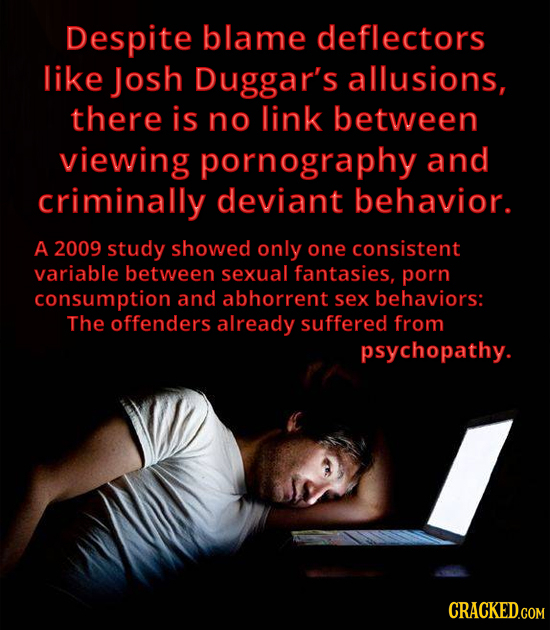
Thankfully, the fine folks at Cracked.com do a nice job of busting myths, including those pertaining to sex. Back in 2015, they did an article on 27 sex myths that too many people still believe. The only thing truly shocking about this article is that they only managed to list 27.
So why am I citing a link from 2015? Well, one of those myths is relevant to what I wrote about yesterday. It involves the concept of porn addiction that Pamela Anderson whined about.
This actually makes her hypocrisy even worse because she’s focusing on the porn and not the underlying mental health issues behind it. She’s basically working under the assumption that the tail is wagging the dog here. As a noted animal-lover and PETA supporter, she should know better. Also, this study was done in 2009. She has no excuses.
There are all sorts of crazy myths that complicate and confuse our sex lives. Again, the main reason these myths emerge is because sex is so taboo and we refuse to talk about it. When we don’t talk about something, we don’t learn enough about it. When we don’t learn enough about something, we tend to make shit up to fill in the blanks. That sort of thing already gave us crazy conspiracy theories, fad diets, and organized religion. Let’s not let it ruin sex more than it already has.
This post is a follow-up to both yesterday’s post on jealousy and another earlier post where I asked the readers for ideas. That request for other topics of discussion wasn’t rhetorical. I really do want to hear what readers want to talk about on this blog. It’s a good way for me to gauge the audience and adapt my work accordingly. Knowing the audience is among the first steps to becoming successful in any media, be it erotic fiction or clown porn.
One reader in particular, InsidousTemptation, read my post about jealousy and how natural/unnatural it may be and brought up an equally relevant topic. I’d like to talk about that topic because it’s closely related to jealousy. In fact, it’s the uglier side of jealousy, as if jealousy itself weren’t ugly enough. That’s right. I’m talking about rejection.
For this concept, there’s far less context to consider. Rejection feels awful in pretty much every form. Other than being rejected by a crippling disease, it’s one of those few things that every society and every culture can agree is universally bad. I’ve certainly dealt with it before. Recently, I announced that my manuscript for “The Big Game” had been rejected by a publisher. For this post though, I want talk about a more specific rejection.
Have you ever loved someone and learned they don’t feel the same way? Have you ever put time and effort into showing sexual or romantic interest in someone, only to be shot down? It doesn’t matter if it’s thoughtful, callous, or cruel. It still sucks. It feels like a gut punch, a slap in the face, and a pin to the heart all at once. It can even be worse in some cases. Just ask this guy who had his marriage proposal rejected in a very public way.
As an awkward teenager, I certainly had my share of rejections. I was not charismatic. I was not attractive. I was not confident. I had very little to offer the opposite sex. For me, every girl I showed interest in felt like a looming gut punch because they all had boyfriends. Every girl I liked was either dating someone, not interested in dating anyone, or didn’t know I existed. Being a teenager was hard enough. Adding rejection to it was like breaking a few extra bones along the way.
So what makes rejection so much worse than jealousy? What does it have to do with the concepts I discussed yesterday? Well, the difference isn’t only in degree. The difference involves sentiment and style. Jealousy mostly involves thoughts and feelings. Rejection is more active. Rejection is a tangible behavior with tangible effects that are fairly universal for the most part. It’s hard for rejection to be misconstrued or mixed. With jealousy, it is possible to feel and think things for the wrong reasons.
That said, there’s a case to be made that our culture and our approaches to romance and sexuality don’t just evoke unnatural sentiments of jealousy. They make rejection even worse. Why do I say this? Well, let’s go back to that primal mindset I call “caveman logic.”
I said in my article about jealousy that from a caveman’s perspective, jealousy makes no sense. We evolved to be a social, communal species that can work together, love together, and share intimacy together. Being jealous or upset about the romantic and erotic affections of others may make sense in some situations, but is overly arbitrary in most. It wasn’t until society developed concepts of property ownership and passing down assets through family lines that jealousy really took hold.
So how does this make rejection worse? Well, the fuel to the fire comes with turning sexuality and romance into a commodity of sorts. Keep in mind that for most eras in human civilization, marriages were arranged. They were loveless business arrangements whose sole purpose was to ensure that land and assets remained within a family. That’s why so many epic love stories involve forbidden romance because most individuals didn’t get a choice in their partner.
This callous commodification treats love and intimacy as something to be bought and sold. That’s bad enough, but popular culture in the 20th century somehow found a way to make it worse. How did it do this? Well, the media we love and consume sold entire generations on all these false promises. Think about every romantic movie. The hero is a nice, honorable, upstanding guy or girl (but mostly a guy). They fight and they struggle to win the love of a stereotypical beautiful partner and they succeed by being themselves.
Spoiler alert. That doesn’t happen in real life. There’s one scene in one movie that accurately encapsulates real modern life. It comes courtesy of Alec Baldwin and its this:
Is it harsh? Yes. Is it cold? Definitely. Is it accurate? Sadly, it is. This speech reveals something sad, but relevant. We, as a free and modern society, care about results and what others can do for us. If we’re not “closing,” then why should we be accepted? We aren’t entitled to all the love, sex, and satisfaction we want. We have to earn it.
This is why rejection feels so awful within our culture. When someone rejects us, we feel like we’re being denied something we’re owed. We want sex. We want love. We want it from this specific person. How dare they reject us! Say that out loud to a mirror and see if it sounds right. It shouldn’t.
So what’s the solution? I don’t like to just complain about things on this blog. I do like to leave some slivers of hope in the mix. In this case, I do hold out some hope that changes in technology will help us overcome a culture that makes rejection worse.
We’re entering a world where we can interact and inform one another more effectively than ever. Social media, online dating, and smartphones give us an ability to find others who share our passions. It gives us a chance to circumvent the worst rejection in some cases.
That said, technology can only do so much. For us to really minimize the pain of rejection, certain parts of our culture and our sexual practices need to be reassessed. What parts am I talking about? Well, that’s a discussion for another post.
Thanks again to InsidiousTemptation for suggesting this topic. I appreciate it. If anyone else has ideas on topics of discussion, feel free to let me know in the comments.
We hear it all the time. Older generations complain constantly that young people are out of control. They’re too deviant. They’re too rebellious. They’re out there in the streets, running around naked, worshiping demons, and having sex like jackrabbits on crack.
Talk to anyone over the age of 45 and they’ll probably tell you that young people these days are more deviant than their generation. They’ll say young people are detached, distant, and selfish. They’re more concerned about texting on their phones than spending time with family, working on the farm, or volunteering at their church. Is there some merit to their criticism? Yes. Is their sentiment valid? No. In fact, it may be the opposite.
Last week, the Washington Post did an article highlighting the trends in sexual activity among Millennials. Some of these trends don’t fit the whining and complaining that older generations bemoan. It turns out, young people today are having significantly less sex than Baby Boomers or the Gen X crowd. The portion of youth that remains sexually inactive has more than doubled over the past 30 years. That’s a pretty big shift and nobody really knows why.
There are some theories. The article highlights concerns about sexually transmitted diseases, which grew significantly in the 80s and 90s. However, that alone doesn’t account for the data. Others suggest that the easier availability of porn, thanks largely to the internet, has made it easier for people to fulfill their needs without a partner. This is probably only partially true at best. Anyone who lived before the age of the internet will tell you that even without porn, they found ways to get off. They may not tell you before a few drinks, but it is true. People still masturbated before the internet.
I’m not a scientist. I don’t have any expertise in this area other than writing books centered around sexy themes. That said, I have learned through my many years of hearing people complain about sexual trends to notice a few themes.
Anything that’s happening in the sexual landscape of a culture basically becomes this big ink blot test. People are having more sex? This must be due to some perverse religious trend, some devious new form of media, or some widespread rebellion against authority. People are having less sex? This must also be due to some perverse religious trend, some devious new form of media, or some widespread rebellion against authority. People see this and use it to inject whatever conclusion they feel fits their agenda. They do the same with politics, religion, and tastes in fast food.
So what do I think? Well, I think like most things involving the complexities of human society, trends in sex have multiple influences. It’s not just smartphones, media, or diseases alone that affect these trends. It’s a combination of many forces, some more powerful than others. So if I had to give more weight to one force in particular, I’d favor the one that tends to govern most human affairs to a significant degree: economics.
Let’s face it. Sex and being in a relationship is expensive. Men and women expect a lot more these days and not just in terms of fancy dates. Between the cost of divorce and the conflicting expectations, getting sex requires a lot of time and energy. In an era where young people have to work a lot harder to achieve the same level of financial stability of their parents, there’s just not as much to dedicate to sex.
It’s not a very sexy explanation. I admit that. People are having less sex because they can’t find good jobs or are shackled with too much debt? That’s not a satisfying explanation and it doesn’t lend itself to a simple solution. People like things that are satisfying. Ironically, it’s kind of like sex. If it isn’t satisfying, they look elsewhere. In this case, however, what isn’t satisfying may also be valid.
Money does affect relationships in a major way. According to the Walls Street Journal, millenials in particular are shackled with a lot of debt, mostly from college loans. Few things kill your sex drive more than the knowledge that you can’t pay your bills and barely have enough money to survive. In terms of our basic needs, survival does take priority over orgasms most of the time.
Is it the only explanation? No. I don’t claim that this is the sole explanation for the decline in sexual activity among young people. There are likely other factors in play, such as changes in feminism and growing awareness of sexual assault. It’s hard to quantify just how much those factors affect the results. It may even be impossible in some ways.
Be this as it may, the success of the porn industry and the continued success of erotica give me hope that people of all generations still have a healthy libido. I hope to nurture it with my books. In the meantime, here’s an insightful video from Think Tank that explores this issue in greater detail. Their explanations are probably only part of the story though. What do you think is causing young people to have less sex? Nobody knows for sure, but that won’t stop plenty from speculating.




 Jack Fisher's Official Publishing Blog