Tag Archives: selfishness

The “It’s Always Sunny In Philadelphia” Filter: A Simple Process For Making Choices

How do you make good choices?

How do you know when something is right, just, and ethical?

How do you go about determining the morality and ethics of any given situation?

These are the kinds of questions that lawmakers, philosophers, scientists, religious leaders, and YouTube commenters debate constantly. It’s one of those deep, fundamental issues that everyone contemplates regularly, but few can claim to understand. The world is so chaotic and complicated. It’s incredibly difficult to surmise a simple, concise, consistent standard for making good choices.

However, there are ways of simplifying that daunting process. It may still be impossible to completely resolve such issues for every person in every situation, but we can make it easier. As it just so happens, one of the greatest TV shows of all time, “It’s Always Sunny in Philadelphia,” provides us with an important tool that also happens to be hilarious.

Using that tool is simple. It goes like this.

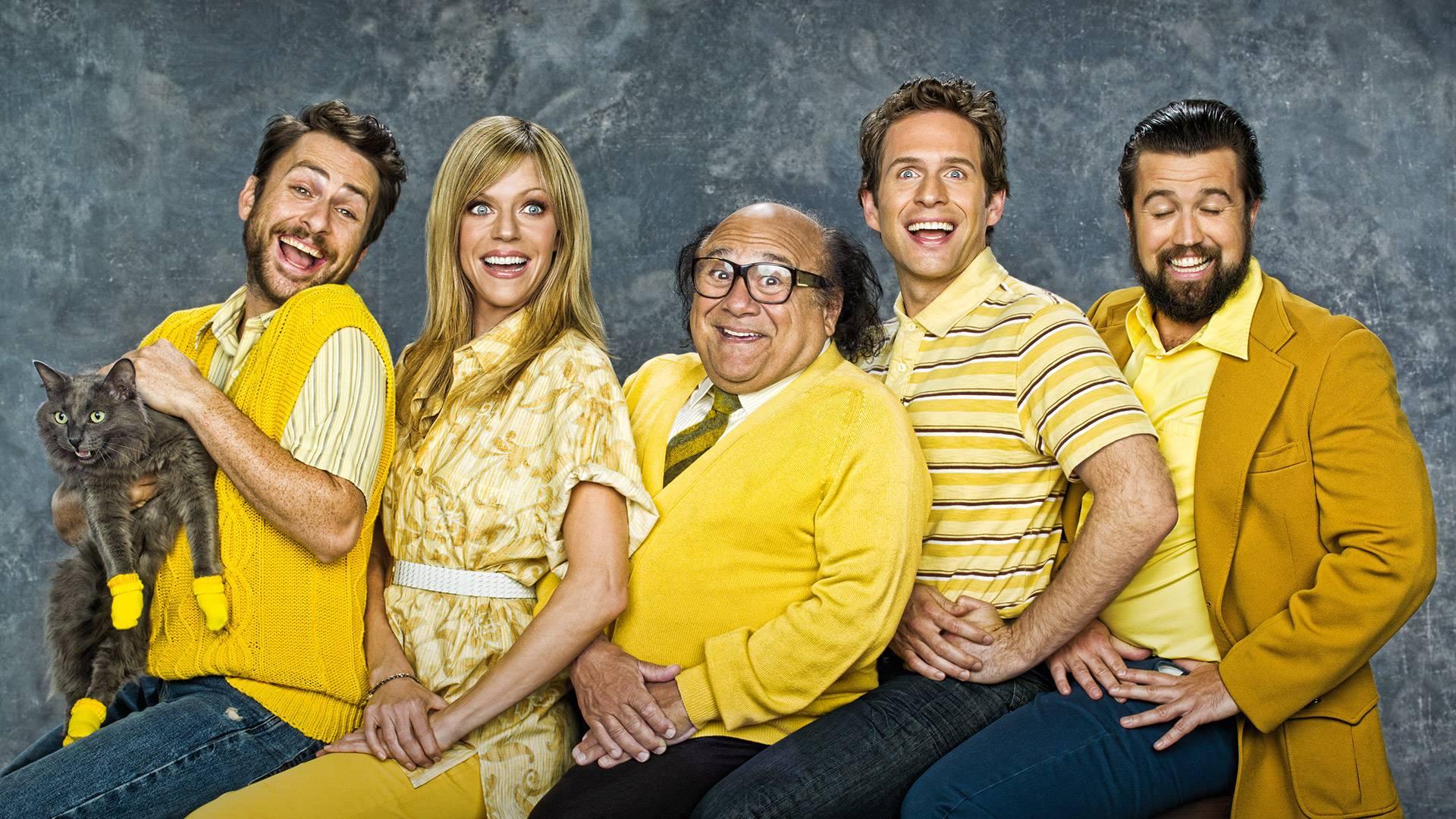
If a certain choice, response, or recourse seems like someone that the Gang would do in It’s Always Sunny in Philadelphia,” then chances are it’s not the one you should follow.

To anyone who has watched this show in any capacity, that makes total sense. For those who haven’t had a chance to watch this hilariously obscene middle finger to every sitcom ever made, here’s just a sample of what I’m talking about.

Even if you’re not familiar with the show, this should at least get you familiar with the implications. I’ve written aboutIt’s Always Sunny in Philadelphia” in the context of its masterful handling of dark comedy. I concede that this is one of those shows that isn’t for everyone. It’s hard to explain to most people the appeal of a show that finds humor in baby funerals, crack binges, and unauthorized Lethal Weapon sequels.

At the same time, it’s because this show dives head-first into dark comedy that it paints a clear picture on what goes into making bad decisions. There’s no getting around it. The characters in this show, also known as the Gang, are not morally upstanding people. In fact, they don’t even try to be moral. Nearly every episode involves them pursuing some elaborate plot based entirely on selfishness, greed, ego, or misguided pettiness.

They’re not stupid on the level of Homer Simpson or Peter Griffin, but they aren’t very smart either. Everything they do, from hoarding gasoline in an oil crisis to stalking a waitress, is incredibly simplistic. It can always be reduced to a basic level of selfish narcissism that never goes beyond basic.

It’s because the Gang’s choices are so basic and self-serving that the show is so funny in the first place. “It’s Always Sunny in Philadelphia” essentially takes the unique setup of a sitcom to amplify all the terrible traits and tropes that frequently go along with other shows that try too hard to be deeper.

At its core, It’s Always Sunny in Philadelphia” doubles down on the simplicity of having characters who don’t even try to be moral. Through 14 seasons, the Gang actively avoids any effort to change or grow in a meaningful way. Charlie, Dee, Dennis, Mac, and Frank are the same selfish narcissists they are in Season 14 as they are in Season 4.

Even as the show has gotten bolder and more absurd with the Gang’s antics, their motivations are the same. They don’t need to be overly complex to be funny. That’s what makes these characters and the entire premise of “It’s Always Sunny in Philadelphia” such a great filter.

The next time you’re in a situation where you need to make a decision, try and apply this filter. What would Sweet Dee do? What would Frank Reynolds do? What would Dennis, Mac, and Charlie do? If you can determine that, then you can also determine exactly what not to do.

Even if it’s not specific, the moral filter of It’s Always Sunny in Philadelphia” can act as a reminder. If you’re going to be exceedingly selfish and narcissistic in making decisions, then you’re tempting fate the same way the Gang does with every absurd antic. Doing so will rarely pan out well for you and those around you.

If you need further proof, just look at Rickety Cricket.

Leave a comment

Filed under human nature, philosophy, political correctness, psychology, television

The (Sort Of) Problem With Evil

I’ve decided to take a break from deciding whether music form boy bands and burned out pop stars counts as love or obsession so I can focus on a far more relevant issue. It’s relevant in that it affects more directly than the annoying songs we have to endure. It also affects me as an aspiring erotica/romance writer because it’s an important component of every character, be they protagonists or sidekicks.

Yes, I’m talking about evil again. My first post yesterday ended up covering so much that I quickly realized I’ll have to stretch this out to cover the full range of the topic. Make no mistake. This is an important topic. Evil, whether we believe in it or not, will impact us in some way and I’m not just talking about the kind that gets shows like Firefly canceled.

Our understanding of good, evil, and the morality that governs both is an important part of our civilization and our species, as a whole. It’s one of those things we all acknowledge, but can’t quite agree upon. It’s not unlike George Clooney. We all agree he’s sexy. We just don’t agree why.

This directly ties into the so-called “Problem of Evil.” Anyone who has endured a debate between an overly atheist and an overly religious type is probably familiar with this concept. The “problem” is that evil exists and, as a result, it undermines a lot of theological and ethical issues. It’s something two people can argue about for days on end and not accomplish a goddamn thing.

For me, personally, I have a big problem with calling evil a “problem” in the first place. It’s not that I think it’s unimportant. It definitely is. I just take issue with use of the word “problem.”

While I was in college, one of my professors did this lecture where he said one of the most brilliant things I ever heard from any human being not inspired by George Carlin. He started by saying this:

“We don’t deal in problems. We deal in dilemmas. Problems are easy. Problems, by definition, have solutions. Dilemmas don’t have solutions. Dilemma’s are harder to manage because they often require compromise.”

There are a lot of amazing things I remember from college. Not all of them have to do with how willing some people are to get naked at a party. The professionals there really had some smart things to say. This, more than almost anything, really stuck with me.

I think it nicely applies to the concept of evil because its a concept that’s so diverse and ambiguous, at times. At one point in history, marrying someone from another tribe is considered evil. At another, admitting to owning a Nickelback album is evil. It’s fluid, overly vague concept that keeps moving the goalposts.

As a dilemma, evil can’t have a solution. It can have various understandings. There can be compromises along the way in which the idea of evil skews towards or away from a certain direction. That’s why concepts like slavery took so much time to fade into that special domain of evil and even then, we still have problems eliminating it.

More than most concepts, the dilemma surrounding evil has many religious connotations. Nearly every religion, including those that involve chakra, crystal energy, and aliens, tries to address the source of evil in some form or another. Some use it as a means of proving their particular theology. Others use it as a means of disproving that very theology. It’s a never-ending argument that rarely ends with someone changing their mind.

Even so, it’s an important concept to explore. Even if I do take issue with the use of the word “problem,” it is a concept that reveals many facets of evil and how we see it. Rather than try to break down every one of those facts, knowing that would require more posts than anyone is comfortable reading, I found a very helpful YouTube video that nicely sums it up.

This comes courtesy of Crash Course, a very helpful YouTube channel in terms of explaining complex issues in a simple, basic way. This is basically a 101 class, one that does not get into the finer details of an issue. This reveals the forest without scrutinizing any of the trees. For those who want to learn more about the “Problem of Evil,” this video breaks it down nicely.

Whether you’re religious or non-religious, both sides of the problem/dilemma should give you pause. It certainly has for me. I’ve even seen it in my writing. I’ve had to mold “evil” characters to make the stories in “Skin Deep” and “The Escort and the Gigolo” work. It’s challenging, but it’s an important part of a larger narrative.

The presence of evil raises questions about what we believe spiritually and how we see ourselves as a species. The simple fact we can’t be certain in both the theological and scientific analysis of evil reveals just how complex this issue is. When neither science nor religion can offer a clear-cut understanding, you know it’s a hell of a dilemma, if that’s not too fitting a term.

So what does this mean for evil as a whole? What does this mean for evil in a religious, scientific, and philosophical respect? Well, these are questions I hope to keep exploring. Right now, I want to use the “Problem of Evil” to create the right context.

We live in a world where we can’t help but acknowledge that evil exists, but can’t agree on the source or mechanisms behind it. With every evil act, there seems to be more and more complexity.

The evil of today is not always the evil of tomorrow. Evil characters in novels today can easily become heroes and/or anti-heroes tomorrow. We don’t know when or how this will manifest. We just know it’ll continue to confound and conflict us in our minds and souls, however we define them.

Leave a comment

Filed under Jack Fisher's Insights