Tag Archives: Netflix Shows

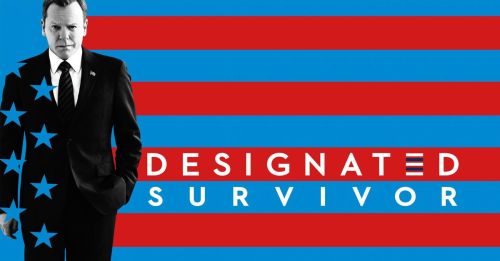
Good People, Corruption, And Politics According To “Designated Survivor”

1200x627-q80_254c4e9ea1d7fec00147aba9a99acb7e

Politics is a dirty, cut-throat world that often requires good people to compromise principles, integrity, and basic human decency. Most people wouldn’t argue that. Even before the internet, the corruption that often goes hand-in-hand with politics was well-documented. That corruption has only become more visible in recent years. It’s hard to go more than a week without seeing a fresh case of shady political conduct.

However, instead of dwelling on how ugly politics can get in the age of social media and outrage culture, I’d like to scrutinize the nature of that corruption. I don’t doubt the ugliness or absurdities that politics often breeds, but it also poses some interesting question.

Do politics naturally corrupt the people who get involved?

Is corruption in politics unavoidable?

Do politics only attract corrupt individuals?

Is it possible to get anything done in politics without some amount of corruption?

These are not easy questions to answer. You don’t have to look hard to find corrupt politicians or uncover cases where politics undermined efforts to pursue a public good. However, the extent and the process of that corruption is sometimes difficult to understand. Those of us not involved in politics have a hard time imagining how ordinary people could become so callous.

That’s why a show like “Designated Survivor” is so uniquely compelling. Even as a work of fiction, this show explores the complex world of politics within the most extreme of circumstances. There’s political drama, intense action, and ongoing mysteries that go beyond politics, but the latest season of the show accomplished something unique in terms of how people become corrupt.

The premise of the show starts simple. Tom Kirkman, played by Keifer Sutherland, works at the White House as a fairly low-level department head as the Secretary of Housing and Urban Development. In terms of rank and influence, his authority is barely above that of a typical intern.

Then, prior to the annual State of the Union Speech, he gets picked for the unenviable role of designated survivor, which is a real thing. It’s a role meant to keep the government going in the worst of worst-case scenarios when there’s a catastrophic attack that kills the President, Congress, and much of the government. In the pilot episode, that’s exactly what happens.

Suddenly, this man who has never run for political office or served as an elected official is thrust into the role of President of the United States and after the worst attack in the history of the country. It’s overwhelming, to say the least. It makes for great TV drama, but it also creates a unique experiment in what power and politics do to an otherwise ordinary person.

Before Kirkman is thrust into this role, it’s established early on that he’s somewhat of an idealist. He identifies as an independent who is genuinely concerned with using the political process to pursue a public good. He also demonstrates early on that he has a strict understanding of right and wrong. For him, there’s no compromise or second-guessing when it comes to ethics.

On paper, he has the kind of character and ethics that most people want in a politician. Even the dire circumstances of his ascension are favorable because he never had to raise money from billionaires to finance his campaign. He doesn’t even have to make shady deals or back-stab anyone, which is also an all-too-common tactic in politics.

In a sense, Tom Kirkman comes into this position of power free of corruption. He is in a position where he can govern with his principles and ideals intact. This isn’t “Mr. Smith Goes To Washington.” This is Mr. Smith gaining unprecedented power without having to go through the corrupt process.

Throughout the first and second season of the show, Kirkman tries to do his job with his ideals intact. Whether it’s tracking down who blew up the Capitol or preventing an all-out war in East Asia, he has to constantly render difficult and weighty decisions that test his ability to keep being that affable man from the first episode.

For the most part, he succeeds on many fronts. The conflicts throughout the show often followed a common formula. President Kirkman faces a difficult issue. One side urges him to make one risky, politically-motivated decision. The other side urges something else that’s just as risky and just as political. Kirkman, unwilling to compromise his laurels, has to forge a third option.

Time and again, the integrity of his character shows. By the end of the second season, the extent of that integrity is beyond dispute. Then, the third season arrives, via Netflix, and everything changes and not just due to the sudden increase in profanity.

This season, unlike the previous two, cast aside the formula of the first two seasons, but not without reason. The entire third season is built around Kirkman running for re-election as an independent. At this point, all the good he did with respect to rebuilding the government after a devastating attack is a distant memory. It’s all politics now and this is where his integrity is pushed to the limit.

Almost immediately, Kirkman discovers that just being a man of integrity isn’t enough. The first episode of the third season really sets the tone, highlighting how easy it is for his ideals to get lost in the politics of an election. Just saying what’s true and right isn’t enough. It has to resonate with voters. That’s the only criterion that counts for anything.

His primary opponent in this season is Cornelius Moss. In the second season, he was an ally. He came in as a former president who knew the rigors of the job better than most. He was also an experienced politician. He had experienced the corrupt world of politics and he had successfully navigated it. As a result, he never comes off as having the kind of integrity and principles that Kirkman espouses.

For a while, Moss comes off as an outright villain in the world of “Designated Survivor” and in a season that introduces a full-fledged bioterrorist, no less. He conducts himself the same way most people expect a corrupt politician to behave. He doesn’t care about truth, integrity, or decency. He does whatever he must in order to win the election and secure his power.

In previous seasons, Kirkman would’ve sought a way to counter those tactics and come out with his integrity intact. It was part of what made him so respectable, as both a character and a politician. Season three makes it abundantly clear that this is not going to work this time. If Kirkman wants to win, he’ll have to compromise his principles.

Without spoiling too many plot points, I’ll just state that the conclusion of this struggle leaves Kirkman in a very vulnerable position. He’s no longer the same man he was when he became President. The attack on the Capitol that made him President was an extreme circumstance that he never could’ve known about. What happens with the election in season three is very much a byproduct of his own choices.

It doesn’t definitively answer those questions I listed earlier, but it does offer some insights. More than anything else, season three of “Designated Survivor” makes the case that the political process will ultimately corrupt anyone who gets involved. It doesn’t matter how principled or decent they are. The very nature of navigating power requires that people compromise their ideals.

It’s not just Tom Kirkman who struggles with it, either. The same supporting cast that helped him cling to his principles for the first two seasons, such as Aaron Shore, Emily Rhodes, and Seth Wright, end up compromising, as well. For some, it’s disconcerting. For others, it’s downright traumatic. In the final episodes of Season 3, the reactions of Emily Rhodes nicely mirror those who valued Kirkman’s character.

There’s now an unavoidable disconnect between what Kirkman says and what he does. Even the actions of Cornelius Moss are obscured when he too becomes a victim of shady political dealings. In the end, there’s no one left in “Designated Survivor” whose integrity hasn’t been compromised. There’s also no one left whose morals aren’t muddled by circumstances.

Even in a fictional context, the politics in “Designated Survivor” are surprisingly reflective of real-world complications. Like in the show, every political party or movement believes they’re right and their opponents are wrong. They believe in what they’re doing. They also believe that if they fail, then the wrong policies will prevail.

Conservatives, liberals, libertarians, and even anarchists are guilty of that flawed mentality. It’s one of the many reasons why politics tends to breed polarization. When people are so convinced that they’re the good guys, they become more willing to cross certain lines to defeat the bad guys. Tom Kirkman managed to avoid that for two seasons. He couldn’t in the third.

Whether or not he’s vindicated for his choices remains to be seen. Depending on whether the show gets a fourth season, it’s inevitable that he’ll face consequences for his choices. How he manages those consequences will reveal how much integrity he still has. If he plays his cards poorly, he may not have any left when all is said and done.

Designated Survivor” is a great show that explores difficult issues. Season three had its faults, but it marked a major turning point for Tom Kirkman. He is definitely not the same person he was in the show’s first episode, but he’s not quite at that point where we can say he’s lost sight of his laurels.

Both circumstances and politics did plenty to change Tom Kirkman over the course of the show. You could make the case that these forces corrupted him. After season three, you could also make the case that he’s now on the same path as Walter White from “Breaking Bad” in that these circumstances simply brought out a side of him that was always there.

Whatever the case, the ugliness of politics is something people have to navigate, both in the real world and the fictional world of “Designated Survivor.” Good people will keep trying to do good. Corrupt people will keep pursuing corrupt behavior. Politics, whatever form it takes, can only ever complicate that process.

Leave a comment

Filed under Current Events, human nature, political correctness, psychology, technology

Why “F Is For Family” Is The Perfect Satire Of The American Dream

netflix-f-is-for-family-bill-burr-e1498677110849

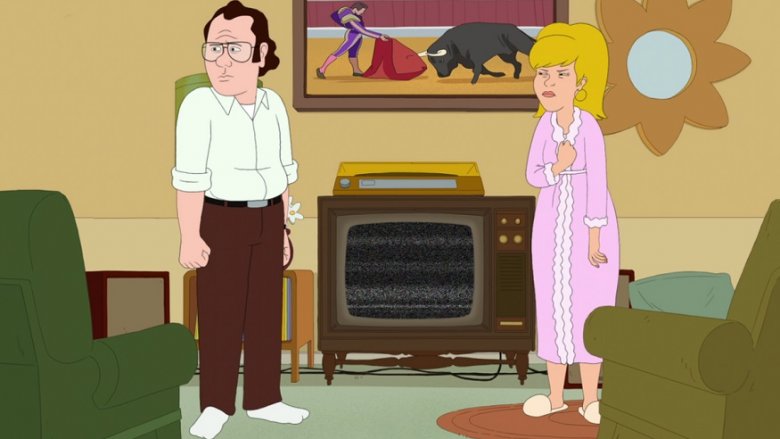
What would you say about a man who constantly yells, curses like a sailor on crack, and constantly threatens to put his kids through a wall? On the surface, it sounds like this guy has some serious anger issues. You would probably suspect there’s something wrong with him and that he needs help from a competent therapist.

Then, after you find out that man’s name is Frank Murphy from the animated show, “F is for Family,” you quickly realize that even the best therapist in the world couldn’t do squat for this man. His anger, cursing, and threats of intentional property damage are entirely understandable. In fact, he would need a therapist if he didn’t exhibit some level of anger.

That’s because Frank Murphy, along with every other major theme in “F is for Family,” is the personification of the disillusion of the American Dream. Take everything you think you know about what it means to work hard, get ahead, and achieve your goals in life. Then, kick it in the gut, spit on it, and throw it through a brick wall. That’s Frank Murphy’s life. That’s what “F is for Family” is all about.

I only recently discovered this show while browsing Netflix and I’m glad I did. “F is for Family” is one of those shows that takes an overdone concept, like a dysfunctional cartoon family, and injects it with some overdue nuance. This isn’t a show about a bumbling dad, a nagging mom, or mischievous kids. The issues and themes in “F is for Family” feel genuinely relevant to the current state of the world.

For a show that takes place in the 1970s, that’s quite an accomplishment. At the same time, it makes sense for this show to take place during that particular time period in America because that’s when the hopes, dreams, and optimism of the post-World War II economic boom began to falter. They just faltered a lot faster for Frank Murphy and his family.

In many respects, Frank’s short-tempered persona is a byproduct of that decline. Throughout the show, it’s clear that Frank underwent a significant transformation. He wasn’t always this rage-filled working stiff who jumps at any chance to cuss out anyone in close proximity. He was once an upbeat, optimistic man who reflected the spirit of his time and his country. This is even reflected in the show’s opening theme.

He starts off as an idealistic youth. Born in 1931, he enters adulthood just as his country returns victorious from World War II. Like others before him, he serves his country after getting drafted in the Korean War. He returns home somewhat scarred, but still optimistic about his future. In 1958, he has dreams of flying airplanes and marrying Sue, a young woman in college at the time.

By all accounts, Frank plays by the rules. He works hard and carries out his duty as well as anyone can expect. He’s not some thick-headed dope like Homer Simpson or Peter Griffin. He’s also not some misanthropic underachiever like Al Bundy. He can speak in complete sentences, form coherent thoughts, and demonstrate an average level of competence.

He is, for the most part, an appropriate representation of a working class man trying to provide for his family. The problem, and the frequent source of his anger, is that his efforts often go unrewarded and unappreciated. In some cases, he gets completely screwed over, both by forces beyond his control and by unexpected consequences from his behavior.

In the first season, he works hard and sucks up to his asshole boss, Lance Dunbarton, to get a promotion at the airport he works at as a baggage handler. He even manages to avert a strike on Christmas Eve. Rather than get rewarded for this effort, he gets fired.

In the second season, he gets a chance to return to work, but the way he confronts his former supervisor, Bob Pogo, ends up making his situation worse.

Along the way, Frank also attempts to deal with the constant dysfunction of his family, which includes a rebellious teenage son, a wimpy pre-teen son who gets bullied at every turn, and a young daughter who refuses to conform to traditional gender norms. On top of all that, his wife is dissatisfied with just being a housewife and her efforts to achieve her own dreams cause plenty of marital strife.

At every level, Frank Murphy’s life is not the at all consistent with what the American dream had promised. Instead of the white picket fence with a content wife and well-behaved kids, his life is a constantly-devolving mess. No matter how hard he works or how much he plays by the rules, nothing seems to improve. Things only ever get more frustrating. After only a few episodes, it’s easy to understand why Frank is so angry.

To some extent, Frank Murphy is a fitting personification of Murphy’s Law. That’s not to say that everything goes wrong for him all the time, but through three eventful seasons, his attempts to improve his lot in life never works out. For every step forward he takes, he suffers a major setback.

He finally gets his job back at the airport where he hopes to pursue his dream as a pilot. Then, he gets his wife pregnant and they have to put their dreams on hold again.

He tries to improve things with Sue by taking his wife out for a romantic evening on their anniversary, but ends up getting into a major fight that makes everything worse.

Even his family isn’t immune to this regressive trap. While Frank struggles to find a stable job, Sue attempts to enter the working world, only to have her dreams crushed when the company she works for steals her invention. On top of that, she works in an office where she’s constantly belittled, harassed, and demeaned by co-workers whose conduct makes Don Draper look like a hippie.

His rebellious son also has dreams of becoming a rock star, but ends up getting kicked out of his band after a breakdown involving his drug-loving neighbor’s busty girlfriend. In season 3, he tries to reinvent himself and he tries to find a sense of belonging with a new group of friends. The end result is him getting arrested and spending a night in jail.

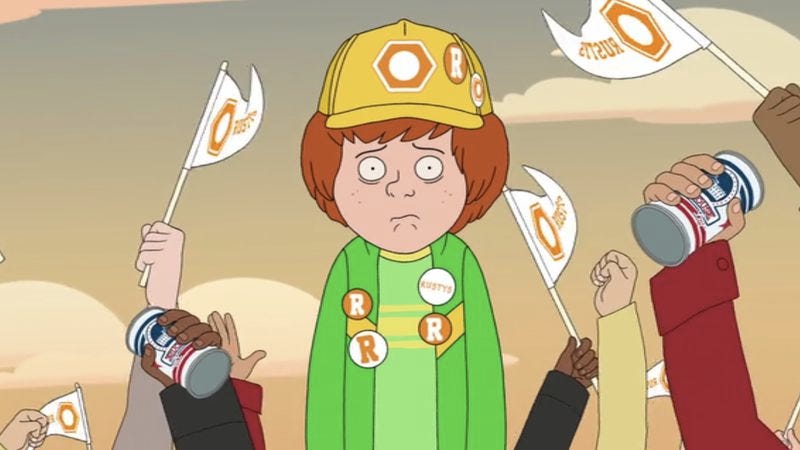
His youngest son, Bill Murphy, learns these harsh lessons even earlier than his father. He also tries to work hard and play by the rules. He tries to stand up for himself and confront the bully who torments him. Like his father, though, he ends up making things worse. I won’t get too deep into spoilers, but I will note that there’s some heavy arson and awkward boners involved.

Even his brainy daughter, Maureen, isn’t immune from it. Being a young girl in the early 1970s, her dreams are limited. Even when she aims low, like winning a ring toss contest on kids show, it still fails and through no fault of her own. Like her parents and brothers, the world seems determined to deny her any semblance of success.

If the essence of satire is to offer scathing criticism of a particular social construct, as those who edit Wikipedia imply, then “F is for Family” is a direct attack on the ideals and assumptions we associate with the American Dream. It never gets overly-nihilistic like “Rick and Morty” or “Bojack Horseman.” With every episode and sub-plot, it chips away at the foundation on which that dream is built.

It’s established throughout the show Frank and Sue were both in a position to achieve that dream. They were on a promising path with Sue being in college and Frank wanting to become a pilot. Even when they faced a major obstacle, namely Sue getting pregnant, they tried to do the right thing. They sacrificed for each other and their family.

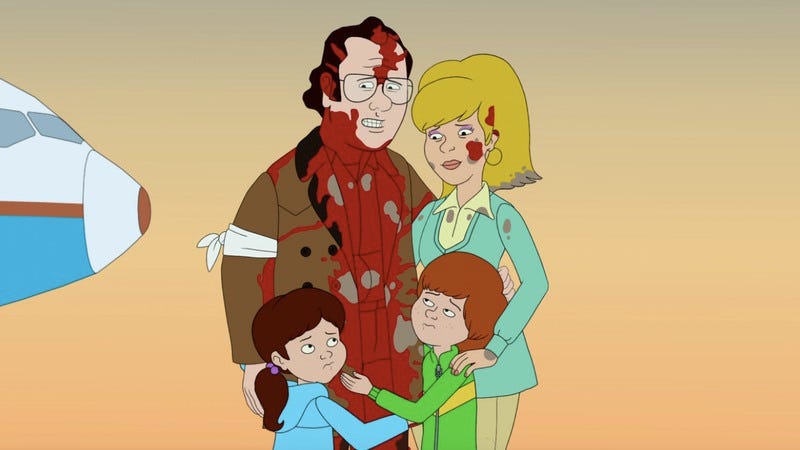
That’s NOT red paint.

In any other narrative, their responsible behavior would be rewarded. By the standards of the American Dream, they did the right thing. They got married and tried to provide for their family. However, despite those sacrifices, they’re repeatedly denied their dreams. At the end of the day, doing the right thing and playing by the rules just doesn’t cut it.

Frank watches as his obese, slob of a boss screws him over on Christmas Eve. Sue watches as the company that made her so miserable steals her idea and profits from it. Their kids watch as the world around them rewards and punishes those who don’t deserve it. The only ones who ever seem to benefit are those strong enough to skirt the rules or well-connected enough to bend them.

In that context, it’s fitting that “F is for Family” takes place in the 1970s. That marked the end of the post-World War II economic boom and the beginning of major economic decline from which working class people never recovered. The well-paying, blue-collar jobs that once allowed a man like Frank Murphy to support his family are long gone thanks to the rise of automation and globalization.

While the show never dives too deep into the complexities of this decline, it provides a great deal of crude tongue-in-cheek humor that reveals just how flawed the American Dream had become at that point. There are not-too-subtle jokes about women, minorities, family life, politics, and the media that highlight just how flawed the system is. Frank Murphy is just the guy who gets screwed more than most.

In the end, though, that’s what makes “F is for Family” the ultimate satire for the idealized narrative we associate with the American Dream. It shows that this notion that a hard-working, self-sacrificing working man who plays by the rules will achieve his dream is nothing more than a bad fairy tale. Frank does everything society expects a working class man to do and rewards him with jack squat.

Given everything he endures, from abandoning his dreams of becoming a pilot so he could provide for a family that rarely shows him any gratitude, I’ll rephrase the question I asked earlier. What would you say about a man like Frank Murphy, who played by the rules and bought into the American Dream, only to see it screw him over at every turn? Can you really blame him for being so angry?

4 Comments

Filed under gender issues, human nature, Marriage and Relationships, men's issues, political correctness, psychology, sex in media, television