
Tag Archives: lawyers

Why Americans Should NEVER Talk To The Police: A (Relevant) Legal Perspective

These are strange, distressing times for America. As an American myself, I’ve never been more concerned or pessimistic about the future of the country I love. There are many reasons for that. But rather than get overly political and go on another rant, I want to offer some important advice to any American who might find this.

Regardless of what you see in the news or in rage-baiting headlines, you still have rights under the Constitution.

The current people in power have shown time and again that they are very willing to undermine those rights. You cannot let them. As an American, it is your responsibility to protect and defend those rights. Believe it or not, you do have the law on your side, even if those enforcing it would have you believe otherwise.

To understand, I’d like to refer to an old YouTube video from 2012 that I often share with people who don’t understand the law, the Constitution, or rights in general. It’s a lecture from a former criminal defense attorney at a law school. He makes the case better than anyone before or since that you, an American citizen, should never under any circumstances talk to the police.

It doesn’t matter if you’re innocent. It doesn’t matter if you’ve never broken a single law in your entire life. Thanks to the Constitution, specifically the 5th Amendment, you have the right to not talk to the police. And you should use it. If you want to know why, just watch this video and share it with everyone you know.

Hopefully, you now understand and will act accordingly, should you ever encounter the police or any law enforcement official. There are plenty of other videos on YouTube that document police encounters. But this one is still the most informative from a purely legal perspective.

Also, I would supplement this video with a few other details that are worth mentioning. If the police ever knock on your door, don’t open it unless you have a screen door separating you and the officers. Unless they have a warrant, they cannot legally enter your home by force.

And if possible, record your encounter and let the officers know that you’re recording. It doesn’t matter if they have body cameras. Make sure you document every detail of the encounter. And make sure the video you’re recording is stored somewhere other than your phone. If you ever have any legal issues, that video will be instrumental.

Lastly, and this is something that I doubt the men in the video could’ve foreseen, but these rights apply to everyone in the United States, regardless of their citizenship status. It doesn’t matter what anyone in the reactionary media say. The language of the 14th amendment is very clear.

All persons born or naturalized in the United States, and subject to the jurisdiction thereof, are citizens of the United States and of the State wherein they reside. No State shall make or enforce any law which shall abridge the privileges or immunities of citizens of the United States; nor shall any State deprive any person of life, liberty, or property, without due process of law; nor deny to any person within its jurisdiction the equal protection of the laws.

Note the bold text. It says person and not citizen. Anyone who claims otherwise is an idiot, a liar, or both.

I really wish I didn’t have to make a post like this for my fellow Americans, as well as those aspiring to be American. But these are the times we currently live in. They suck. They’re probably going to get a hell of a lot worse. But at least for now, the Constitution says you have rights. And now, more than ever, you should cherish and defend them.
Leave a comment

Filed under Current Events, politics

Jack’s CreepyPastas: I’m A Lawyer For Damned Souls

This is a video from my YouTube channel, Jack’s World.

This video is a CreepyPasta story I wrote and narrated myself about lawyers who specialized in clients who are damned. Enjoy!

Leave a comment

Filed under CreepyPasta, horror, YouTube

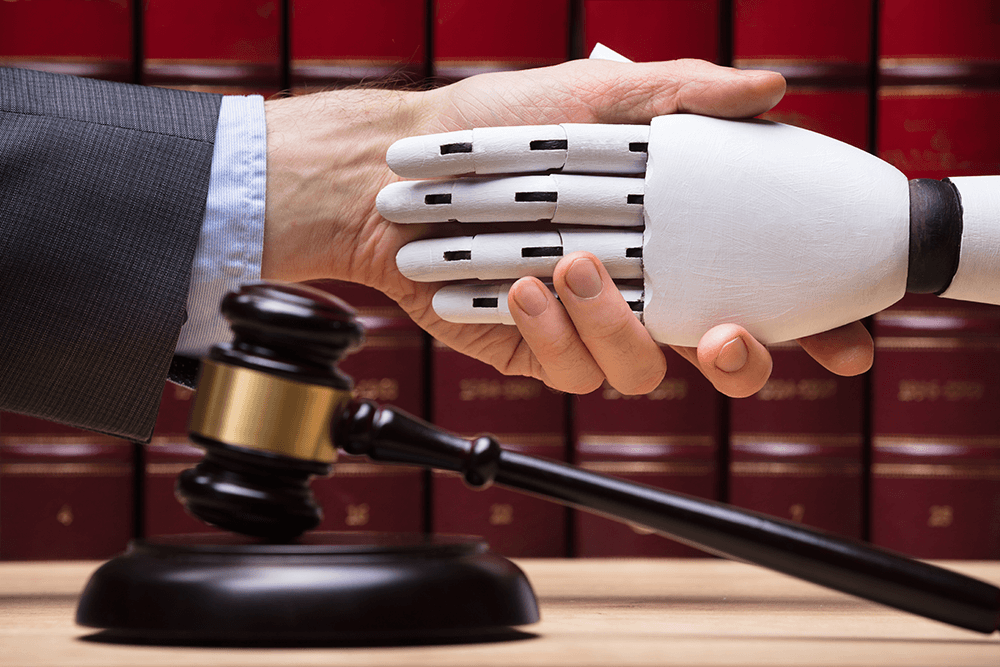
Artificial Intelligence Is Learning Law: Is Government Next?

It’s inevitable. As technology advances, certain industries are going to become obsolete. That’s why the horse-and-buggy industry is incredibly limited. It’s also why companies don’t make typewriters or LaserDisk movies anymore. Once better tech becomes available, an industry either adapts or disappears. Just ask Blockbuster.

Sometimes, it’s obvious that an industry is becoming obsolete. Again, just ask Blockbuster. As soon as something better, easier, and more convenient comes along, it’s only a matter of time before it takes over. However, it’s when things aren’t quite as obvious where more dramatic changes occur.

In terms of dramatic change, few things have the potential to generate more than artificial intelligence. I’ve highlighted that many times before, but a lot of that potential depends on advances that haven’t happened yet. They’re still likely to happen at some point, which may or may not be in my lifetime. They’re just not there yet.

That said, AI doesn’t have to become advanced on the level of Skynet or Hal 9000 to impact and/or disrupt major industries. The AI technology we have now is already having an impact. It may only be a narrow form of AI, which is AI that’s focused on performing a specific task, like playing chess. Its potential is still immense and some fields are feeling it more than others.

One industry that might feel it first is law. Now, at the risk of inspiring one too many lawyer jokes, I’m going to try and keep things general here. I’m also going to try and fit in some personal experience. I know some lawyers personally. I’ve been in law offices and I’ve seen how they work. You don’t have to be that much a visionary to understand how AI could change this industry entirely.

Recently, TechNews did a story on how artificial intelligence is learning basic legal operations and learning it quite well. Given the massive amounts of data and technicalities included in American law, a narrow AI is ideally suited to handle such tasks. However, I don’t think the piece fully grasps the implications.

TechNews: Lawyers Beware: Artificial Intelligence Is Learning Law – And Doing Frighteningly Well

AI or artificial intelligence is starting to find its footing in the legal field. The world is now on the brink of revolution in legal profession spearheaded with the extensive use of AI in the entire industry, specifically by the in-house lawyers.

Just like how email greatly changed the way people conduct their business on a daily basis, AI is also expected to become an ever-present force and an invaluable assistant to almost all lawyers.

But the million-dollar question now is, what does the future look like for AI as far as the legal industry is concerned? A much bigger question is, will AI soon replace real life lawyers?

These are not unreasonable questions. What will happen to the current legal industry if much of the legal grunt-work can be handled by an AI? What will happen to the industry when it’s no longer necessary to have a huge team of overpaid lawyers to conduct competent legal operations?

As someone who has been in his share of law offices, I can make a few educated guesses. I can easily imagine firms shrinking their office space, but expanding their operations. Most of the legal offices I’ve gone to dedicate 80 percent of their office space to storing documents and secure research material. Very little is left or necessary for the actual people doing the work.

The recent pandemic has only revealed that plenty of this work can be done form home or remotely. Some legal proceedings are even unfolding through Zoom calls, albeit with mixed results. It’s a step in that it undermines and disrupts the traditional model for handling the law. It also raises a much larger question that the TechNews article didn’t ask.

Once AI learns the law, then is learning government next?

It’s a natural progression. Governments make and administer laws. An AI that specializes in the law would also have to learn government, as well. A narrow AI might be able to process the general bureaucracy of a government, but what happens when those systems become more advanced?

I’m not just talking about a scenario where an AI becomes the government, which I’ve already speculated on. An AI that has perfect expertise in both law and government operations could have many less obvious effects. Inefficiencies that often go unnoticed in a bureaucracy are suddenly harder to overlook. Inconsistencies that rarely get fixed, due to that bureaucracy, can finally be remedied.

In theory, a sufficiently advanced AI, which need not be as intelligent as a human, could do more than just document legal and government proceedings. It could formulate new laws and policies on its own. Some may seem outrageous from a basic non-lawyer human perspective, but make perfect sense within a functioning legal system or government.

It may still seem like just another tool for lawyers to stay organized, but I think it could be more than that. If an AI makes both legal and government systems more efficient, then what will that mean for those in government? Would politicians be better able to implement their agenda if they have tools like AI at their disposal? Would that necessarily be a good thing?

This is where things get both tricky and political. No matter how confident you are in your political persuasions, the party you favor will not always be in power.

It may seem like politics is trending a certain way, but those trends change quickly. People who think their party is strong now can’t imagine a time when they’ll lose that strength. It happens regularly in any democracy.

Like it or not, your party will one day be out of power. When that happens, do you want the other party having a more efficient means of implementing their policies?

I’m sure everyone’s answer to that question will vary. What no one is certain of is how we’ll keep up with ever-improving AI systems, regardless of what industry they’re in. It’s one thing for a system to make it easier to stream movies or keep track of groceries. It’s quite another when it becomes intimately involved with our laws and our government.

The TechNews article expressed some concern, but only with respect to how it affects the current law industry. I believe AI, even if it’s focused only on law, will have a far larger impact. That’s not to say that AI will render law firms and governments obsolete.

If ever there was one domain in which foresight is critical, it’s this. Some industries can and should become obsolete. Others, like how we govern our society, need a more careful approach. We simply cannot afford our laws and our government to end up like Blockbuster.

3 Comments

Filed under Artificial Intelligence, Current Events, human nature, Neuralink, politics, technology