Tag Archives: Extraterrestrial

The James Webb Telescope MIGHT Have Discovered Extraterrestrial Life (And What It Could Mean For Humanity)

Even if you’re not an avid fan or regular consumer of science fiction, the prospect of discovering extraterrestrial life is intriguing. I believe that, on some level, we want to discover beyond any reasonable doubt that we’re not alone in the universe. Given the sheer size and breadth of the universe, the idea that we’re the only intelligent species just doesn’t sit well.

And it’s largely because of that same size and breadth that most scientists agree. The odds are very likely that there’s life in the universe beyond Earth. It’s not a total certainty. It’s largely derived from the law of averages. Since we started discovering extrasolar planets, the opportunities for life to emerge throughout the universe are vast. It’s just a matter of finding one other instance where the right circumstances were in place.

That effort has been frustrating and prone to plenty of cynicism. But thanks to better technology and tools, namely the James Webb Telescope, science finally has an effective means of studying extrasolar planets in greater detail. Given the vast distances, there’s an inherent challenge to gathering adequate data. But with each advancement and each discovery, we’re getting closer.

And in April 2025, the James Webb telescope discovered what might be the best evidence to date that life exists outside our planet. Granted, this evidence isn’t as cinematic as you’d get in a movie like “Contact.” But from a purely scientific standpoint, this is pretty damn compelling.

The planet in question is an explanet called K2-18b. It’s located approximately 124 light years from Earth, which is not that far in stellar terms. It’s also considerably bigger than Earth. In terms of mass, it’s over eight times larger and it orbits a red dwarf star, which are comparably smaller and cooler than our sun.

But it has been confirmed to be in the habitable zone of that star. It’s also suspected to be a hycean planet, which is basically an planet covered by oceans under a hydrogen atmosphere. Compared to any other planet in our solar system, this is truly an alien world.

And yet, the James Webb Telescope detected what appear to be chemical signatures for dimethyl sulphide and dimethyl disulphide, two chemicals only known to be produced by life. Now, that doesn’t mean that K2-18b is home to some advanced alien civilization. These chemicals are primarily produced by microbes. And at best, K2-18b could simply be an ocean world populated primarily by microbes.

Even if that ends up being the case, it’s still a remarkable discover. It’s still alien life that emerged entirely on another world. It would be definitive proof that life is not exclusive to Earth. And in terms of biological complexity, we are not alone.

Would this realization really shake humanity to its core?

Given the current state of the world, I think that’s expecting too much.

There’s no question that confirming that there’s life on another world would be an incredible discovery. It would definitely have some impact on how we see ourselves as a species. However, I think that impact would be very limited. Human beings barely understand the microbes that live in their gut or belly button. They probably wouldn’t give much thought to microbes on another planet.

It also wouldn’t confirm that there’s other intelligent life in the universe. It could very well be possible that microbial life is quite common in the universe. But intelligent life that’s on par or greater with humans is exceedingly rare or non-existant.

Personally, I don’t think that’s the case. I do believe there is intelligent extraterrestrial life in the universe. We just don’t have the tools, effort, or know-how to find it. Again, the universe is very big. We’ve barely searched our own galactic neighborhood, let alone the universe.

But discovering microbial life on another world might be a necessary step in that process. Simply confirming that life on other words is possible drastically increases the likelihood that intelligent life exists, as well. After all, Earth was once populated only by microbes. It took billions of years of evolution for humanity to evolve. And the universe has been around a lot longer than our solar system.

At the moment, this discovery hasn’t been confirmed. It may very well end up being wrong. But to date, this is the closest we’ve ever come to confirming life on other worlds. And even as our world feel like a chaotic mess, I think it provides a good and necessary perspective.

Leave a comment

Filed under Aliens, Current Events, technology

Why You Should Be (Very) Skeptical About Congress’ Sudden Interest In UFO/UAP Testimony

I’ve noted before that I used to be a big believer in UFO and UFO conspiracies. I’ve also made clear that I gradually came to realize that those beliefs were dead wrong. And I regret all the time I wasted and people I annoyed when talking about those beliefs. That’s not to disparage anyone who believes in UFO or UFO conspiracies. That was just my personal experience.

And it’s because of that experience that I have strong opinions about some of the recent claims that are coming out from a series of Congressional hearings, which include reports from an alleged whistleblower who flat out says the United States has recovered actual UFO’s and non-human intelligence. This is not a re-run of the “X-Files” or another episode of “Ancient Aliens.” These are real, official government hearings conducing real, serious inquiries about UFOs and aliens.

If this were happening years ago when I was still neck-deep in UFO lore, I would be excited and maybe a little scared. The idea that these beliefs I’d been exploring might be valid would’ve been overwhelming, to say the least. I even know a few people who are tracking this news closely, as if we’ll get confirmation any day now that we are not alone.

But this is where I’d like to take a step back and offer an important counter. I’m not out to be a downer or overly fatalistic. But as someone who once bought into this narrative, I like to think I understand where the UFO crowd is coming from. And I hope I can provide perspective to them, as well as those who are skeptical.

The first thing to note is that the hearings, as compelling as they’ve been, have not offered any genuinely tangible evidence of UFOs. It’s all just personal testimony and records of those who claim to have seen something unidentified. Yes, the fact that some of these testimonies come from trained pilots, soldiers, and people within the intelligence community is noteworthy. However, there’s one critical detail to keep in mind.

These are all still people.

These are all still human beings who eat, sleep, and poop like the rest of us.

That means they’re still prone to human error. And that, more than anything, is why everyone following this story should remain skeptical.

Now, that’s not to say that I think the people at these hearings are flat out lying. I also don’t think this is part of some elaborate misinformation or distraction orchestrated by the government to mislead the public so they can do something covert behind the scenes. I’m not saying the government would never do that. There is proven documentation that they have.

But something on par with involving intelligent extraterrestrial beings requires a level of competence that nobody should ascribe to any government. Again, the government is run by flawed, fallible people. Covering something up as tantalizing as real aliens would just be too much, even for the most competent human governments. Someone with connections, like Elon Musk, would’ve uncovered it and he would’ve tweeted it already.

That’s not just me speculating. Musk himself has flat out admitted this. That, alone, should give even the most ardent UFO enthusiasts pause.

Personally, I believe the individuals at these UFO hearings are telling the truth to some extent. They genuinely believe that they saw something not of this world. They generally believe they have evidence that real aliens exist and there’s proof on this planet right now. If you hooked them up to a lie detector, they’d pass with ease.

But that’s exactly why I think even more skepticism is warranted. It’s the fact that none of these individuals are crazy, ignorant, or unbalanced in some way. They’re serious, professional people making serious claims. But they’re still people and they’re still capable of misremembering and misunderstanding what they saw.

Like it or not, human memory and perceptions are not reliable. And if that’s the only thing coming out of these hearings, then it really is offering nothing that you can’t get from a episode of “Ancient Aliens.” Unless someone actually presents a tangible piece of UFO wreckage that can be held in someone’s hand, which could then be verified by others, these hearings are pointless.

At the end of the day, the only real conclusion you can draw from these hearings is that there are things flying around in the sky and in space that we can’t identify or understand. And that’s to be expected. The sky is big. Our senses are limited. But just because we can’t identify something doesn’t mean that there are intelligent aliens behind it. It would make just as much sense to assume every unidentified object in the sky is an angel, a fairy, or a time traveler.

Also, I’m of the opinion that if any government had any proof of alien visitations, it would’ve leaked long ago. We live in a world where everyone has a high-definition camera in their pocket and it’s easier than ever to share photos, videos, and media of all kinds. The fact that we don’t have that proof is as clear an indication as any that we don’t have it at the moment.

That’s not to say it doesn’t exist. I actually do believe there are intelligent alien civilizations in the universe. The sheer size of the universe is just too big for humanity to be the only ones. But I don’t believe there’s any proof that they’ve actually visited Earth or even have an interest in humanity. Maybe that proof will one day come, but it sure as hell won’t come out of government hearings. Of that, we can be certain.

Leave a comment

Filed under Current Events, rants

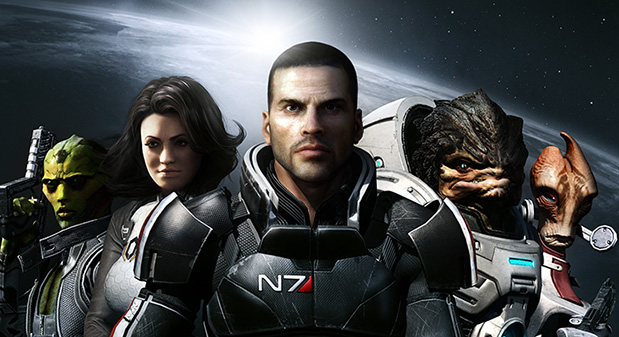
Why Intelligent Aliens May Destroy Us Even If They’re Peaceful (According To Mass Effect)

tuchanka_-_sabotaged_cure_wasteland_1

What would happen if we went back in time and gave the Genghis Khan nuclear weapons?

What  would happen if we went back even further and gave machine guns to the Ancient Romans?

Let’s be even more subtle. What do you think would happen if you gave Aristotle a functioning smartphone with a complete catalog of Wikipedia? How much would that change the course of history? More importantly, how much damage would it potentially incur?

I consider myself an optimist. I generally place more faith in humanity than most people in this age of fake news and heavy cynicism. I have my reasons for doing so, but even my confidence in the human species has limits. I trust most people to do the right thing every time I drive my car on the highway. That doesn’t mean I’d trust a caveman from 10,000 BC to drive a fully-loaded tank.

I make this point because these are legitimate concerns consider when assessing how humanity deals with emerging technology. We can barely handle some of the technology we already have. How will we handle things like advanced artificial intelligence, gene hacking, or advanced robotics?

I’ve stated before that the human race is not ready for advanced artificial intelligence in its current state. I’ve also stated that the human race isn’t ready for contact with an advanced alien species, either. I believe we’re close. We may even be ready within my lifetime. However, if aliens landed tomorrow and brought an advanced artificial intelligence with them, I think our civilization and our species would be in trouble.

I also think the human race would be in danger even if those same aliens were peaceful. Even if they brought a super-intelligent AI that was as compassionate and caring as Mr. Rogers, our species would still face an existential crisis. To explain why, I’ll need to revisit one of my favorite video games of all time, “Mass Effect.”

The various themes of this game, and the lore behind it, offer many insights into very relevant questions. In addition to the timeless hilarity of bad dancing skills, the game crafts a rich history between alien races like the Quarians and the Geth. That history reflected the dangers of mishandling advanced artificial intelligence, an issue humanity will have to deal with in the coming decades.

There is, however, another rich history between alien races within “Mass Effect” that offers a similar lesson. This one has less to do with artificial intelligence and more to do with what happens when a species technology that it’s not ready to handle. That danger is well-documented in the game through a hardy race of beings called the Krogan.

Like the Quarian/Geth conflict, the conflict surrounding Krogan has some real-world parallels. However, I would argue that their story Krogan is more relevant because it serves as a warning for what could happen when an advanced species uplifts one that is less advanced.

In the mythos of “Mass Effect,” the Krogan were once a primitive, but hardy species that evolved on the harsh world of Tuchanka. They’re reptilian, high-functioning predators in nature. They’re basically a cross between a velociraptor, a crocodile, and a primate. They have a tough, war-like culture, which is necessary on a world that contained hulking Thresher Maws.

They were not a species most would expect to develop advanced technology. Then, the Salarians came along. Unlike the Korgan, this amphibious alien race isn’t nearly as hardy, but is much more adept at developing advanced technology. In most circumstances, they wouldn’t have given the Krogan a second thought. Unfortunately, they were in the middle of the Rachni War and they needed help.

You don’t need to know the full details of that war. The most critical detail, as it relates to advancing an unprepared species, is how this war came to define the Krogan. Neither the Salarians nor the other alien races in the game could defeat the Rachni. In a fit of desperation, they uplifted the Krogan by giving them weapons and advanced knowledge.

In the short-term, the Salarians achieved what they’d hoped. The Krogan helped defeat the Rachni. In the long-term, however, it created another inter-stellar war in the Krogan Rebellions. Apparently, giving a hardy, war-like species advanced weapons doesn’t make them less war-like. It just gives them better tools with which to fight wars. That may sound obvious, but keep in mind, the Salarians were desperate.

The details of this war end up playing a major role in both “Mass Effect” and “Mass Effect 3.” That’s because to stop the Krogan, the Salarians resorted to another act of desperation. They crafted a biological weapon known as the genophage, which significantly curtailed the Krogan’s rapid breeding rate.

The damage this did to the Krogan race cannot be understated. Through the entire trilogy of “Mass Effect,” characters like Wrex and Eve describe how this destroyed Krogan society. In “Mass Effect 3,” Eve talks about how the genophage created massive piles of stillborn Krogan babies. That kind of imagery can haunt even the most battle-hardened species.

In the end, both the Salarians and the Krogan paid a huge price for giving technology to a species that wasn’t ready for it. Depending on the decision you make in “Mass Effect 3,” the Krogan species is doomed to extinction because of how ill-prepared they were. This haunted more than a few Salarians as well, one of which played a significant role in a memorable side-story in “Mass Effect 2.”

Regardless of how the game plays out, there’s an underlying message at the heart of the Salarian/Krogan dynamic. When a species is uplifted by another so abruptly, it’s difficult to see the long-term ramifications. Even though the Salarians were in a dire situation, they ended up creating one that had the potential to be much worse.

That danger is actually more pressing because, unlike advanced artificial intelligence, the act of uplifting a species effectively skips over the cultural and societal evolution that’s necessary to handle new technology. The Krogan never got a chance to go through that process before getting that technology. As a result, they became an existential threat to themselves and others.

The human race still has a long way to go before it creates the kind of artificial intelligence that would constitute such a threat. Aliens on the level of Salarians could land tomorrow and there would be nothing we could do to prepare ourselves. Whatever knowledge or technology we gained could do more than just upend human society. It could irreparably damage our species, as a whole.

Some of that outcome would depend on the intentions of the advanced alien race. It could be the case that they’re not like the Salarians and aren’t looking to enlist humanity in a war. It could also be the case that they’re smart enough to not give primitive humans advanced weapons. That could mitigate the risk.

However, that still assumes humans won’t find a way to use advanced knowledge to make weapons. When Otto Hahn discovered nuclear fission in 1938, he didn’t have any idea that it would be used to make a bomb that would kill go onto kill over 100,000 people. Even if advanced aliens are really smart, how could they be sure that humanity won’t use advanced knowledge to create something more horrific?

Sure, they could try to stop us, but that could only make things worse. The genophage wasn’t the Salarians’ first recourse. They actually went to war with the Krogan. They suffered heavy losses and so did the Krogan. In the long run, uplifting a less advanced species was detrimental to both of them.

That doesn’t just put the famous Fermi Paradox into a new context. It demonstrates a real, tangible threat associated with advancing a species before it’s ready. I would argue that the human race is close to that point, but we’re still not there. We have issues managing the technology we’ve created. There’s no way we can handle advanced alien technology at the moment.

Mass Effect,” in addition to being one of the greatest video games of the past two decades, offers many lessons for the future of humanity. It shows that humans are capable of great things. We have what it takes to join an entire galaxy full of advanced alien life. For our sake, and that of other advanced aliens, we cannot and should not rush it.

2 Comments

Filed under Aliens, futurism, human nature, Mass Effect, philosophy, psychology

Is The Human Race Ready For Contact With Alien Life?

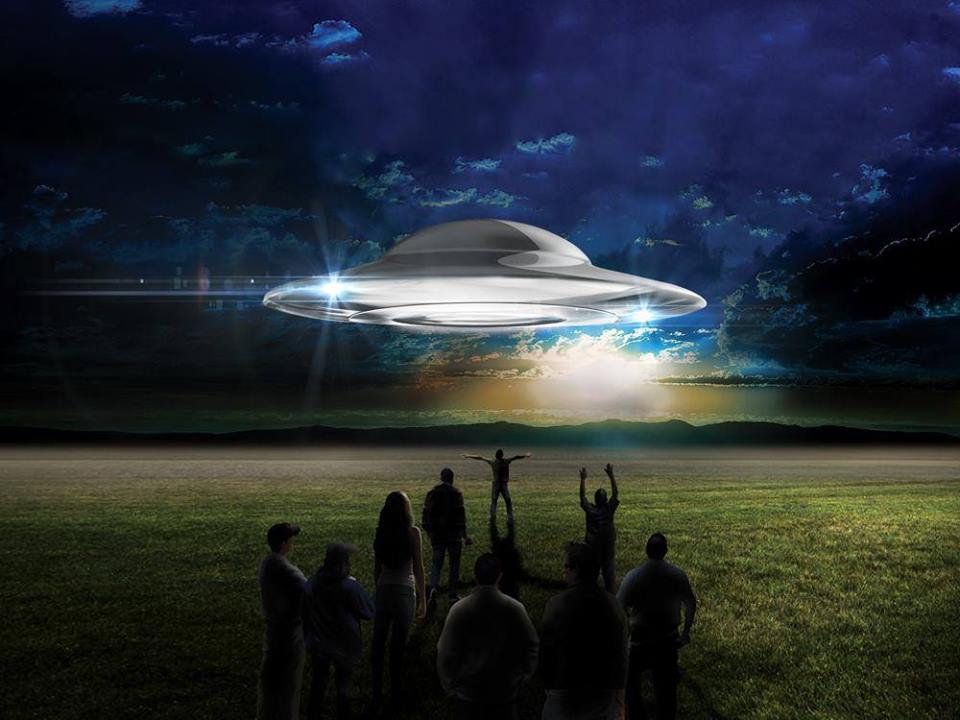
contactparty

In general, I tend to have a high opinion of the human race. I believe that, in general, people are inherently good and will do the right thing in the long run, even if it requires mistakes and missteps along the way. Some of my personal experiences have fed this belief, as well as stories of incredible acts of compassion.

I say that as a preface because my faith in humanity does have limits. There are certain issues where those limits become a critical factor in answering major questions about where we are, as a species, and where we’re heading. I’ve tried answering some of those questions before, such as humanity’s readiness for advanced artificial intelligence. Now, I want to try to answer another where I feel humanity’s limits are a real issue.

It has to do with whether or not humans are alone in the universe. It’s probably one of the most fundamental questions our species has ever asked, inspiring heated debates, famous equations, and Hollywood blockbusters. I’ve certainly asked that question a time or two when looking up at the stars. I imagine there are few people who haven’t.

At the moment, the sheer size of the universe and the ever-growing number of planets we keep finding, the raw numbers make it almost certain that there’s other life outside our planet. It may even be within our own solar system. Just finding some microbes on one of Jupiter’s moons would be pretty profound, but I doubt it would bring that much change to the human race. Some might just brush it off or call it fake news.

It’s the act of discovering intelligent extraterrestrial life that has far greater implications for humanity. I would even argue that those implications could determine whether the human race will survive beyond the destruction of Earth, which is inevitable. Even advanced artificial intelligence wouldn’t compare because at least humans would create that. An intelligent alien civilization would be much less predictable.

In confronting this existential issue, I don’t believe movies or TV shows have come close to getting it right. “Contact” made a commendable effort, but never gave more than a half-answer. Movies like “Independence Day” and “Close Encounters of the Third Kind” were overly simplistic in their approach. That’s to be expected because, logistically speaking, there’s no way to fit all the implications into a single two-hour movie.

I believe that to answer the question of humanity’s readiness to confront an extraterrestrial species is multi-faceted. There are plenty of factors to consider, but before I get too bogged down by the particulars, I want to offer my personal opinion on the issue. Then, I hope to demonstrate why I have this opinion.

No, the human race is NOT ready for contact with intelligent extraterrestrial aliens, but we’re getting there.

I know that isn’t a straightforward answer. It may sound like I’m trying to stand on both sides of the fence, but like I said, the question is inherently complex. As such, it’s hard to offer a simple answer.

Part of the complexity comes from circumstances. In an instance where scientists on Earth identify an advanced alien species, possibly by detecting an alien mega structure like a Dyson Sphere around a distant star, I think the human race could handle that, for the most part.

Such a discovery would be, by far, the greatest ever made in the history of humanity. It would be the story of the millennium and confirm, once and for all, the answer to one of the most fundamental questions our species has ever asked. Getting an answer to that question would change how we see ourselves in the universe, but the extent of the impact would be limited.

Sure, it might cause some disruptions with respect to major religions, although some denominations already preparing for that. It might also cause some ripples in the social fabric of society. If we know there are alien civilizations in the universe that are more advanced than us, then suddenly we have fewer excuses to impose petty divisions within our own species.

There would be upheaval. There would be tension, as well. I still believe that society would adapt in that scenario. Once the shock wears off, we may very well go back to how we were before. Future generations would just shrug off the notion that advanced aliens exist and focus primarily on the issues directly affecting them on Earth.

There’s another instance, however, that has far more profound implications, as well as greater danger. In that scenario, the advanced alien civilization contacts us directly. Moreover, it effectively announces that it’s coming to meet us and there’s nothing we can do to stop it.

In that scenario, I don’t think the current order will remain intact. If we found out tomorrow that intelligent aliens exist and they’re on their way to greet us, I believe that society, as we know it, will fall apart under the weight of fear, uncertainty, and outright dread.

My reasons for believing this have less to do with my faith in humanity and more to do with my understanding of basic human psychology. It’s proven science that the human psyche is adverse to uncertainty. From a purely survival standpoint, that makes sense. Not knowing whether there’s a hungry lion hiding in the bushes is detrimental to our survival. We have a legitimate evolutionary reason for avoiding such situations.

An advanced alien civilization isn’t just a possible threat. It’s the ultimate uncertainty. Even if those aliens are peace-loving hippies who want nothing more than to create a utopian world for every species they encounter, we won’t know for certain. Even if they try to articulate their peaceful intentions, we may not believe them because assuming wrong would be more dire than any hungry lion.

If an alien civilization is advanced enough to both contact us and traverse interstellar space, then it’s highly likely that we wouldn’t stand a chance at stopping them. Despite what “Independence Day” might have you believe, there’s just no way we would be able to counter technology that could carry another species across the stars.

On top of that, we wouldn’t even know if these aliens were biological creatures, like us. More than a few scientists have speculated that it’s the natural path of all advanced life that it transcend its biology to become machines in part or entirely, which makes sense for any species that wants to survive in the vacuum of space. I would agree that any initial encounter humans have with advanced aliens will come in the form of a probe.

Even if that probe is no bigger than a basketball, its arrival on Earth would trigger so much panic that our society, economy, and political institutions wouldn’t survive in their current form. That’s not to say civilization would completely collapse. Some areas might descend into anarchy, but most wealthy countries would remain intact.

However, I believe they’ll remain intact through strict martial law. I also believe that, in the face of incoming aliens, there would be a huge scramble among nations to put together some sort of defense plan. Anyone remotely experienced with science or engineering would suddenly become incredibly valuable for their skills and likely be required to work on this issue.

No matter what recourse humanity takes, though, I don’t think it’ll matter once intelligent aliens arrive. The worst case scenario is that people are so afraid that a few become too trigger happy and attempt to attack. In that case, if the advanced aliens are the vindictive type, they would probably wipe humanity out with the same ease that we would use to step on an ant.

While I don’t think that scenario is that likely, I can certainly see fear dominating the discourse. It would probably extend beyond the initial contact. Even if  the aliens present themselves as friendly visitors, I imagine there will still be plenty of paranoia that it could all be a trick. Given how eager some people are to embrace conspiracy theories, I think this will cause plenty of problem, even in the best case scenario.

There’s still a chance that the human race could adapt to this encounter and be stronger because of it. However, if I had to bet money on the ultimate outcome, I wouldn’t wager much on that outcome. I think, at the moment, it’s more likely that fear and uncertainty will lead to the kind of irrational behavior that would prevent humanity from benefiting from an encounter with intelligent aliens.

As it stands, humans can’t even prevent conflict when encountering one another, especially if they look and act differently. I can’t imagine it would be much better if we encountered a species that was so different that we just had no way of relating to them. At least with minorities here on Earth, we share the same basic human template. For all we know, aliens will look, think, and feel things that are beyond our abilities.

Now, I know that scenario sounds bleak, especially for someone who claims to have more faith in humanity than most. However, there’s one last caveat that further complicates the issue and it has to do with the last part of my answer.

When I stated that the human race is not ready to encounter an advanced alien species, I mean that within a specific context. In the same way I don’t believe humanity is ready for advanced AI at the moment, I don’t think the collective psyche of the human race is to a point where we can accept the idea of confronting an intelligent alien civilization.

That, I do think we’re more ready today than we were 30 years ago. Humanity has made remarkable progress with respect to technology, society, and general welfare. Being more connected through media, the internet, and globalization has helped us better see ourselves as one species, at least to the extent our inherent tribalism will allow.

I believe that in the coming decades, especially as we augment our brains and our bodies, we’ll be more prepared to encounter an extraterrestrial intelligence. I’m not sure we’ll ever be completely ready, but I do think we’ll get to a point where we, as a society, will be able to handle it.

Whether or not that point comes within my lifetime or that of the kids being born today is hard to say, but given enough time and continued progress, I believe we’ll get there. For now, though, the prospect of encountering an intelligent alien civilization would incur some pretty detrimental effects on our species and our world. Even if aliens come in peace, we just not be ready to accept it.

3 Comments

Filed under Aliens, human nature, media issues, philosophy, psychology