Tag Archives: Doomed Romance

Love Triangles and Why 95 Percent of them Suck

He loves her. She loves somebody else. That somebody else doesn’t love her back. Somebody’s heart gets broken. Somebody kisses somebody in some exceedingly overdue moment. We’re then left with an ending that satisfies some, outrages others, and confounds many.

I just described the most basic formula for a love triangle, also known as one of the oldest, most predictable tactics in all romantic narratives. It’s right up there with the classic will-they-or-won’t-they narrative that Ross and Rachel drew out for way too long over multiple seasons of Friends. As an aspiring writer who specializes in romance and erotica, I can’t ignore its presence so let’s talk about it.

First off, let me acknowledge that love triangles have their place in popular culture. I understand that they’re part of a tried and true formula in romance that goes back to a time when our ancestors were washing their hand in cow piss and calling it hygienic. They tap into a powerful set of emotions in all of us. Unless you’re born rich or have the body of Ryan Gosling, you know what it feels like to see someone you love choose someone else. That said, they can tap into more annoying emotions and that’s what I’m going to focus on.

As anyone who hasn’t slept through English class knows, love triangles have been part of some of the most iconic stories in history. The most famous is probably the one that plays out in the legends of King Arthur. That affair involved King Arthur, his wife Guenivere, and the perpetually friend-zoned Sir Lancelot. That love triangle is a small, but important component of that whole mythos and it did not take away from it in any way.

Flash forward 800 years, throw in reality TV and vampires, and the whole concept of the love triangle has been overdone, over-used, and twisted to a point where it’s more of an annoyance than a plot device. At its worst, it derails the larger story that’s supposed to be unfolding. We all know the kinds of stories I’m talking about here. Do I really need to remind anybody of this?

I’ll try to limit my references to vampires in this post, but they symbolize just how bad love triangles can get. From a writer’s perspective (and I am trying to be a writer, mind you), it often narrows the narrative considerably. It immediately ascribes roles to certain characters that limits their development. When a character’s sole purpose is defined by who they want to bone and who is standing in their way, that effectively overrides every other trait of that character.

It plays out in way too many ways in every kind of media. Characters like Spike in Buffy the Vampire Slayer dedicated 90 percent of their energy towards winning someone else’s heart. The same thing plays out in books like The Hunger Games, movies like Tron, and even video games like Final Fantasy. Think of any form of media, new or old. At some point in the past or at some point in the future, a love triangle will infect it and its characters.

This doesn’t even begin to touch on the extent to which love triangles permeate comic books. As some of you already know, I love comic books and I’ve crafted entire posts about them. If there’s one non-vampire medium that abuses love triangles more than most, it’s definitely comic books. I’d love to get into specifics, but rather than risk derailing this entire post into a personalized rant from a message board, I’ll save that for another discussion.

Why do these stories persist? Well, as I said earlier, they do tap into some very basic emotions that are fairly universal across cultures. With this appeal in mind, maybe we should ask another question. Why do these stories about love triangles have to be so god-awful?

The biggest problem, in my opinion, stems from another problem that seems to be ingrained in our culture to some extent. When we tell love stories, we have this ideal in mind. One person finds their absolute soul mate. That soul mate is 100 percent in love with them and returns 100 percent of their affections. That’s all well and good in terms of romance. I certainly have a soft spot for those kinds of fluffy romances. I think those of us without personality disorders all have some affinity for those kinds of stories.

It’s that same affinity, though, that makes love triangles so untenable. A love triangle is often used as an obstacle. It’s a wedge designed to prevent two lovers from coming together. It can make for a good story, but it also comes at the expense of another character along the way.

Sometimes that works because the character in question is a total asshole. There’s no effort to make Biff Tanner in Back to the Future on equal footing with George McFly. He’s supposed to be an asshole. The problem comes when we want that character to develop dimensions other than being an asshole and that can be a problem.

The way a love triangle works essentially makes it so there’s always one character that gets screwed over and not in a good way. Someone is going to have their heart broken. Someone is going to come off as the loser and the bad guy. In some cases, as we see in Back to the Future, it works out in a way that’s satisfying. In others, especially in vampire-themed stories, it turns the character in to a sacrificial lamb of sorts. It means they never get a chance to stand on their own and show that they have worth.

I find that kind of approach troubling because it throws away opportunities to create quality characters. It also ensures that the character that loses is going to be flat, boring, and dull. If it’s a male character, he’s some sort of bad boy, Dirty Harry wannabe who just needs the right nudge to being a full-blown asshole. If it’s a female character, she’s some sort of Mean Girls uber-bitch who generates as much sympathy as a hungry shark.

That makes the outcome of the love triangle fairly predictable. Before it even has a chance to get sexy, we already have a pretty good idea of how it’s going to play out. The nice guy/nice girl is going to win. That’s all well and good in that it plays into our innate sense of justice, but it doesn’t make for very good stories.

It’s for this reason that I’ve generally tried to avoid using love triangles in my books. The closest I ever came was “Skin Deep” and even in that, I made a concerted effort to give each side sufficient depth. I’ll let those who take the time to read the book to decide whether I did a good enough job, but I think love triangles in general need to be either retired or overhauled.

How do we go about that? Well, I have a few ideas. I’m not going to share them just yet because I want to turn them into books first. I believe this is an idea that can sell if done right. If I can’t sell it, then I hope others figure out a way as well. A bad love triangle is the easiest way to turn quality characters into trophies/obstacles. It turns women into prizes to be won, men into powerless tools of their passions, and everyone else into overly emotional vampires. I think we can do better.

15 Comments

Filed under Jack Fisher's Insights, Uncategorized

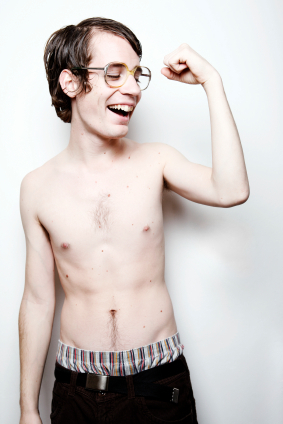
The Rise (and Necessary Fall) of the Beta Male

Over the course of the past couple decades, which are the primary decades in which I’ve lived my adult life, I’ve noticed a trend in popular culture. I think others have noticed it as well. I see it in novels, TV shows, cartoons, comics, and movies. It doesn’t matter if the themes are erotic or romantic. It shows up everywhere. More specifically, they show up everywhere. Who are they? I’m talking about beta males.

Let’s face it. Whether we admit it or not, we all know the traits of an alpha male. We know because those traits show up in pretty much every story that needs a villain. They’re aggressive, tough, angry, mean, self-centered, self-absorbed, and self-centered. They are bullies, plain and simple. Look at Biff Tanner from the “Back to the Future” movies. He’s basically the template of the alpha male.

Why is this an issue? It’s simple. We hate the alpha male. More often than not, he is the least likable character in a story. Never mind that these are traits associated only with men and never women. They are the enemies. They are the villains. They are the ones we’re supposed to root against, even if they’re the ones we turn to for protection and strength in the real world.

Enter the beta male, the lovable underdog who is everything the alpha male is not. He’s sweet, he’s sensitive, he’s caring, and above all, he’s emphatic. In other words, he’s basically a stereotypical woman.

In many respects, he’s an affront to both men and women. He is the antithesis of masculinity and symbolic of all the weaker traits we associate with women. It’s almost as if popular culture can’t stand the idea of men being tough without being assholes. It demeans both genders when you think about it.

So how did we get here? Well, that’s hard to say and probably something that requires multiple blog posts. I suspect it comes from our innate desire to root for the underdog or the unspoken acknowledgment that most men don’t possess the traits of an alpha male, which in turn makes us jealous. I can look into that later. For now, I’m talking about the beta male and why he matters.

There’s no dictionary definition for a beta male. We define him basically as what an alpha male is not. That’s not a good definition, defining something solely by what it isn’t. Urban Dictionary isn’t exactly a definitive site, but it does offer some interesting takes.

An unremarkable, careful man who avoids risk and confrontation. Beta males lack the physical presence, charisma and confidence of the Alpha male.

That’s a short and simple definition. Then, there are those favored by radical feminist and extremely liberal types.

A man who is content with nontraditional gender roles; i.e., he is not threatened by intelligent and/or powerful women, and he does not have to be in control of every situation to maintain his sense of self. (Frequently, he does manifest a quiet kind of confidence and control over his surroundings, but it’s not important to him that this is noticed by others.)

A beta male is often introverted, intelligent, and introspective. Though he may have been branded a “nerd” growing up, the adult beta is frequently a thoughtful, capable, and fascinating individual whom many women find appealing.

Then, there’s the opposite side of that coin.

To be a bitch like male.

In many respects, the beta male embodies the agenda of whatever someone or some line of thinking wants. If feminists want the beta male to be their ideal template for men, then that’s what he’ll be. If liberals want the beta male to be the superior, enlightened, understanding men who embody their ideals, that’s what he’ll be. The beta male is basically the universal tool for those looking to play into stereotypes for their protagonists.

There are already plenty of them. There’s Ross from “Friends.” There’s George from “Seinfeld.” There’s Peter Parker from “Spider-Man.” There’s the entire cast of “The Big Bang Theory.” There are even movies built entirely around this concept, my personal favorite being “She’s Out of My League.”

In every case, the story is the same. The weaker beta male is the underdog who never gets a break. Then, through some magical thinking and obscene luck, they win the day against the odds. It can be a good story and it makes for a nice fantasy, but that is what it is at the end of the day: a fantasy.

In real life, we don’t want beta males running everything. We don’t want beta males being our police officers, our fire fighters, or our star athletes. We want alpha males for those jobs.

When we look for a spouse or a lover, we tend not to favor those who we constantly have to coddle and protect. We want someone who will at least be our equal. We want someone who makes us stronger or at least can stand by our side on the same playing field.

So in a sense, our sentiment towards the beta male is downright schizophrenic. We love them in movie, but we discount them in real life. In real life, we see alpha males still dominating in terms of success. They get more attention, more sex, and more opportunity. Can this kind of discrepancy last? I say it can’t.

Reality, being the frustrating force that it is, tends to chip away at false fantasies in the long run. The cult of the beta male cannot last. There are only so many times we can watch Peter Parker get dumped or Ross from “Friends” get rejected. At some point, it stops being entertaining and we seek something else.

I say this as someone who has, to an extent, used beta male characteristics in my own stories. My book, “Skin Deep,” gives the main protagonist, Ben Prescott, a few beta male traits. It also gives his main rival, Zachery Crenshaw, a number of stereotypical alpha male traits. In this story, I stop short of making them too flat. I do make a conscious effort to balance them out. I like to think I succeed more than a typical episode of “The Big Bang Theory.” However, it’s a skill I’m still trying to refine.

In my other stories, I try to avoid too many beta males. I’ve actually noticed that erotic fiction in general tends to avoid beta males. Even in BDSM stories, they favor alpha male traits for both men and women alike. The success of “50 Shades of Grey” is a sign that there is a market for these kinds of characters. I hope to contribute to that market with future books, as well as my current books.

So for those who are as sick of beta males as me, check out my books or look back on the beta males in previous stories. Yes, that’s a shameless promotion of my own work. Yes, it’s entirely self-serving. However, it’s not something you’d expect of a beta male, would you? I rest my case.

8 Comments

Filed under gender issues, Jack Fisher's Insights, sex in media, sex in society, Uncategorized

Anatomy of Doomed Romances

I’ve talked about the right and wrong ways to explore sexuality and BDSM on this blog. I’ve talked about the potential benefits and insights that alternative concepts of sexuality may bring. However, there’s another side of that coin that’s worth talking about and, given that my work involves both erotic and romantic elements, it’s something that needs to be touched on.

A lot of my books have heavy romantic elements. At their core, books like “Skin Deep,” “Child of Orcus,” and even the aptly titled “The Escort and the Gigolo” are love stories. A big part of the story involves two characters coming together in a meaningful way. For the most part, I try to make this journey compelling, as well as sexy. I try to avoid typical Disney cliches. We all know them when we see them. It’s a “love at first sight” or a “forbidden love they can’t have.” Those make for tantalizing possibilities, but do they really make for healthy relationships?

It’s an important question to ask because some of these stories fail to acknowledge the flaws in those relationships. Make no mistake. Those flaws are there. The concept of “love at first sight” is sweet and all, but it’s barely the first step to a meaningful relationship and not taking more steps can undermine both the story and the relationship as a whole.

This isn’t a new issue either. Doomed romances are a big part of literature, going back to the days of the ancients. There’s an undeniable appeal to them, albeit one that reflects a crass understanding of love and meaningful relationships. Paste Magazine even made a list a few years back that highlights some of the most notable. I don’t think their choices will surprise anybody.

8 Epically Doomed Relationships in Literature

That’s one kind of doomed relationship. Most won’t argue the premise. Then, there are the doom relationships explored by Cracked.com in an article that may surprise some. Being a humor website full of dirty jokes, they took a more crass look at certain iconic romances. As is often the case, a crass gaze reveals an unexpected insight.

5 Movie Romances That Won’t Last According To Science

Some of the romances on this list are sure to make a certain subset of fans tense, but sometimes science and reality can be just that harsh. We tend to forget that relationships founded on excessive sacrifice or two people from different words, such as Han Solo and Princess Leia or John Bender and Clair Sandish, have more obstacles to overcome than most. By and large, those obstacles can be pretty detrimental. They’re not impossible to overcome, but the stories rarely explore this. It’s almost always just about how they come together. Then, the credits roll and we’re all left to fill in the blanks.

I understand why that happens. Exploring the intricacies of how relationships blossom and flourish is rarely as interesting as the process of coming together. I’m guilty of that as well in some of my stories. My book, “The Final Communion,” is the best example of that. At the same time, the concept of doomed romances provides an important context to developing romance as a whole. It’s a context I hope to keep in mind as I explore new stories. “The Big Game” doesn’t have heavy romantic elements, but some of the other books I have in mind will. Whatever comes of them, I hope I can show that there is a place for more meaningful romance that won’t feel so doomed in the end.

2 Comments

Filed under Jack Fisher's Insights, Uncategorized