
He’s back! AI Jay Sherman is still at it. While “The Critic” may have been cancelled decades ago, AI is keeping his spirit and trademark snark alive. So today, I had him review another movie. This time, he reviews James Cameron’s Avatar. It’s one of the highest grossing movies of all time. Now, let’s see AI Jay tear it to shreds on TikTok. Enjoy!
Tag Archives: Artificial Intelligence
AI Jay Sherman Reviews James Cameron’s “Avatar” On TikTok
Filed under AI Art, Artificial Intelligence, television
AI Jay Sherman Reviews “The Minecraft Movie” On TikTok
Recently, while dealing with the drama surrounding my YouTube channel, I decided to explore some other creative endeavors. One idea that I’ve been contemplating recently has to do with TikTok. There are certain ideas I’ve had that just wouldn’t work on YouTube, either due to format or content. But I thought one idea might work well with Tiktok’s format.
It has to do with AI and one of my favorite shows of all time, “The Critic.” I’ve been experimenting a bit with AI on numerous endeavors. But I wasn’t sure if there was anything worth refining into an actual video. Then, I discovered some AI tools that allowed me to mimic the voice of Jay Sherman himself. And since we may never get more content from “The Critic,” I figured why not use AI to keep the spirit of Jay alive?
So, with the help of AI, I created my first TikTok of an AI version of Jay Sherman reviewing the Minecraft Movie. It’s a new and different kind of content. But let me know what you all think.
Is this something you’d be interested in seeing more of? Is there a movie you think AI Jay should review? I’m very interested to know everyone’s thoughts here.
Filed under AI Art, Artificial Intelligence, television
We’re Testing AI By Having It Play Pokémon (And I’m All For It)
Years ago, I found myself caught up in the first Pokémon craze. And I am not ashamed to admit that I fueled that craze in my own special way.
For a couple of years, I put played the game for hours on end on my Gameboy, so much so that I would buy packs of AA batteries to ensure I never ran out. I was not just content with beating the game. I wasn’t even content trying to “catch ’em all.” From red to blue to yellow to silver to gold, I wanted to master every last bit of those games.
Even after all these years, I regret nothing. Those were hours well spent.
But I’m not just bringing up Pokémon for the sake of nostalgia. Recently, it became relevant for an unexpected, but intriguing reason. And it has to do with artificial intelligence.
I know AI has been in the news a lot in recent years, for better and for worse. But it’s definitely newsworthy because this technology is advancing at an incredible pace. It’s no longer this novelty gizmo that can win at games like chess, Go, or pong. Even if it doesn’t have human level intelligence, AI is changing the world. And the pace of that change is likely to accelerate.
It’s now at a point where gauging the advancing capabilities of AI is increasingly difficult. For years, the Turing Test was considered the primary means of testing an AI. But even that has proven limited and incomplete.
That’s where Pokémon comes in. I know that sounds like a weird segway, but it’s actually appropriate. I would even argue that this is a better way to measure the capabilities of an AI.
At this very moment, an AI model called Claude is being tasked with playing the classic version of Pokémon Red. There are even occasional livestreams of it. Having played that game multiple times and beaten it in every way possible, I am genuinely in favor of this. The fact that Claude has been struggling to beat this game, sometimes in hilarious ways, only proves that test has merit.
That’s because Pokémon, as a game, is very different from other games that AI has played. It’s not linear in that the point is to get a character from Point A to Point B, like in Mario, Metroid, or Donkey Kong. It also doesn’t have straightforward rules like Jeopardy, Go, or chess. Pokémon games are a lot more open ended. They’re also a lot more random.
There’s no one way to assemble, train, and develop a team of Pokémon that help you beat every gym and defeat the Elite 4. There are also multiple options on how to start the game. Your first choice is to pick a starter Pokémon in Squirtle, Charmander, or Bulbasaur.
From there, you deal with numerous random encounters in certain areas. And if you try rushing into a match against a gym leader or Team Rocket, you’re likely to lose, even if you use perfect strategy.
It’s also not enough to simply know the map and understand where everything is located. It also takes a measure of planning, patience, and resource management. You need to know which Pokémon to train, which skills to teach, and which matchups are most advantageous.
These are all capabilities that AI has not developed beyond a certain point. There’s a complexity to the game and its mechanics that it has yet to grasp. It shows in just how much the AI has struggled thus far. As I’m writing this, no AI has been able to beat Pokemon in terms of defeating the Elite Four. At times, it has even gotten completely stuck.
That doesn’t mean the AI is a failure or in some ways flawed. It just means that it’s incomplete. It’s not yet at a level where it can process tasks of a certain scope and compelxity. It’s like a child that has learned to walk, but can’t run at a sustained pace. That’s likely to change and change quickly. It’s only a matter of time before an AI like Claude finally beats Pokemon. But after that, what next?
That’s a difficult question to answer at the moment. There are plenty of other games out there that have more compelx mechancis than classic versions of Pokemon. But at some point, playing games just isn’t going to be enough for an AI. Even if it gets to a point where it can beat any video game, that doesn’t mean we’ve achieved a superhuman level of AI. It just means we’ve got an AI that is capable of more complex tasks.
That has many possibilities and implications. But for now, we can only speculate. In the meantime, we can also watch as our best AI tries to catch ’em all. Some might be cheering for it. Others may hope it keeps failing. We don’t yet know when or whether an AI will achieve the coveted title of Pokemon Master. But if it ever does, then chances are it’ll be ready to become a master at many other challenges.
Filed under Artificial Intelligence, video games
Why People (Wrongly) Claim AI Art Is “Soulless”
This is a video from my YouTube channel, Jack’s World.
There have been many concerns and criticisms regarding artificial intelligence. One area that has been impacted more than most involves art.
Generative AI has caused serious disruptions to the world of art. And in 2025, this became a much larger controversy with “Ghiblification” trend that began with Open AI. This has led to more vocal criticisms about AI art being “soulless” in nature.
However, that criticism is worth scrutinizing. And in this video, I attempt to offer what I feel is a more balanced perspective on this issue. Enjoy!
Filed under AI Art, Artificial Intelligence, Jack's World, technology, YouTube
Japan Is Launching An AI Dating App (And Why It’s A Good Idea)

Back in 2017, I posed a question that I didn’t think would be answered for decades. I asked whether anyone would allow an artificial intelligence program to pick their spouse. Now, this was several years before ChatGPT came out. Like most everyone else, I had no idea that artificial intelligence was going to become mainstream in less than a decade.
There’s no question that a lot has happened in that span, so much so that it’s now a half-a-trillion dollar industry. This is no longer some futuristic sci-fi technology that most people alive today won’t see. AI is already here. If you have an internet connection, you can use it right now. Even if our best AI systems aren’t at human-level intelligence, that doesn’t mean they aren’t useful. Entire industries have emerged in recent years that either utilize or rely on AI.
But when it comes to our love life, I think the application of AI is inevitable. When I first asked the question, I made the point that AI has the benefit of analyzing data about people in a way that’s more objective and less prone to emotional manipulation. And in theory, more advanced AI systems can also account for someone’s emotional health when determining who is their ideal romantic partner.
I expected someone to come along and use AI for this purpose sooner or later. Well, it ended up being much sooner than expected.
Because the Tokyo government in Japan is officially launching a dating app that will utilize AI to help people find romantic partners. Now, make no mistake. This is not some overhyped tech startup or some online gimmick. This effort is a non-profit public initiative. Signing up is free, but users have to register, provide government identification, verify their income, and establish clearly that they are indeed single.
These steps aren’t just necessary for the sake of providing adequate data for the AI. This makes clear that the goal of this app isn’t to facilitate random hookups or provide a platform for porn stars to advertise their OnlyFans page. The goal is to actually help people get together, get married, and start families.
And for Japan, and many other industrialized countries, that’s an increasingly urgent issue. Marriage rates have been declining in Japan for years, along with birthrates. This has led to a serious demographic problem in which the population of Japan is declining and young people have shown little interest in dating.
The reasons for this trend are many. Between Japan’s insanely demanding work culture and gender politics, dating in the classical sense has become unfeasible. The effort it takes to find someone and date them just isn’t feasible for many young Japanese. But this is where AI can help.
So long as the AI has adequate data, it can factor in all of someone’s quirks, habits, personalities, and desires when matching them with someone else. While it’s doubtful any AI for any dating app has that kind of data at the moment, the incentives for Japan are actually what makes this a good idea. And if it has any measure of success, it would definitely be worth pursuing for other countries.
I’m comfortable saying this because I’ve used dating apps before. I know for a fact that they’re not designed to help people find their future spouse. Beyond having a massive gender imbalance that tends to favor women, the incentives for every dating service ensues they’ll never be good at helping people find love, even if they use advanced AI.
That’s because most every dating app relies on its users paying regular membership fees to turn a profit. And if the app works too well in that it helps people find that special someone, then those people have no reason to keep paying for a subscription. That’s why so many dating apps either become a mechanism for hook-ups or just a way to advertise porn sites.
Japan is taking those incentives out of the equation by making it a government run, not-for-profit enterprise. They’re not charging money. They’re charging time, information, and your personal energy. That helps ensure that the people who join this app actually want to find a good relationship. They provide the data. The AI provides the possible romantic connections.
Now, there’s no guarantee that the AI will be perfect at helping its users find their future spouse. In fact, I think there will be some growing pains with this dating service. Even if it attracts a large number of users, it’s going to need development, investment, and refinement.
But, like every new endeavor, it has to start somewhere. I think the early results for a non-profit AI dating app like this are certain to be mixed, at best. But if it starts working and there’s good research to back it up, then other countries facing similar problems would be wise to take notice.
And who knows? Maybe one day, an app like this will help me find my future wife.
Only time will tell.
Filed under Artificial Intelligence, futurism, romance
Why AI SHOULD Replace Most CEOs
This is a video from my YouTube channel, Jack’s World.
In this video, I make the case that, of all the jobs artificial intelligence could replace, CEO should be at the top of that list. In recent years, CEOs in general have generated headlines for all the wrong reasons. With the ongoing advancements in AI, this is one job for which we should be actively trying to remove human flaws.
Filed under Artificial Intelligence, Jack's World, television, YouTube
Thought Experiment: What Is The Endgame For Human Civilization?
This is a video from my YouTube channel, Jack’s World.
This video is another thought experiment that contemplates where human civilization is heading and where it will ultimately end up. Humanity, as a whole, has undergone many upheavals, collapses, and advancements over the centuries. But as far as we’ve come, there’s still so much farther we have to go. That raises the question.
What’s the endgame?
What is human civilization’s ultimate form?
try to explore that with this thought experiment.
Filed under Artificial Intelligence, biotechnology, futurism, Jack's World, YouTube
Terminator Zero: New Fate And Renewed Hope
This is a video from my YouTube channel, Jack’s World.
It’s been a long time since Terminator fans had a reason get to excited. But with the release of Terminator Zero on Netflix, the fate of this franchise has promise. The story of Sarah and John Connor is in the past. Through this series, a new future and a new war against Skynet has begun. And I couldn’t be more thrilled with the possibilities. Enjoy!
Filed under futurism, television
Happy (Terminator) Judgement Day!
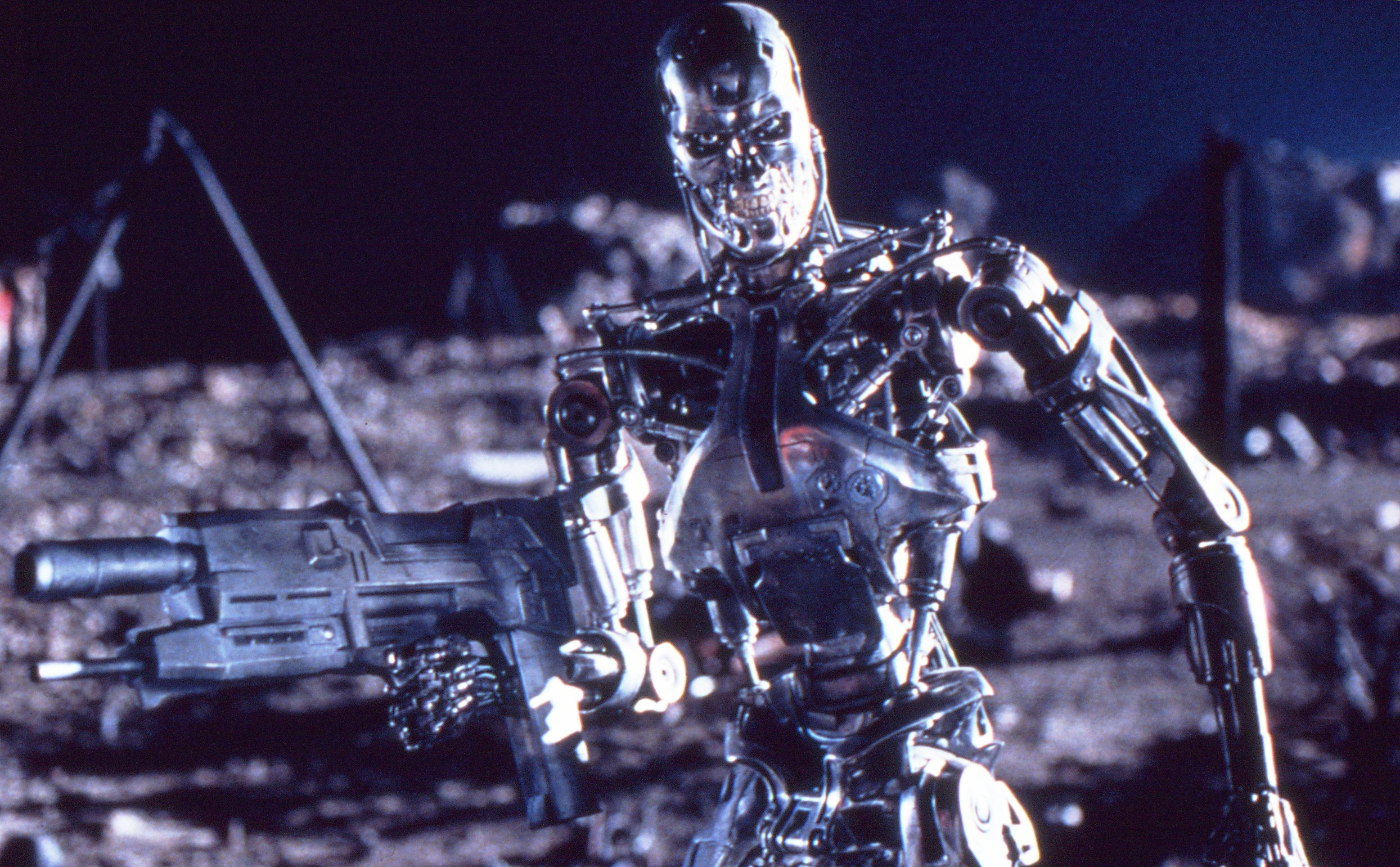
Today is August 29, 2024.
Officially, it’s just an ordinary day. It has no historical or legal significance of any kind.
But if you happen to be a serious movie buff, or a big fan of the Terminator franchise, it is the official canon date of Judgement Day. According to the events documented in “Terminator 2, Judgement Day,” Skynet became self-aware at 2:14 a.m., Eastern Standard Time, on August 29, 1997. Shortly afterwards, it launched a full-scale war on the whole of humanity.
While it is true that this date has fluctuated over the years due to numerous time travel anomalies and sub-par sequels, the August 29, 1997, date tends to be the most well-known and accepted. And in recent years, I think that date has become even more noteworthy and not just because it celebrates the greatest action movie of all time.
In recent years, artificial intelligence has emerged as something far greater than a standard movie trope. It is now a rapidly growing field, as well a multi-billion-dollar industry. I’ve discussed the possibilities in the past and tried to put more recent advancements like ChatGPT into a proper context. But even I have been astonished at how quickly artificial intelligence has gone from an intriguing possibility to something that’s very real.
At this very moment, anyone with an internet connection can utilize what is essentially a limited AI for various tasks in a manner that would’ve seemed like a futuristic dream less than 10 years ago. It’s very likely that in the next 10 years, AI will advance in plenty of other ways, some which we can’t possibly predict.
But these AI systems are nothing like Skynet. They’re very narrow in terms of their scope and capabilities. They’re not going to become self-aware or gain human-level intelligence. But make no mistake. At some point, we will have an AI that is as smart as an average human, if not smarter. This is not a technological feat that requires a huge breakthrough that defies or redefines physics. It’s largely an engineering and logistical challenge.
Whether it happens next year or several decades from now, it will happen. We will eventually create an AI that’s as capable and self-aware as Skynet. At that point, what happens next has been a huge point of contention and speculation.
Unless someone is stupid enough to give this future AI access to a nuclear weapons system, I don’t see it launching a full-scale nuclear war like Skynet did. Even if it wanted to, I doubt it would be given that level of access. That doesn’t mean it’ll be friendly. The first self-aware AI may very well be hostile in that it sees humanity as a threat. If it does choose to pursue conflict with us, that could result in some truly unprecedented dangers.
It’s unlikely it will manifest like the war we saw unfold in multiple Terminator movies. It’s also unlikely it’ll operate in any body that resembles Arnold Schwarzenegger. Whatever form it does ultimately take, it will still likely mark a turning point for technology and human history, as a whole.
Whether we call it Judgement Day, the technological singularity, Doomsday, or just another day that ends in Y, it’s a date we should take seriously. Because with all technology, there are risks and benefits. There are also best-case scenarios to go along with the worst case. “Terminator 2, Judgement Day” offered us a cinematic experience of how bad it can get if AI becomes hostile.
But we also shouldn’t let that obscure how good it could potentially be if utilized properly. I would even argue that, as the world continues to face unprecedented dangers and uncertainty, we need to advance AI. It might very well be our most important tool in solving critical issues having to do with climate change, medicine, ecological destruction, power generation, and surviving the eventual destruction of our planet.
As such, we should continue to proceed carefully. We should remain cautious as we journey into the future. As Sarah Conner once said, there is no fate but what we make. And when it comes to developing an AI that will eventually become self-aware, let’s make that fate a good one for everyone, be that human or machine.
Filed under Artificial Intelligence, ChatGPT, technology


 Jack Fisher's Official Publishing Blog