
This is a video from my YouTube channel, Jack’s World.
In this video, I highlight some distressing trends in the gaming industry, specifically for consoles. And I explain why I may never buy another console again.
This is a video from my YouTube channel, Jack’s World.
In this video, I highlight some distressing trends in the gaming industry, specifically for consoles. And I explain why I may never buy another console again.
Filed under AI Art, Artificial Intelligence, Jack's World, YouTube
This is a video from my YouTube channel, Jack’s World.
In this video, I recount Mass Effect Andromeda, a game that had so much going for it, but ultimately fell short in terms of sales and reception. But personally, I think this game deserved better. And I make the case that, despite its flaws, Mass Effect Andromeda is a good game.
Filed under Jack's World, Mass Effect, YouTube

One of the biggest stories in 2023 was the SAG-AFTRA strike, which also coincided with the WGA strike. It was one of the most impactful and extensive labor disputes in recent history. Some would even argue it was the most important strike to ever occur in the entertainment industry. I’m certainly inclined to agree with that. That’s part of why I felt compelled to mention it.
The strike by both unions had many issues of concern, but one of the biggest had to do with artificial intelligence and emerging technology like generative AI. Both writers and actors alike were concerned that studios would start using AI to effectively replace them or use their past works to create derivatives without any compensation.
It was a very legitimate concern. I’m of the opinion it was the single most pressing issue for everyone involved in the entertainment industry. Artificial intelligence is no longer just the domain of sci-fi stories. Even the limitations of existing tools are capable of producing music, art, literature, and various other forms of content. Future tools promise to be even more effective.
Eventually, in the not-so-distant future, AI tools might get to a point where they can produce content at or near the quality of any human. They don’t even need to achieve human-level intelligence. They just need the right amount of refinement, investment, and engineering.
But even with this pressing issue, both the WGA and SAG-AFTRA largely won their dispute. They were able to get a contract that included provisions protecting them from future encroachments by AI. That is certainly an important, worthwhile consideration. It helps ensure that those working in the entertainment industry can continue to make a living.
However, less than a few months after the strike ended, there are already new encroachments. And they’re happening with the full support and sanction of SAG-AFTRA. According to multiple reports, the union reached a deal with a company called Replica Studios to allow actors to license their voices to be replicated by artificial intelligence for video games.
Naturally, this has caused some concern and consternation, especially among voice actors who do a great deal of work in gaming. On the surface, it seems like an about-face. This seems like a manifestation of what they were protesting against during the strike, letting studios use AI to replicate iconic voices or figures in certain productions.
However, I don’t think it would be accurate to say this is a complete reversal. For one, SAG-AFTRA makes it clear that the intention of the deal is to ensure that those whose voices are licensed and utilized by AI receive appropriate compensation. This way, studios can’t just use a bunch of recordings of a famous voice and stick them in a game without paying the appropriate people. That is perfectly reasonable.
At the same time, there’s no denying that this will undermine current and future voice actors working within the gaming industry. The process for voice acting in most modern games can be extensive and expensive. A high-profile game like Grand Theft Auto V cost over $250 million to develop, unadjusted for inflation, and that game involved a lot of voiceover work.
Developing video games has only become more expensive over time, much more so than movies, TV shows, or music. Some are already estimating that the development of Grand Theft Auto VI could exceed $2 billion when all is said and done. No matter how you feel about video games or their development, that is not sustainable.
In that context, it makes sense to allow the use of AI tools to help cut down on that cost, especially as games and computing power increases. And it will certainly benefit those who have iconic, established voices in the video game industry.
But for those who aren’t in the industry yet or just aren’t well-known, this could be the first step in rendering voice acting in video games an unviable career path. It could become to acting what switchboard operators were to telephones.
I don’t doubt for a second that those in SAG-AFTRA are aware of this. They have to know on some levels that AI technology will continue to advance. They can’t fight it. They can’t stop it. They can’t prevent it from becoming more and more capable with each passing year.
And unlike video or artwork, mimicking voices is a more mature technology. It’s something that doesn’t really need much refinement to replace the work of a human voice actor. If they didn’t make this deal, then it just would’ve been harder to work around with each passing year.
Even if this deal is ultimately beneficial to actors and voice actors, it should still be a concern. It sets an early precedent for how unions, studios, and actors are attempting to accommodate advances in AI with their profession. While this primarily impacts the gaming industry, it is bound to affect others eventually.
There will come a point where AI is capable of replicating the imagery, mannerisms, and presence of any living actor. There will also come a point where AI is capable of producing animated content that’s difficult to distinguish from the kind that’s traditionally produced. What happens to the industry and those who work within it at that point? Would this deal that SAG-AFTRA did for gaming work? Or will it only delay further disruptions?
I don’t claim to know the answer. But if you’re involved in the entertainment industry in any way, this warrants serious attention. The existing AI tools we have now are plenty disruptive. They’re only going to get better with time, investment, and better engineering. The incentives are strong and at this point, there’s no putting the AI genie back in the bottle.
This technology isn’t just going to affect our lives. It’s going to affect how we make a living. If we don’t find a way to coexist with it, then that will only cause greater problems down the line. And it will impact far more than video game development.
Filed under AI Art, Artificial Intelligence, technology, television, video games
It’s relatively common these days for someone to claim certain news or announcements will “break the internet.” The fact you’re reading this and the internet is still intact demonstrates how much that sentiment has become cliché. And given how many dumb things end up trending for dumber reasons, it’s perfectly reasonable to roll your eyes at the very concept.
But with the recent release of the trailer for Grand Theft Auto VI, I think an exception is warranted.
This event might not have “broken” the internet, but it has perfectly demonstrated how the internet can reflect the hype and excitement for something. Whether it’s a game, a movie, a TV show, or a big moment in sports, there’s something powerful about how it reveals the interest and popularity of something. It’s just as powerful at highlighting the controversies surrounding it, even when those controversies are dumb.
In case you missed it or just want to watch it again for the hundredth time, here’s the trailer to Grand Theft Auto VI.
Unless you’re familiar with video games and the gaming industry, as a whole, you probably can’t appreciate just what a big deal this trailer is. Even if you’ve never played a video game in your life, you’ve probably heard about the Grand Theft Auto games, but not for the reasons you’ve also probably heard of Mario.
Grand Theft Auto is one of those gaming franchises that has always been in the news for the right and wrong reasons. This is the franchise that helped popularize the concept of open world games. You’re not restricted to just going from one point to another, completing objectives in a mostly linear manner. You’re free to explore an entire virtual world. And the Grand Theft Auto games are among the best at creating those worlds while also putting a unique twist on them.
But it’s that freedom to explore unique worlds that has also led to the many controversies surrounding this franchise, going all the way back to the early 1990s. As the title suggests, one of the major activities in these games often involve committing crimes and following stories that involve any number of criminal activities. From robbing banks to doing heists to assassination plots, there’s all sorts of devious activities to be had in these games.
Naturally, that has always drawn the ire of the anti-fun puritanical whiners from all ends of the political spectrum. Grant Theft Auto was among the franchises singled out by some of the industry’s most vocal critics. And it’s still often cited as the embodiment of the worst elements of modern video games, from how it glorifies violence to how it presents female characters to how it satirizes American politics.
But despite all these controversies and crusades, there’s no denying one critical detail. This franchise is insanely popular. It is one of these most successful franchises in the history of gaming. And its developer, Rockstar Games, is one of these most successful and respected video game publishers in the world. They may not be iconic in the same way as Nintendo, but make no mistake. This series and this company are among the greatest success stories in the history of video games and media, in general.
To understand the breadth of that success, you need to look beyond the simple sales figures of those games. Granted, Grand Theft Auto games tend to be among the highest-selling video games of all time. Both Grand Theft Auto: Vice City and Grand Theft Auto: San Andreas sold over 20 million copies in the early 2000s. And they put up those numbers, despite some controversies that threatened to pull them from store shelves.
But even these sales figures pale in comparison to the success of Grand Theft Auto V, the current gold standard of the series. This game, which was originally released in 2013, has sold 190 million copies worldwide across multiple platforms. For any game or any media product of any kind, that is not a trivial figure.
But it’s the revenue generated by Grand Theft Auto V that’s truly worth noting. As of December 2023, this game has generated approximately $8.3 billion in revenue. This includes both sales of the game and the money generated by its online features. That’s not just a lot of money by most measures. That kind of revenue makes this one Grand Theft Auto game one of the most successful media products of all time.
It made more money than every Avatar movie.
It made more money than nearly every TV show or series.
It made more money than any musician, band, or artist.
Unless the franchise involves Star Wars or Marvel, this one game probably out-grossed it all. Even with it being the biggest target among anti-gaming critics, it has become one of the biggest success stories in the history of modern media.
And now, Rockstar is preparing to give us a sequel. It’s been in the work for many years, even while Grand Theft Auto V was still generating plenty of revenue. It’s also expected to be one of the most expensive games to develop of all time, with costs expected to range between $1 billion and $2 billion. But to anyone who has watched the trailer and knows Rockstar’s track record, it’s clear they’re putting that money to good use.
I don’t claim to know how much money this game will make. But it’s worth noting that, when the trailer released, it generated over 100 million views within the first 36 hours. To put that into perspective, that’s more than the trailer for Grand Theft Auto V has generated over 12 years. These are figures that rival that of the Avengers: Infinity War trailer or a Taylor Swift music video.
With all these numbers and perspectives in mind, what does this ultimately mean for this game and the millions of gamers looking forward to playing it? Nobody can say for certain. While Grand Theft Auto might not be my favorite gaming franchise, I have played these games. I understand why they’re so popular and why they’re so controversial.
The popularity of these games may not be as obvious as packed concerts or crowded movie theaters. But the reaction to this trailer, both in terms of raw figures and the discourse surrounding it, should offer some insights into just how popular this series is. And if it’s even as remotely successful as its predecessor, it’s certain to generate more reactions and controversies for the right and wrong reasons.
Filed under video games

After I graduated college, I got my first full-time job at a software company providing technical support. Out of respect for my former employer, I won’t name the company or the type of software it made. I’ll just say that, like all software, it sometimes malfunctioned and users got really upset.
For the most part, those seeking support were polite and reasonable. I enjoyed helping them. It made the job feel rewarding, despite the erratic hours and mediocre pay. However, there were certain customers who, for whatever reason, just weren’t satisfied complaining about the product. They basically went out of their way vent all their problems on whoever was unlucky enough to get their call.
At my office, we called these people “rubber wall users” because they weren’t just an impenetrable wall of whining. Any time you tried to throw something at them to fix their issue, it just bounced right back at you. While we tried to be professional, there was an unwritten rule that even my supervisor understood. You say whatever you have to say to get that person off the phone and on with their miserable lives.

I’m sharing that story because it’s a fitting metaphor for a phenomenon we’re seeing more and more of these days. I see it in movies, TV shows, video games, and even novels, which especially concerns me. It involves pressuring artists, producers, and developers to be more inclusive and diverse with their media. Then, when it finally happens, that’s labeled “progress.”
With respect to the sincerity of those efforts, as well as the memories of some of the angry customers I dealt with, I disagree.
I’ve talked about progress on this blog before, mostly within the context of just how much the human race has made over the past century. You won’t find many people who celebrate that progress as much as I do. By nearly every measure, we’re far more prosperous, tolerant, and well-behaved than we’ve ever been.
That said, there are certain kinds of progress that shouldn’t count as progress. They’re only progress in the same way that getting an unruly customer off the phone with some moniker of professionalism counted as progress at my old job. It’s not motivated by a sincere acceptance of diverse opinions. It’s just a way to stop the whining.

For the past couple years, I’ve found myself wondering just how much of this false progress is being mislabeled. I’ve been seeing it in multiple mediums. Comic books, a medium for which I regularly express my love on this blog, is just one of them.
While I’ve avoided talking about such controversies, I have noticed the same trend that others have vocally criticized in other mediums. Major publishers, including Marvel, have been pushing for more diversity in their books, but their efforts haven’t always been well-received and the resulting “progress” isn’t necessarily cause for celebration.
Beyond the diversity push, Marvel even made an effort to de-sexualize their characters. While that’s only possible to some extent for overtly sexual characters like Emma Frost or DC’s Starfire, some of those efforts have had a noticeable effect on characters like Carol Danvers and Black Cat. It’s now much rarer to see female characters flaunt their sexuality.

For some, that counts as progress. Specifically, for those who believe depictions of sexy female characters promotes misogyny and sexism, it counts as a victory. If it upsets the fans and robs an inherently visual medium of a unique form of beauty, then so be it. That’s the price of “progress.” If I could say that with more sarcasm, I would.
Again, I disagree. In fact, I would go so far as to say those efforts by Marvel backfired and not just because it cost their editor-in-chief his job. Marvel, like all media companies, is a business. Businesses need to please their customers. When certain customers are especially vocal, they have to listen to some extent, just as I had to listen to those customers.
It’s debatable how much those at Marvel actually bought into the “progress” that certain critics were asking for. I don’t doubt that some creators were sincere in their desire to improve diversity and expand the appeal of their comics. However, I also don’t doubt that a part of that effort was just to temper some of the whining by people who know how to be extra loud in the era of social media.

While the impact on Marvel comics concerns me greatly, I noticed a much bigger effort late last year from an industry that has been prone to much louder criticisms. Specifically, it happened in one of my favorite video game franchises of all time, “Mass Effect.” Unlike what happened with Marvel, I’m not sure this beloved series will survive.
Prior to 2014, “Mass Effect” was the cream of the crop of video game franchises. It had a little of everything. There was action, drama, romance, exploration, insight, and yes, even a little sexiness. Characters like Miranda Lawson, Liara T’soni, Samara, EDI, and even the female protagonist, Shepard, had undeniable sex appeal.
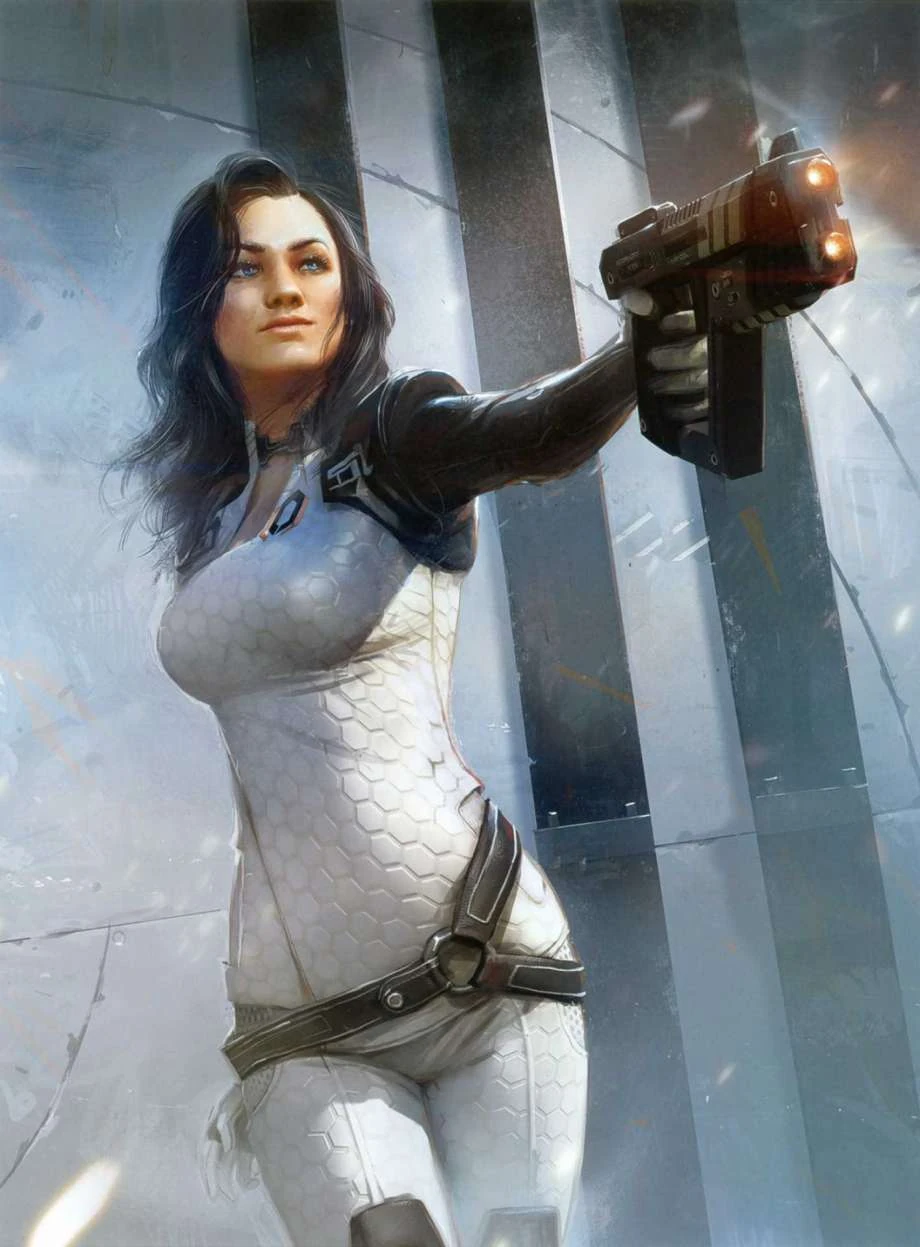
Then, in between the release of “Mass Effect 3” and the 2017 sequel, “Mass Effect: Andromeda,” a scandal broke out in the video game industry that involved everything from sexism to harassment to just how visible a character’s butt could be in a video game. I wish I were exaggerating, but it really happened and I don’t think the industry has fully recovered.
In the midst of that scandal, the demand for “progress” soared more than it did for most other mediums. Suddenly, the act of making a video game character too sexy was seen as contributing to a toxic culture of misogyny, sexism, and violence against women and minorities. It’s not like sex appeal had nothing to do with Lara Croft becoming so successful. Again, if I could say those words with more sarcasm, I would.

“Mass Effect: Andromeda” was developed in the eye of that storm. EA and Bioware couldn’t use the same approach they did with previous “Mass Effect” games. They had to be very careful with how they designed their characters, especially their female characters. One misplaced curve is all it would take to reignite a controversy that nobody wanted to deal with, given all the negative press the gaming industry had incurred.
As a result, the female characters in “Mass Effect: Andromeda” didn’t just dial down the sex appeal. In some cases, there was a concerted effort to make their female characters less attractive. This is best shown in the female model used for Sara Ryder, the main female protagonist. To say it didn’t translate to the game would be like saying drinking a gallon of bleach might make you a little queasy.

Ryder wasn’t the only female character to have her looks tempered. Pretty much every female character, from the supporting cast to background characters, was designed with minimal sex appeal in mind. That’s not to say the game didn’t have some sexier moments, but compared to what other games attempted before that, it was pretty watered down.
That was just one of many problems that “Mass Effect: Andromeda” faced when it launched in March 2017. Now, games launching with bugs and glitches is nothing new. It’s standard practice for a game to get patched after launch. However, the extent of those bugs in “Mass Effect: Andromeda,” combined with unattractive characters, did not help the game’s reception.
I say that as someone who played the game and still loved it, for the most part. Since I love “Mass Effect” games so much, I found plenty of reasons to love “Mass Effect: Andromeda.” However, I found myself having to overlook more flaws than usual. I also found it hard to really admire the visual aspects of the game. Like comics, undermining that part of the experience can be pretty detrimental.

There were a lot of criticism levied against “Mass Effect: Andromeda.” Some are legitimate. Some are painfully valid. More than any other game, though, it was developed with the intent to promote a more diverse and inclusive product that appealed everyone and offended no one. As the sales and reception seem to indicate, though, even female gamers don’t like looking at unattractive characters.
As a result, nobody really hailed “Mass Effect: Andromeda” as progress. However, nobody staged a mass online protest claiming the game made its female characters too sexy and promoted toxic behaviors among its users. Some might count that as progress too. I am not one of them.

In a sense, “Mass Effect: Andromeda” is a case study in a product where efforts towards progress just masked a desire to avoid outrage. Just avoiding outrage does not count as progress in any capacity. It just counts as a company trying to shield itself from bad publicity that might damaged its brand. Say what you will about corporate greed, but brand still matters to them, often more than money.
I don’t blame Bioware or EA at all for going that route, but simply avoiding outrage set the bar pretty low and it might have doomed “Mass Effect: Andromeda” before it ever had a chance. At the moment, the “Mass Effect” franchise is on indefinite hold because the response to “Mass Effect: Andromeda” was not what the developer had hoped.
Beyond the tragedy of damaging a beloved franchise, “Mass Effect: Andromeda” reflects a dangerous and potentially regressive sentiment in the industry. Rather than focus on pushing the envelope and doing something bold, artists and developers are more concerned with avoiding outrage. The actual quality of the final product can only ever be secondary, at most.

There are a great many challenges facing the video game industry, as anyone who followed the news surrounding “Star Wars: Battlefront II” can attest. However, the precedent set by “Mass Effect: Andromeda” may very well be the most damaging.
Most agree that video games, like any other media, should work to appeal to a broad audience. However, as Marvel found out, forcing certain kinds of “progress” can have some pretty detrimental effects in the long run. It alienates consumers, frustrates developers, and limits the incentives to innovate and try new things.
At the end of the day, making female superheroes less sexy in comics and making characters in “Mass Effect” less attractive did nothing to reduce sexism, promote gender equality, or foster a more inclusive culture. All it really did was go out of its way to stop exceedingly vocal critics from whining.

Bioware and EA didn’t suddenly become more enlightened about video games, female characters, and the impact of mass media. They simply took the path of least resistance, doing what would generate the least amount of outrage, at least in terms of sexist accusations. That’s not progress. That’s just frustration and, like my old job, very little good comes from it.
Filed under gender issues, sex in media, sexuality, video games


 Jack Fisher's Official Publishing Blog