
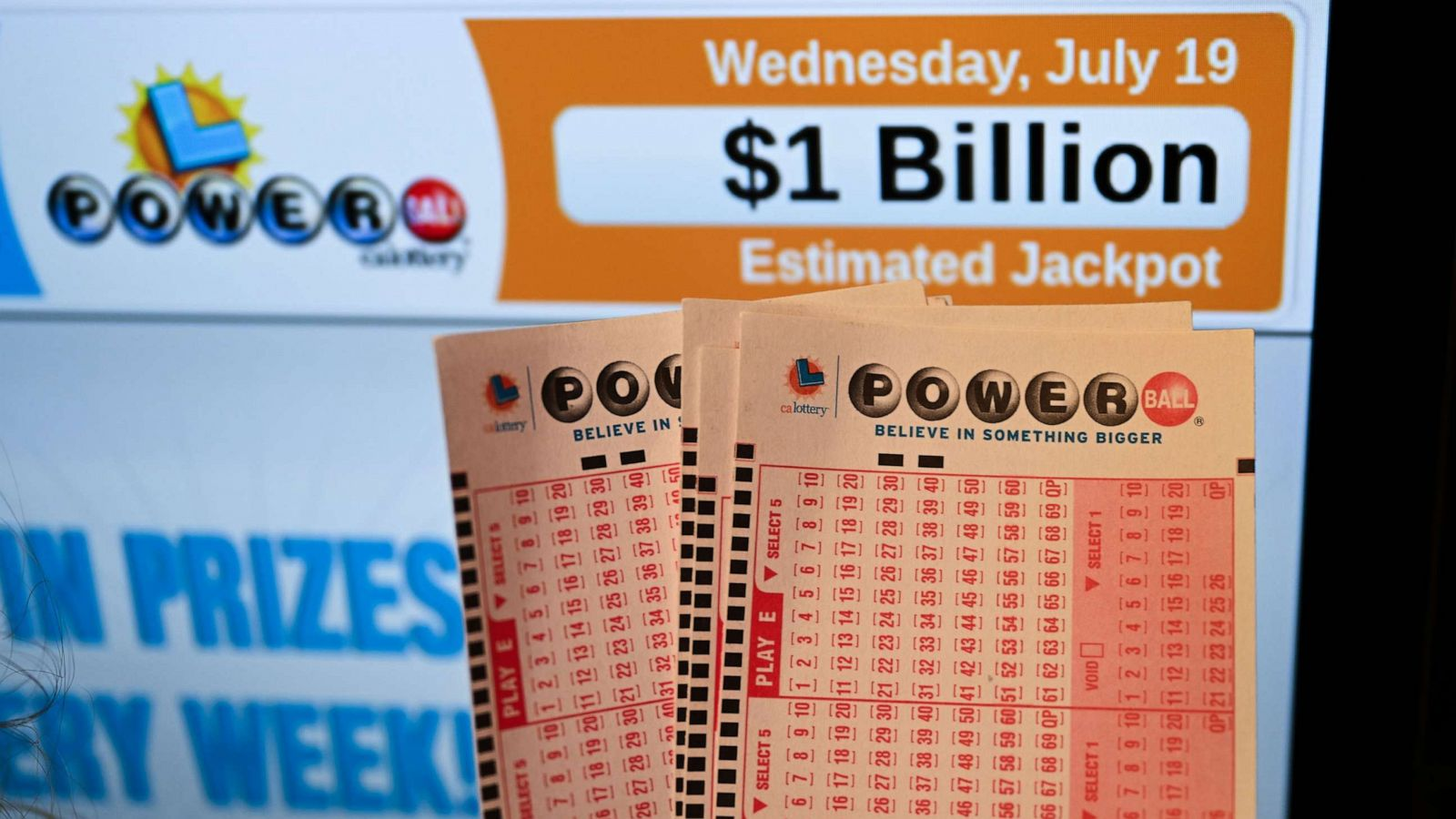
On Wednesday, July 20, 2023, a very lucky individual in California found out they won the $1 billion jackpot. It is one of the largest lottery jackpot wins in US history. And whoever is the purchaser of that ticket, their life is about to change immensely. I know a lot of people dream about winning the lottery and what they would do if it ever happened. But for this individual, it’s no longer a fantasy.
Now, setting aside for a moment the collective envy we all feel for lottery winners, I do want to convey an important message to this and all future lottery winners. Please note that this message isn’t from me. It comes courtesy of a famous post on Reddit that is frequently re-visited every time the lottery jackpot gets very bit.
What it says and what it reveals isn’t just important for lottery winners and non-winners alike. It adds a critical perspective that supersedes any fanciful dreams about wealth and money. Enjoy.
Congratulations! You just won millions of dollars in the lottery! That’s great.
Now you’re fucked.
No really.
You are.
You’re fucked.
If you just want to skip the biographical tales of woe of some of the math-tax protagonists, skip on down to the next comment. To see what to do in the event you win the lottery.
You see, it’s something of an open secret that winners of obnoxiously large jackpots tend to end up badly with alarming regularity. Not the $1 million dollar winners. But anyone in the nine-figure range is at high risk. Eight-figures? Pretty likely to be screwed. Seven-figures? Yep. Painful. Perhaps this is a consequence of the sample. The demographics of lottery players might be exactly the wrong people to win large sums of money. Or perhaps money is the root of all evil. Either way, you are going to have to be careful. Don’t believe me? Consider this:
Large jackpot winners face double digit multiples of probability versus the general population to be the victim of:
- Homicide (something like 20x more likely)
- Drug overdose
- Bankruptcy (how’s that for irony?)
- Kidnapping
And triple digit multiples of probability versus the general population rate to be:
- Convicted of drunk driving
- The victim of Homicide (at the hands of a family member) 120x more likely in this case, ain’t love grand?
- A defendant in a civil lawsuit
- A defendant in felony criminal proceedings
Believe it or not, your biggest enemy if you suddenly become possessed of large sums of money is… you. At least you will have the consolation of meeting your fate by your own hand. But if you can’t manage it on your own, don’t worry. There are any number of willing participants ready to help you start your vicious downward spiral for you. Mind you, many of these will be “friends,” “friendly neighbors,” or “family.” Often, they won’t even have evil intentions. But, as I’m sure you know, that makes little difference in the end. Most aren’t evil. Most aren’t malicious. Some are. None are good for you.
Jack Whittaker, a Johnny Cash attired, West Virginia native, is the poster boy for the dangers of a lump sum award. In 2002 Mr. Whittaker (55 years old at the time) won what was, also at the time, the largest single award jackpot in U.S. history. $315 million. At the time, he planned to live as if nothing had changed, or so he said. He was remarkably modest and decent before the jackpot, and his ship sure came in, right? Wrong.
Mr. Whittaker became the subject of a number of personal challenges, escalating into personal tragedies, complicated by a number of legal troubles.
Whittaker wasn’t a typical lottery winner either. His net worth at the time of his winnings was in excess of $15 million, owing to his ownership of a successful contracting firm in West Virginia. His claim to want to live “as if nothing had changed” actually seemed plausible. He should have been well equipped for wealth. He was already quite wealthy, after all. By all accounts he was somewhat modest, low profile, generous and good natured. He should have coasted off into the sunset. Yeah. Not exactly.
Whittaker took the all-cash option, $170 million, instead of the annuity option, and took possession of $114 million in cash after $56 million in taxes. After that, things went south.
Whittaker quickly became the subject of a number of financial stalkers, who would lurk at his regular breakfast hideout and accost him with suggestions for how to spend his money. They were unemployed. No, an interview tomorrow morning wasn’t good enough. They needed cash NOW. Perhaps they had a sure-fire business plan. Their daughter had cancer. A niece needed dialysis. Needless to say, Whittaker stopped going to his breakfast haunt. Eventually, they began ringing his doorbell. Sometimes in the early morning. Before long he was paying off-duty deputies to protect his family. He was accused of being heartless. Cold. Stingy.
Letters poured in. Children with cancer. Diabetes. MS. You name it. He hired three people to sort the mail. A detective to filter out the false claims and the con men (and women) was retained.
Brenda, the clerk who had sold Whittaker the ticket, was a victim of collateral damage. Whittaker had written her a check for $44,000 and bought her house, but she was by no means a millionaire. Rumors that the state routinely paid the clerk who had sold the ticket 10% of the jackpot winnings hounded her. She was followed home from work. Threatened. Assaulted.
Whittaker’s car was twice broken into, by trusted acquaintances who watched him leave large amounts of cash in it. $500,000 and $200,000 were stolen in two separate instances. The thieves spiked Whittaker’s drink with prescription drugs in the first instance. The second incident was the handiwork of his granddaughter’s friends, who had been probing the girl for details on Whittaker’s cash for weeks.
Even Whittaker’s good-faith generosity was questioned. When he offered $10,000 to improve the city’s water park so that it was more handicap accessible, locals complained that he spent more money at the strip club. (Amusingly this was true).
Whittaker invested quite a bit in his own businesses, tripled the number of people his businesses employed (making him one of the larger employers in the area) and eventually had given away $14 million to charity through a foundation he set up for the purpose. This is, of course, what you are “supposed” to do. Set up a foundation. Be careful about your charity giving. It made no difference in the end.
To top it all off, Whittaker had been accused of ruining a number of marriages. His money made other men look inferior, they said, wherever he went in the small West Virginia town he called home. Resentment grew quickly. And festered. Whittaker paid four settlements related to this sort of claim. Yes, you read that right. Four.
His family and their immediate circle were quickly the victims of odds-defying numbers of overdoses, emergency room visits and even fatalities. His granddaughter, the eighteen year old “Brandi” (who Whittaker had been giving a $2100.00 per week allowance) was found dead after having been missing for several weeks. Her death was, apparently, from a drug overdose, but Whittaker suspected foul play. Her body had been wrapped in a tarp and hidden behind a rusted-out van. Her seventeen-year-old boyfriend had expired three months earlier in Whittaker’s vacation house, also from an overdose. Some of his friends had robbed the house after his overdose, stepping over his body to make their escape and then returning for more before stepping over his body again to leave. His parents sued for wrongful death claiming that Whittaker’s loose purse strings contributed to their son’s death. Amazingly, juries are prone to award damages in cases such as these. Whittaker settled. Again.
Even before the deaths, the local and state police had taken a special interest in Whittaker after his new-found fame. He was arrested for minor and less minor offenses many times after his winnings, despite having had a nearly spotless record before the award. Whittaker’s high profile couldn’t have helped him much in this regard.
In 18 months Whittaker had been cited for over 250 violations ranging from broken tail lights on every one of his five new cars, to improper display of renewal stickers. A lawsuit charging various police organizations with harassment went nowhere and Whittaker was hit with court costs instead.
Whittaker’s wife filed for divorce, and in the process froze a number of his assets and the accounts of his operating companies. Caesars in Atlantic City sued him for $1.5 million to cover bounced checks, caused by the asset freeze.
Today Whittaker is badly in debt, and bankruptcy looms large in his future.
But, hey, that’s just one example, right?
Wrong.
Nearly one third of multi-million-dollar jackpot winners eventually declare bankruptcy. Some end up worse. To give you just a taste of the possibilities, consider the fates of:
- Billie Bob Harrell, Jr.: $31 million. Texas, 1997. As of 1999: Committed suicide in the wake of incessant requests for money from friends and family. “Winning the lottery is the worst thing that ever happened to me.
- William âBudâ Post: $16.2 million. Pennsylvania. 1988. In 1989: Brother hires a contract murderer to kill him and his sixth wife. Landlady sued for portion of the jackpot. Convicted of assault for firing a gun at a debt collector. Declared bankruptcy. Dead in 2006.
- Evelyn Adams: $5.4 million (won TWICE 1985, 1986). As of 2001: Poor and living in a trailer gave away and gambled most of her fortune.
- Suzanne Mullins: $4.2 million. Virginia. 1993. As of 2004: No assets left.
- Shefik Tallmadge: $6.7 million. Arizona. 1988. As of 2005: Declared bankruptcy.
- Thomas Strong: $3 million. Texas. 1993. As of 2006: Died in a shoot-out with police.
- Victoria Zell: $11 million. 2001. Minnesota. As of 2006: Broke. Serving seven year sentence for vehicular manslaughter.
- Karen Cohen: $1 million. Illinois. 1984. As of 2000: Filed for bankruptcy. As of 2006: Sentenced to 22 months for lying to federal bankruptcy court.
- Jeffrey Dampier: $20 million. Illinois. 1996. As of 2006: Kidnapped and murdered by own sister-in-law.
- Ed Gildein: $8.8 million. Texas. 1993. As of 2003: Dead. Wife saddled with his debts. As of 2005: Wife sued by her own daughter who claimed that she was taking money from a trust fund and squandering cash in Las Vegas.
- Willie Hurt: $3.1 million. Michigan. 1989. As of 1991: Addicted to cocaine. Divorced. Broke. Indicted for murder.
- Michael Klingebiel: $2 million. As of 1998 sued by own mother claiming he failed to share the jackpot with her.
- Janite Lee: $18 million. 1993. Missouri. As of 2001: Filed for bankruptcy with $700 in assets.
So, what the hell DO you do if you are unlucky enough to win the lottery?
This is the absolutely most important thing you can do right away: NOTHING.
Yes. Nothing.
DO NOT DECLARE YOURSELF THE WINNER yet.
Do NOT tell anyone. The urge is going to be nearly irresistible. Resist it. Trust me.
1. IMMEDIATELY retain an attorney.
Get a partner from a larger, NATIONAL firm. Don’t let them pawn off junior partners or associates on you. They might try, all law firms might, but insist instead that your lead be a partner who has been with the firm for a while. Do NOT use your local attorney. Yes, I mean your long-standing family attorney who did your mother’s will. Do not use the guy who fought your dry-cleaner bill. Do not use the guy you have trusted your entire life because of his long and faithful service to your family. In fact, do not use any firm that has any connection to family or friends or community. TRUST me. This is bad. You want someone who has never heard of you, any of your friends, or any member of your family. Go to the closest big city and walk into one of the national firms asking for one of the “Trust and Estates” partners you have previously looked up on http://www.martindale.com from one of the largest 50 firms in the United States which has an office near you. You can look up attorneys by practice area and firm on Martindale.
2. Decide to take the lump sum.
Most lotteries pay a really pathetic rate for the annuity. It usually hovers around 4.5% annual return or less, depending. It doesn’t take much to do better than this, and if you have the money already in cash, rather than leaving it in the hands of the state, you can pull from the capital whenever you like. If you take the annuity you won’t have access to that cash. That could be good. It could be bad. It’s probably bad unless you have a very addictive personality. If you need an allowance managed by the state, it is because you didn’t listen to point #1 above.
Why not let the state just handle it for you and give you your allowance?
Many state lotteries pay you your “allowance” (the annuity option) by buying U.S. treasury instruments and running the interest payments through their bureaucracy before sending it to you along with a hunk of the principal every month. You will not be beating inflation by much, if at all. There is no reason you couldn’t do this yourself, if a low single-digit return is acceptable to you.
You aren’t going to get even remotely the amount of the actual jackpot. Take our old friend Mr. Whittaker. Using Whittaker is a good model both because of the reminder of his ignominious decline, and the fact that his winning ticket was one of the larger ones on record. If his situation looks less than stellar to you, you might have a better perspective on how “large” your winnings aren’t. Whittaker’s “jackpot” was $315 million. He selected the lump-sum cash up-front option, which knocked off $145 million (or 46% of the total) leaving him with $170 million. That was then subject to withholding for taxes of $56 million (33%) leaving him with $114 million.
In general, you should expect to get about half of the original jackpot if you elect a lump sum (maybe better, it depends). After that, you should expect to lose around 33% of your already pruned figure to state and federal taxes. (Your mileage may vary, particularly if you live in a state with aggressive taxation schemes).
3. Decide right now, how much you plan to give to family and friends.
This really shouldn’t be more than 20% or so. Figure it out right now. Pick your number. Tell your lawyer. That’s it. Don’t change it. 20% of $114 million is $22.8 million. That leaves you with $91.2 million. DO NOT CONSULT WITH FAMILY when deciding how much to give to family. You are going to get advice that is badly tainted by conflict of interest, and if other family members find out that Aunt Flo was consulted and they weren’t you will never hear the end of it. Neither will Aunt Flo. This might later form the basis for an allegation that Aunt Flo unduly influenced you and a lawsuit might magically appear on this basis. No, I’m not kidding. I know of one circumstance (related to a business windfall, not a lottery) where the plaintiffs WON this case.
Do NOT give anyone cash. Ever. Period. Just don’t. Do not buy them houses. Do not buy them cars. Tell your attorney that you want to provide for your family, and that you want to set up a series of trusts for them that will total 20% of your after-tax winnings. Tell him you want the trust empowered to fund higher education, some help (not a total) purchase of their first home, some provision for weddings and the like, whatever. Do NOT put yourself in the position of handing out cash. Once you do, if you stop, you will be accused of being a heartless bastard (or bitch). Trust me. It won’t go well.
It will be easy to lose perspective. It is now the duty of your friends, family, relatives, hangers-on and their inner circle to skew your perspective, and they take this job quite seriously. Setting up a trust, a managed fund for your family that is in the double-digit millions is AMAZINGLY generous. You need never have trouble sleeping because you didn’t lend Uncle Jerry $20,000 in small denomination unmarked bills to start his chain of deep-fried peanut butter pancake restaurants. (“Deep’n ‘nutter Restaurants”) Your attorney will have a number of good ideas how to parse this wealth out without turning your siblings/spouse/children/grandchildren/cousins/waitresses into the latest Paris Hilton.
4. You will be encouraged to hire an investment manager. Considerable pressure will be applied. Don’t.
Investment managers charge fees, usually a percentage of assets. Consider this: If they charge 1% (which is low, I doubt you could find this deal, actually) they have to beat the market by 1% every year just to break even with a general market index fund. It is not worth it, and you don’t need the extra return or the extra risk. Go for the index fund instead if you must invest in stocks. This is a hard rule to follow. They will come recommended by friends. They will come recommended by family. They will be your second cousin on your mother’s side. Investment managers will sound smart. They will have lots of cool acronyms. They will have nice PowerPoint presentations. They might (MIGHT) pay for your shrimp cocktail lunch at TGI Friday’s while reminding you how poor their side of the family is. They live for this stuff.
You should smile, thank them for their time, and then tell them you will get back to them next week. Don’t sign ANYTHING. Don’t write it on a cocktail napkin (lottery lawsuit cases have been won and lost over drunkenly scrawled cocktail napkin addition and subtraction figures with lots of zeros on them). Never call them back. Trust me. You will thank me later. This tactic, smiling, thanking people for their time, and promising to get back to people, is going to have to become familiar. You will have to learn to say no gently, without saying the word “no.” It sounds underhanded. Sneaky. It is. And its part of your new survival strategy. I mean the word “survival” quite literally.
Get all this figured out BEFORE you claim your winnings. They aren’t going anywhere. Just relax.
5. If you elect to be more global about your paranoia, use between 20.00% and 33.00% of what you have not decided to commit to a family fund IMMEDIATELY to purchase a combination of longer-term U.S. treasuries (5 or 10 year are a good idea) and perhaps even another G7 treasury instrument. This is your safety net. You will be protected… from yourself.
You are going to be really tempted to start being a big investor. You are going to be convinced that you can double your money in Vegas with your awesome Roulette system/by funding your friend’s amazing idea to sell Lemming dung/buying land for oil drilling/by shorting the North Pole Ice market (global warming, you know). This all sounds tempting because “Even if I lose it all I still have $XX million left! Anyone could live on that comfortably for the rest of their life.” Yeah, except for 33% of everyone who won the lottery.
You’re not going to double your money, so cool it. Let me say that again. You’re not going to double your money, so cool it. Right now, you’ll get around 3.5% on the 10-year U.S. treasury. With $18.2 million (20% of $91.2 mil after your absurdly generous family gift) invested in those you will pull down $638,400 per year. If everything else blows up, you still have that, and you will be in the top 1% of income in the United States. So how about you not fuck with it. Eh? And that’s income that is damn safe. If we get to the point where the United States defaults on those instruments, we are in far worse shape than worrying about money.
If you are really paranoid, you might consider picking another G7 or otherwise mainstream country other than the U.S. according to where you want to live if the United States dissolves into anarchy or Britney Spears is elected to the United States Senate. Put some fraction in something like Swiss Government Bonds at 3%. If the Swiss stop paying on their government debt, well, then you know money really means nothing anywhere on the globe anymore. I’d study small field sustainable agriculture if you think this is a possibility. You might have to start feeding yourself.
6. That leaves, say, 80% of $91.2 million or $72.9 million.
Here is where things start to get less clear. Personally, I think you should dump half of this, or $36.4 million, into a boring S&P 500 index fund. Find something with low fees. You are going to be constantly tempted to retain “sophisticated” advisers who charge “nominal fees.” Don’t. Period. Even if you lose every other dime, you have $638,400 per year you didn’t have before that will keep coming in until the United States falls into chaos. Fuck advisers and their fees. Instead, drop your $36.4 million in the market in a low fee vehicle. Unless we have an unprecedented downturn the likes of which the United States has never seen, should return around 7.00% or so over the next 10 years. You should expect to touch not even a dime of this money for 10 or 15 or even 20 years. In 20 years $36.4 million could easily become $115 million.
7. So you have put a safety net in place.
You have provided for your family beyond your wildest dreams. And you still have $36.4 million in “cash.” You know you will be getting $638,400 per year unless the capital building is burning, you don’t ever need to give anyone you care about cash, since they are provided for generously and responsibly (and can’t blow it in Vegas) and you have a HUGE nest egg that is growing at market rates. (Given the recent dip, you’ll be buying in at great prices for the market). What now? Whatever you want. Go ahead and burn through $36.4 million in hookers and blow if you want. You’ve got more security than 99% of the country. A lot of it is in trusts so even if you are sued your family will live well, and progress across generations. If your lawyer is worth his salt (I bet he is) then you will be insulated from most lawsuits anyhow. Buy a nice house or two, make sure they aren’t stupid investments though. Go ahead and be an angel investor and fund some startups, but REFUSE to do it for anyone you know. (Friends and money, oil and water – Michael Corleone) Play. Have fun. You earned it by putting together the shoe sizes of your whole family on one ticket and winning the jackpot.



 Jack Fisher's Official Publishing Blog