Tag Archives: Christmas Classic

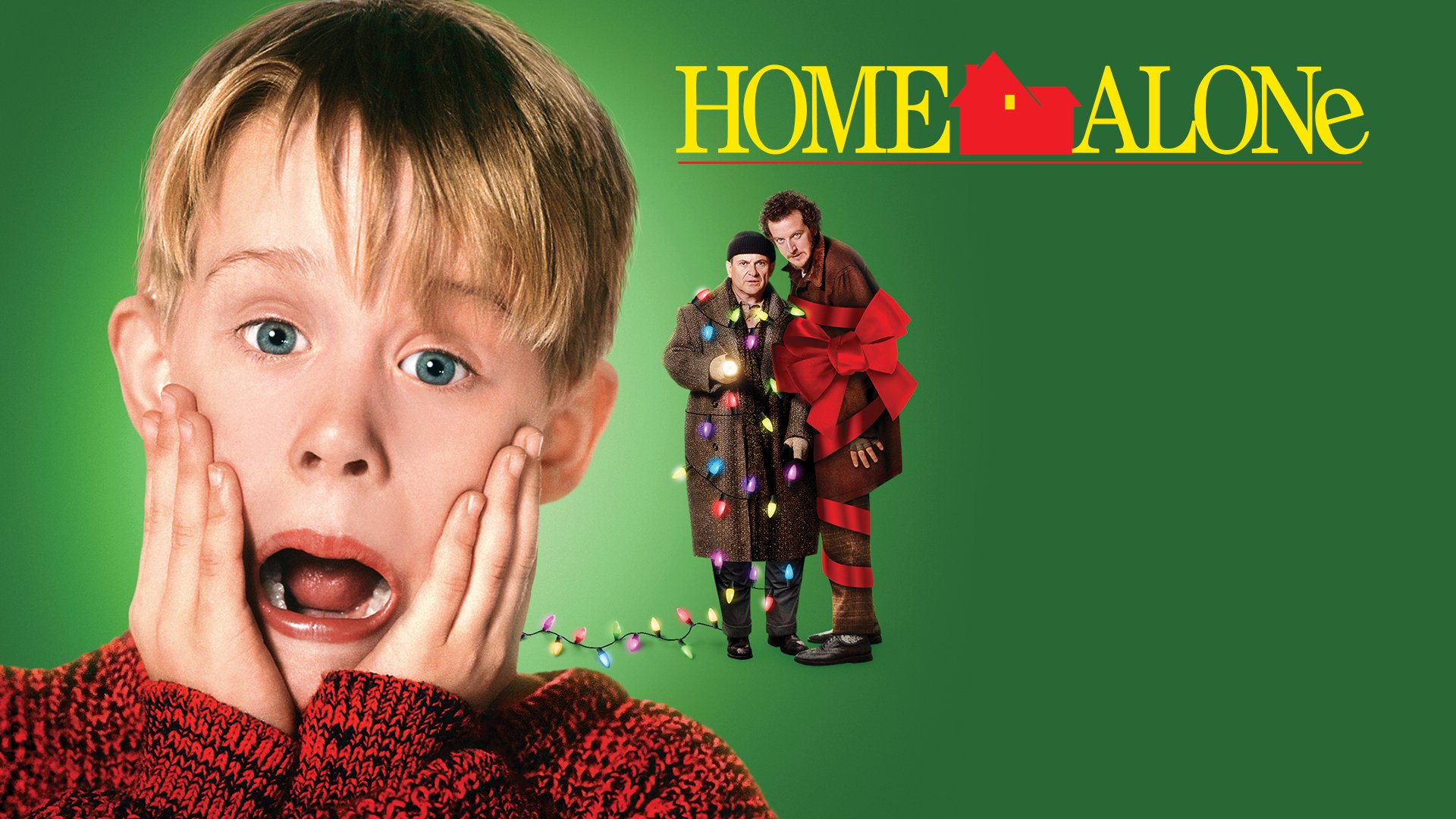
My “Home Alone” Fan Theory: Kevin’s Father Is A Mob Lawyer

Disney+ on Twitter: "🙀 KEEEEEEVINNNNNNNNNN 🙀 Home Alone (1,2, AND 3) are  here just in time for the long weekend. Start streaming now on  #DisneyPlus—home alone or not. https://t.co/VRzHMZlxaj" / Twitter

Some movies and TV shows are bound to attract more wild fan theories than others. Sometimes, that’s by design. A show like ”Lost” is basically built for that kind of wild speculation. The mystery, the intrigue, and the possibilities are weaved into the very premise. The same could be said for movies like ”The Matrix” or “Inception.”

Then, there’s a movie like ”Home Alone,” the heartwarming holiday classic that made Macaulay Calkin a star. As a concept, a story, and a general overtone, it’s just not as conducive to elaborate fan theories. It’s a simple premise with a simple appeal, a clever kid being left home alone by accident and having to defend his house against a couple of bumbling burglers.

It’s a fun, entertaining movie all around. Whenever the holidays roll around, I find myself watching it at least twice. It has become a holiday tradition in its own right. Like eggnog, decorations, or presents, ”Home Alone” is just one of those movies that has stood the test of time and maintained that special appeal.

Despite that, it has been subject to some substantial fan theories in recent. Some are a bit more extreme than others. One in particular claims that ”Home Alone” is actually an origin story for Jigsaw from the ”Saw” movies. While I think it’s a creative theory, it falls apart when you just compare the age of Kevin and that of John Cramer.

Other theories are a bit less colorful, dealing with everything from time travel to deals with the devil. I don’t think those theories do much to really change, enhance, or undermine the overall viewing experience of the movie. In general, I like theories that get you to see a movie or show in a whole new light that makes watching it more engaging.

In that spirit, I’d like to share my own personal fan theory about ”Home Alone” that I came up with after rewatching the movie recently. It’s actually an expansion of another popular fan theory about Kevin’s father being a mob boss. Compared to most fan theories, I think this one is a lot more believable in that it fills in a particular detail.

Specifically, it asks how Peter McCallister can afford to fly his entire family to Paris for Christmas one year and Florida the next. On top of that, his family lives in this big, opulant house that allows Kevin to put in so many traps in the first place.

It’s not an unreasonable question. Kevin’s family is clearly quite well off. We never actually even learn what his parents do for a living. It never factors into the overall plot. It just means they’re wealthy enough to become targets for burglers.

However, I think the theory about Peter McCallister being a mob boss just doesn’t work. Most point to how he interacts with the police officer, who is actually Harry in disguise. He quickly asks if he’s under arrest or something, which is an odd thing to ask and something you’d expect a criminal to say. I don’t deny that’s odd, but I don’t think that makes Peter a mob boss.

Also, if Peter were a mob boss, I don’t think he would be quite as polite to someone he thinks is an police officer. In fact, I doubt he’d even let an officer get into his house. Mob bosses aren’t too keen on cops being anywhere near their homes or their families, let alone inside their house. If a cop just suddenly paid a visit, even if he was a fake cop, it would be a much bigger cause for concern.

On top of that, I think even if Kevin’s father was just a high ranking figure in the mob, he’d have body guards and henchmen to keep him from ever dealing with the police. They would probably stop Harry before he ever entered the house and told him, in not so many words, that he’s not welcome.

That said, I think there’s another way to look at this. I think there’s another version of this theory that makes more sense and fills in some other plot points within this movie. This is where I’m going to posit my own fan theory about ”Home Alone.”

Kevin McCallister’s father is a mob lawyer.

The difference might seem trival. On the surface, it doesn’t seem to change much with the theory about Kevin’s father being a mob boss. Why does it matter if Peter McCallister is a mob boss or a mob lawyer? Well, if you apply a bit of scrutiny, it makes a bit more sense in the grand scheme of things.

Mob lawyers do exist. They’ve always been part of organized crime in some form or another. They may not be as recognizable or famous as the mobsters they represent, but I think that only gives more credence to this theory. I also think it changes the context of what unfolds over the course of ”Home Alone.”

In essence, a mob lawyer is like any other lawyer. They just happen to specialize in clients that are high profile mobsters. They defend and represent those who others are too afraid to get near. It’s a high risk for anyone in the legal field, but with great risk comes great reward. If Peter McCallister is even moderately successful, then that reward would explain his lavish trips and big house.

Even if that’s true, you might still ask whether he couldn’t just be a really successful legitimate lawyer? Yes, he certainly could. Those types of lawyers do exist, but Peter being a mob lawyer also helps explain a few other details more than just being a typical successful laywer.

Specifically, it offers another reason as to why Harry wanted to rob the McCallister house more than the rest on that block. On multiple occassions, he tells Marv just how much he values that house. He makes clear he wants to rob it, even after finding out that Kevin is home alone.

Why would he want to risk that? He has to know that, even if he doesn’t know Kevin can set all those traps, the police could get involved. Even if he and Marv aren’t particularly bright, they know enough to avoid police.

However, if Peter McCallister is a mob lawyer, then that changes things. Mob lawyers, much like regular mobsters, are less inclined to get involved with the police. They understand that the longer they talk to the police, the greater the chance they’ll slip up and reveal something incriminating. Also, given the nature of their work, they probably wouldn’t have too many friends at the police.

That does seem to manifest at one point in the movie. The McCallisters don’t seem to be particularly fond of dealing with them. Just look at how Kevin’s mother talked to the police. Even if they were just worried about their son, they weren’t exactly patient with them.

It’s almost like they know the police in that area aren’t overly competent, nor are they inclined to go out of their way for the McCallisters. You’d think that if they were a wealthy family from a wealthy neighborhood, the cops would do a lot more than just send one officer over to check on Kevin. Doing the bare minimum would surely attract a scandal or a lawsuit.

That only makes sense if you take into account that the police know the McCallisters have mob ties. Even if Peter is just a lawyer, they probably have experience with how they protect the criminals they arrest. So, why would they go out of their way for a family like that? Plus, if Peter McCallister is a competent mob lawyer in any capacity, he knows it’s better to avoid unnecessary publicity than to attract it.

Being a mob lawyer also makes sense of another unusual detail towards the end of the movie. When Kevin finally does call the cops, he doesn’t call them to his house. He pretends to be his neighbor, the Murphys. Why would he do that? Why wouldn’t he want the cops to come to his house?

Well, if his father is a mob lawyer, then he also knows the importance of minimizing their interaction with the police. Perhaps Peter McCallister teaches all his children to avoid calling the police to their house. He might not give a reason. It’s just a rule that his kids aren’t meant to question and, in the name of defending his home, Kevin decided to keep that rule.

That same inclination to avoid police interaction could also explain why Harry targets the McCallister’s house. Perhaps he actually knows of Peter’s mob ties. He might also know that if he were to rob a mob boss, even without threatening his son, he and Marv would probably end up dead and disappeared within a week. However, robbing a mob lawyer is a different story.

Not only are mob lawyers rich, they’re not going to involve themselves with the police more than they have to. Even if they lose a lot of valuables, they’re more inclined to just buy new stuff rather than deal with the police. They may complain to their mob associates, but their lawyers being robbed probably wouldn’t bother them as much as it would if they got robbed.

This theory even explains why Kevin’s Uncle Frank is so cheap. Maybe he knows about his brother’s mob connections. He may also think that it’s only a matter of time before Peter gets in trouble for all this and he’s just bracing for that.

In its totality, Peter McCallister being a mob lawyer just explains so much in ”Home Alone” that it’s hard to ignore. If you rewatch the movie with the assumption that Kevin’s dad is a successful mob lawyer, it changes the context of the story in all the right ways. It makes sense of things that were otherwise left unexplained, which is the hallmark of any good fan theory.

Now, I don’t deny that the theory is without flaws. In the sequel, the McCallister’s did seem a bit more comfortable in dealing with the police. Then again, that’s the NYPD and not the Chicago PD, so I still think it holds up.

What do you think, though? Do you think this fan theory holds up? Do you have a better one to offer for this holiday classic? Please let me know in the comments.
Leave a comment

Filed under fan theory, movies

Why You Should Watch “Klaus” On Netflix This Christmas

Klaus' Director Reveals How Netflix Landed 2D Animation Film

Every year, once the holidays come around, I make it a point to check out at least one new Christmas special. Regardless of whether it’s a TV show or movie, I think it’s important to supplement your holiday collection.

There will always be a place for classics like “It’s A Wonderful Life” or “A Charlie Brown Christmas,” but we can’t be afraid to give other holiday specials a chance. Otherwise, we wouldn’t experience unexpected gems like “The Christmas Chronicles,” a wonderful Christmas movie from Netflix that I recommended last year.

I can attest that those who have seen this movie are grateful for that recommendation. My mother even checked it out and she thought it was delightful.

In that same spirit, I’d like to recommend another holiday gem that really flew under the radar. I actually watched it last year, but it kind of got overshadowed by “The Christmas Chronicles.” However, in re-watching it again recently, while I was wrapping presents no less, only made me realize how great it was.

That movie is called “Klaus,” an animated feature that’s also on Netflix and one that you’d never expect to be so great. That’s despite the rather impressive voice cast, which include the likes of J. K. Simmons, Rashida Jones, Jason Schwartzman, and the late Norm MacDonald.

It’s one of those movies that, if you just saw the trailer, you’d think it’s just some sub-par Pixar or Dreamworks wannabe. You know it’s a Christmas movie, but it’s not clear what kind of Christmas movie it’s supposed to be. I remember putting it on because I just wanted to have something on in the background while I wrapped presents.

Much to my surprise and delight, “Klaus” turned out to be so much more. What starts as a somewhat quirky story about a lazy, self-centered, self-absorbed postal worker quickly evolves into a unique kind of Christmas story, one that captures the spirit of the holidays in all the right ways.

The story begins with Jesper, the aforementioned postal worker who has largely coaxed his way through life because he was born in a privileged family. Then, his father decided to teach him a lesson and sends him to the postal station in Smeerensburg, one of the least jolly places in the world. It’s a harsh lesson and one he resents to the utmost.

While there, he meets Klaus, a mysterious recluse from the woods who makes toys in his spare time. His reasons for doing so aren’t clear at first. He even seems menacing, as tends to be the case with characters who sound like J. K. Simmons. However, as we learn more about him, we also learn the tragic nature of his story.

I won’t spoil it. I’ll just say that it’s one of those tragedies that serves as the foundation for something that’s genuinely heartwarming. It doesn’t happen all at once. The motivations involved aren’t even that noble at first. Then, as the story unfolds, the true spirit of the movie becomes clear.

You see selfish, arrogant people eventually become selfless, sincere, and genuine.

You see someone go from a liar and a fraud to someone willing to sacrifice all his comforts to do the right thing.

You also see someone turn their loss and heartbreak into something positive and beautiful.

There’s just so much more I could say about this movie. The last few minutes alone will bring a tear to your eye while enriching your Christmas spirit. While I still think “The Christmas Chronicles” is the better Christmas movie, “Klaus” is not that far behind.

If you’re going to try another Christmas movie this year, make it this one. It’s a uniquely heartwarming story that perfectly embodies the spirit of the season. After the past couple years, we could all use more of that.

Leave a comment

Filed under movies

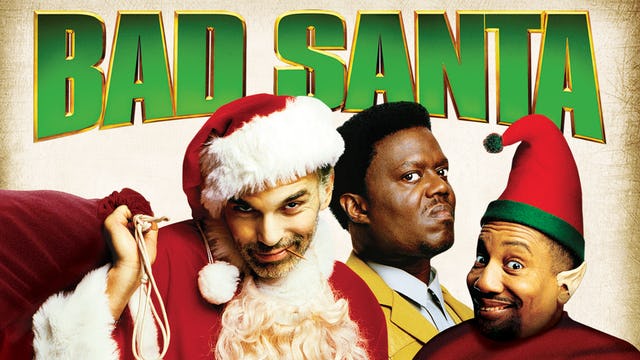
Why “Bad Santa” Is The Greatest Modern Christmas Movie

44a1258c-3534-4b88-9623-312728e91f59-2f020c3e

This is the time of year where you can’t go more than a half-hour without seeing a Christmas movie on TV. We’re basically in the heart of the holiday season. People have finally stopped complaining about Christmas decorations going up too early or getting a head start on their shopping. It’s not just fast-approaching anymore. The holidays are here.

Now, I love the holidays as much as anyone. As such, I have a strong appreciation for Christmas movies. I often go through stretches in December where I’ll watch at least part of a Christmas movie every day. It’s a beautiful thing that gets me in the spirit and gives me an excuse to drink eggnog spiked with whiskey.

I have a long list of personal favorites. I’m also among those who argue vehemently that “Die Hard” qualifies as a Christmas movie. Despite what Bruce Willis himself says, this movie will always be part of my holiday viewing schedule. I could write multiple articles to justify that position, but that’s not my intent here.

In recent years, I’ve found myself immersed in another argument surrounding a unique kind of Christmas movie. That movie is a lesser-known, but underrated gem called “Bad Santa.” If you’ve seen it, then you probably understand why it inspires such colorful discussions during the holidays. If you haven’t, then I urge you to check it out, but do not watch it with your children.

Make no mistake. “Bad Santa” is to Christmas movies what the McRib is to fast food fans. It’s one of those rare movies that doesn’t just go in the opposite direction of every classic trope associated with a particular genre. It gives those themes the finger, kicks it in the balls, and throws up on them for good measure.

This movie has no holiday miracles. There’s no magic at work. There’s no heartwarming moments that reaffirm the spirit of the season. This movie is weapons grade cynicism for all things Christmas and it goes about it in a way that’s vulgar, crude, disgusting, and hilarious.

The story is not for the faint of heart. It follows Willie Soke, a degenerate, misanthropic, womanizing, alcoholic who makes his living cracking safes with his dwarf partner-in-crime, Marcus Skidmore. Their tactics are the antithesis of the holiday spirit. Willie works as a mall Santa while Marcus works as an elf. They work at malls during the holidays and then rob them on Christmas Eve.

If you expect the movie to be a feel-good holiday story about a criminal redeeming himself during Christmas, then prepare to be disappointed. Willie is not that kind of character and “Bad Santa” does not tell that kind of story. While Willie does undergo some growth, he’s still an asshole by the time the credits roll.

The story doesn’t try to redeem Willie. It doesn’t even try to put him on the path to becoming a better person. All the Christmas miracles in world can’t do that for someone like him. However, his story does bring something uniquely festive to the table. The way things play out for Willie and those around him convey a powerful message that resonates with the holiday season in its own perverse way.

Some go so far as to argue that “Bad Santa” is an anti-Christmas movie. I can understand that sentiment to some extent. However, I would argue that “Bad Santa” is one of those movies that has become more relevant with time. I would even argue that, in the context of the modern spirit of Christmas, “Bad Santa” is the greatest modern Christmas movie.

Now, I know that won’t sit well with those who still love “It’s A Wonderful Life” or “How The Grinch Stole Christmas.” I don’t deny that those are great Christmas movies that deserve to be classics. I’m not arguing that “Bad Santa” is better than those movies or deserves to be in the same category. I simply believe that “Bad Santa” is the greatest Christmas movie for the current times in which we live and these are my reasons why.


Reason #1: It Reflects The Real (And Increasingly Jaded) World

Let’s face it. These are not the upbeat, idealistic times of yesteryear. People no longer trust in their government. People keep seeing once-beloved celebrities self-destruct. In general, people just aren’t confident about the future anymore. As a society, we’re becoming more and more jaded. That’s exactly the kind of sentiment that “Bad Santa” appeals to.

This movie is a world where assholes keep being assholes. Bad things happen to good people and good things happen to bad people. That may not be a great basis for a Christmas movie, but it perfectly represents the real world, now more than ever. In this day and age, we see famous and powerful people get away with awful things time and again. There’s no miracle that comes around to right all the wrongs.

In “Bad Santa,” this harsh view of the world isn’t avoided. For the entire movie, Willie essentially channels the defeatist attitude of Al Bundy. His life sucks. He hates himself. He barely even flinches when he’s staring down the barrel of a gun at one point. Beyond the self-loathing, though, he finds a way to provide real insights into the holidays.

Do we really need all the crap we ask for on Christmas? Do we really need magic, miracles, or some grand spectacle to appreciate it? Willie’s entire persona is an indictment of those who rely too much on magical thinking during the holidays. In the real world, that doesn’t get anyone anything other than a gut punch and a kick in the ass.


Reason #2: It Relies On Choices Rather Than Miracles

As deplorable a human being as Willie Soke is, he does have one defining trait that makes him somewhat sympathetic. He doesn’t make excuses. He doesn’t blame the world or everyone else for his lousy lot in life. He’s very much a product of his choices. He chooses to drink, spit, swear, and piss himself while wearing a Santa suit. There’s no extenuating circumstances. These are his choices.

Granted, they’re deplorable choices from someone inclined to self-destruction, but he makes them freely and doesn’t hide from the consequences. These same choices are what makes his relationship to the dense, but lovable kid in the movie, Therman, so meaningful. Willie has no reason to care or help this kid in any capacity and the kid is in no position to stop him.

In the end, though, Willie doesn’t need a miracle or some visit from Christmas spirits to make his choices. Therman’s influence on him, while ridiculous and downright pathetic at times, is sufficient for him to make the choices that make the story work. While they don’t necessarily redeem Willie for all his misdeeds, it does show that even a drunk like him can do the right thing without a miracle.

That, in and of itself, is a testament to the spirit of Christmas. When someone like Willie Soke can actually choose to do something good for a gullible kid, then that offers hope to any jaded soul on the holidays.


Reason #3: It Highlights Small (But Meaningful) Gestures

Many of the most memorable Christmas movies often have these big, elaborate gestures that attempt to make our hearts gush with holiday cheer. Whether it’s embracing loved ones at the end of “It’s A Wonderful Life” or reuniting with family in “Home Alone,” it feels like a Christmas movie has to go overboard with holiday sentiment.

“Bad Santa” takes the exact opposite approach, but somehow finds a way to make those gestures more meaningful. The movie doesn’t take place in the North Pole or some fanciful holiday setting. It takes place in Phoenix, Arizona where it doesn’t snow and heavy coats are useless. It effectively removes the ambiance of the holidays beyond the tacky decorations that people put up.

That works perfectly for “Bad Santa” because it ensures any gesture carries more weight. Whether it’s Willie trying to get Thurman his Christmas present or Willie putting back together the Advent Calendar, these small moments feel bigger in a setting devoid of traditional holiday magic.

There’s no sweeping change that turns Phoenix into some sort of Christmas haven. The world of “Bad Santa” never tries to be anything other than a world of shallow holiday imagery because that’s all it needs. Anything more than that is just fantasy and there’s only so much fantasy you can muster in a story that follows a misanthropic drunk.


Reason #4: It Offers Perspective Rather Than Hope

Another major trait of classic Christmas movies is the hope they inspire. When you get to the end of a Christmas movie, you’re supposed to feel a sense of hope. There’s this sense that the story has somehow rekindled someone’s holiday spirit. While there will always be a place for that kind of hope in a fantasy world, “Bad Santa” offers something different, but valuable.

More than anything else, “Bad Santa” conveys a sense of perspective about the holidays. It’s not this wonderful, heartfelt occasion for everybody. There are a lot of miserable, self-loathing drunks like Willie Soke out there who don’t want or need hope. They’d rather have something that’ll make life suck a little less.

That’s the best Willie can strive for in “Bad Santa” and that’s exactly what he does. Being around Therman doesn’t make him a beacon of Christmas spirit. It just makes his miserable life slightly less miserable and he’s grateful for that. As a result, he makes an effort to help the kid have a good Christmas.

Sure, his efforts result in him getting roughed up and shot, but that’s perfectly appropriate for the tone of the story. In the real world, noble efforts like that aren’t always rewarded. Sometimes, they end up pretty messy, which Willie finds out the hard way on more than one occasion. It’s not the most uplifting message, but it’s the most honest.

Perspective today is more precious than it has ever been before. In the era of fake news and alternative facts, it’s hard to maintain a firm grasp on reality. Christmas movies tend to obscure reality for something more cheerful, but “Bad Santa” for something more real and that’s what makes it so effective as a story.


Reason #5: It Finds Humor In Bad Situations

To this point, if I’ve given the impression that “Bad Santa” is one depressing slog of a movie, I apologize. Yes, it can be depressing and bleak, but it’s also obscenely funny. There are dark moments in this movie that involve depression, alcoholism, and even attempted suicide. However, many of these moments are perfectly balanced with moments of raw hilarity.

Whether it’s Willie beating the snot out of a bunch of bullies or Marcus berating Gin with a masterful string of profanity, this movie invests heavily on humor. Granted, it’s a very adult form of humor, but it works perfectly within the context of the story. From the very beginning, Willie and his supporting cast are in all sorts of awful situations. Injecting humor into the mix helps balance it out.

It helps create a particular tone for a movie that goes out of its way to spit on so many holiday traditions. Things are ugly for these characters. They’re miserable excuses for human beings, but they often find themselves in funny situations that they make more hilarious with their reactions. No matter how bad it gets, they find a way to make their devolving situations entertaining.

In an era were awful situations unfold in real time because of social media, it’s important to find humor wherever you can. There’s only so much we can do to change a situation. Willie makes that clear from the very beginning of “Bad Santa.” Sometimes, all you can do is just laugh at the absurdities and that’s exactly what this movie does.


I won’t claim that “Bad Santa” is the new standard for Christmas movies. I doubt it’s going to start the kinds of trends we’ve seen in other genres. However, the story it told and the dark humor it utilized struck a chord when it first came out. As the years have gone by, it keeps finding new ways to resonate with an emerging audience.

There will always be a place for “Home Alone” and the Grinch. However, I think for the current generation and all the others who have watched this world embrace new levels of absurdities, “Bad Santa” deserves a special place in our holiday traditions.

Leave a comment

Filed under Current Events, human nature, Movie Reviews, movies, nihilism, philosophy