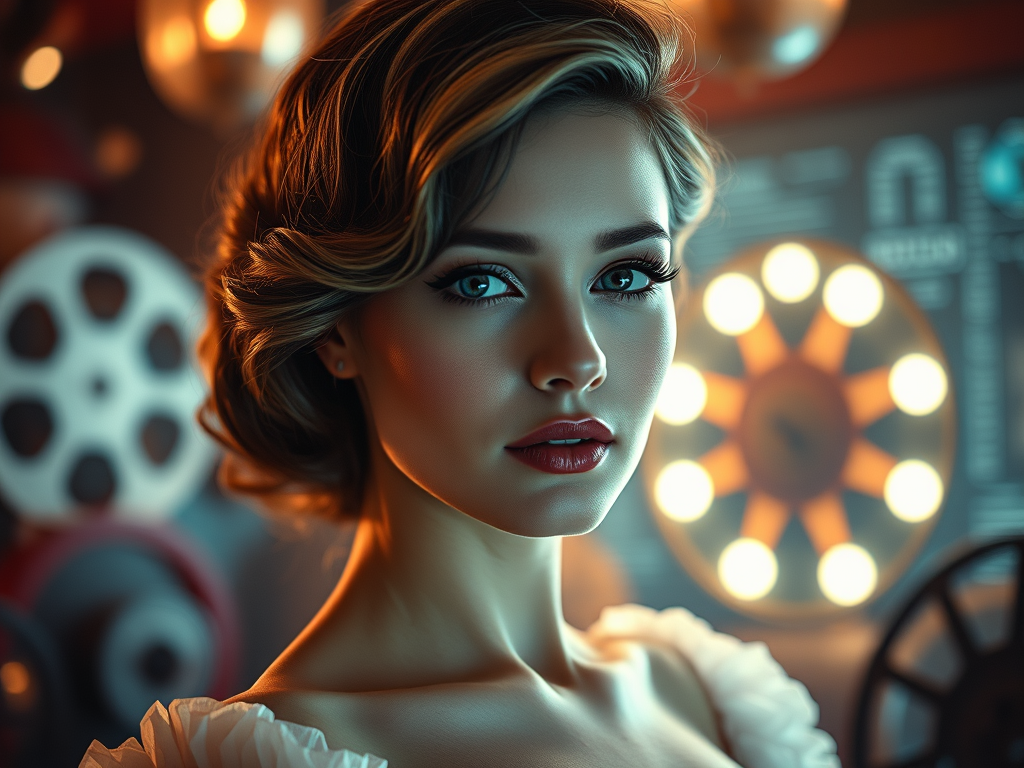
Have you heard of Tilly Norwood? She’s a beautiful young actress who is just starting to make her presence felt in Hollywood. She hasn’t been in much, but she’s already negotiating with talent agents to get bigger roles.
There’s just one major issue. Tilly Norwood isn’t a real person. She’s an entirely AI-generated persona.
Naturally, that doesn’t sit well with real life actors and unions. There is already a concerted effort to prevent Tilly Norwood from being cast in anything beyond your typical AI slop content. I completely understand this sentiment. I don’t blame anyone who works in Hollywood for being concerned about this. However, having covered the rise in AI for years, I’m comfortable making this prediction.
Tilly Norwood will eventually be cast in major movies and TV shows.
Other AI actors like her will be cast, as well.
Traditional actors and actresses will hate it. A sizable chunk of the audience will hate it as well. But this is going to happen. It was always going to happen the moment generative AI reached a certain level of refinement. A big reason for that involves money, as tends to be the case in Hollywood and most other industries. But there’s another reason that’s worth highlighting.
Dollar for dollar, movies and TV shows are getting more expensive to produce. This isn’t just due to inflation, unions, and the “personalities” that tend to comes with Hollywood. The logistics involved with making media has become bloated and inefficient. We’re no longer in an era in which media can only go through certain channels, be it TV and movie theaters. Thanks to streaming media, as well as online content like YouTube and Tiktok, the competition for eyeballs has never been greater.
Unless you’re a big budget blockbuster with a massive distribution network, such as Disney or Warner Bros., it’s harder to make content that turns a profit. The scale, resources, and personnel required to produce a movie or show is such that it’s limiting. Add to that the general enshitification of streaming media and the current model for producing content just isn’t sustainable.
Generative AI, as much as it is derided, offers a significant cost advantage. On top of that, an AI actor or actress is less likely to get accused of harassment, arrested for public intoxication, or go on some anti-sematic rant during a routine traffic stop. And for certain Hollywood agents, you can’t put a price on that kind of assurance.
But the question remains. Will audiences accept AI actors? Will the content they produce actually be worth watching?
A lot of people will probably refuse to watch anything with Tilly Norwood or anything like her out of principle. But what happens when AI gets to a point where it’s hard to tell if a person is AI generated? There are already AI tools like SORA and Veo3 that make extremely realistic videos of people who look and sound real. This is one element of AI that is not in the distant future. It’s here and it’s evolving fast.
It’s not yet clear what kind of career Tilly Norwood will have. She may never show up in anything mainstream. But like it or not, she marks the first step in a new trend with AI. We don’t know where it will lead. Hollywood is already undergoing significant change. Technology like this is only going to accelerate that change in ways we can’t imagine.



 Jack Fisher's Official Publishing Blog