

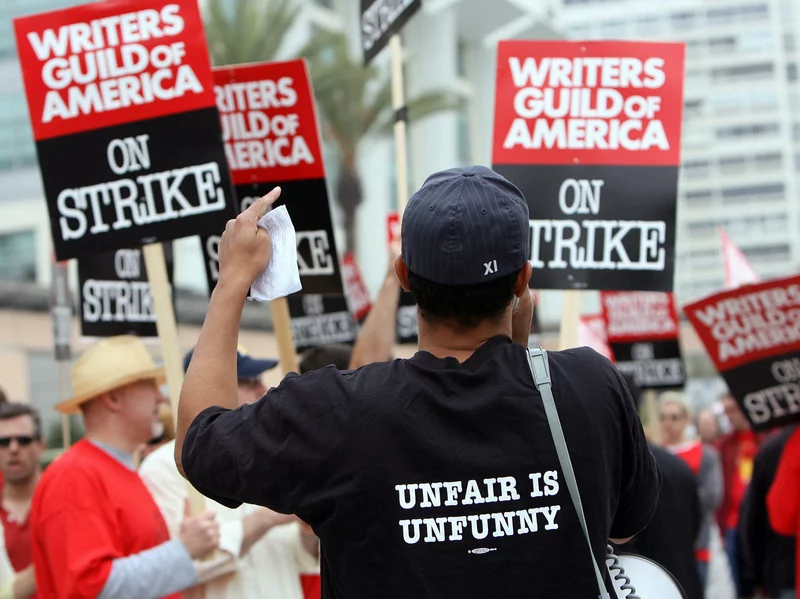
One of the biggest stories in 2023 was the SAG-AFTRA strike, which also coincided with the WGA strike. It was one of the most impactful and extensive labor disputes in recent history. Some would even argue it was the most important strike to ever occur in the entertainment industry. I’m certainly inclined to agree with that. That’s part of why I felt compelled to mention it.
The strike by both unions had many issues of concern, but one of the biggest had to do with artificial intelligence and emerging technology like generative AI. Both writers and actors alike were concerned that studios would start using AI to effectively replace them or use their past works to create derivatives without any compensation.
It was a very legitimate concern. I’m of the opinion it was the single most pressing issue for everyone involved in the entertainment industry. Artificial intelligence is no longer just the domain of sci-fi stories. Even the limitations of existing tools are capable of producing music, art, literature, and various other forms of content. Future tools promise to be even more effective.
Eventually, in the not-so-distant future, AI tools might get to a point where they can produce content at or near the quality of any human. They don’t even need to achieve human-level intelligence. They just need the right amount of refinement, investment, and engineering.
But even with this pressing issue, both the WGA and SAG-AFTRA largely won their dispute. They were able to get a contract that included provisions protecting them from future encroachments by AI. That is certainly an important, worthwhile consideration. It helps ensure that those working in the entertainment industry can continue to make a living.
However, less than a few months after the strike ended, there are already new encroachments. And they’re happening with the full support and sanction of SAG-AFTRA. According to multiple reports, the union reached a deal with a company called Replica Studios to allow actors to license their voices to be replicated by artificial intelligence for video games.
Naturally, this has caused some concern and consternation, especially among voice actors who do a great deal of work in gaming. On the surface, it seems like an about-face. This seems like a manifestation of what they were protesting against during the strike, letting studios use AI to replicate iconic voices or figures in certain productions.
However, I don’t think it would be accurate to say this is a complete reversal. For one, SAG-AFTRA makes it clear that the intention of the deal is to ensure that those whose voices are licensed and utilized by AI receive appropriate compensation. This way, studios can’t just use a bunch of recordings of a famous voice and stick them in a game without paying the appropriate people. That is perfectly reasonable.
At the same time, there’s no denying that this will undermine current and future voice actors working within the gaming industry. The process for voice acting in most modern games can be extensive and expensive. A high-profile game like Grand Theft Auto V cost over $250 million to develop, unadjusted for inflation, and that game involved a lot of voiceover work.
Developing video games has only become more expensive over time, much more so than movies, TV shows, or music. Some are already estimating that the development of Grand Theft Auto VI could exceed $2 billion when all is said and done. No matter how you feel about video games or their development, that is not sustainable.
In that context, it makes sense to allow the use of AI tools to help cut down on that cost, especially as games and computing power increases. And it will certainly benefit those who have iconic, established voices in the video game industry.
But for those who aren’t in the industry yet or just aren’t well-known, this could be the first step in rendering voice acting in video games an unviable career path. It could become to acting what switchboard operators were to telephones.
I don’t doubt for a second that those in SAG-AFTRA are aware of this. They have to know on some levels that AI technology will continue to advance. They can’t fight it. They can’t stop it. They can’t prevent it from becoming more and more capable with each passing year.
And unlike video or artwork, mimicking voices is a more mature technology. It’s something that doesn’t really need much refinement to replace the work of a human voice actor. If they didn’t make this deal, then it just would’ve been harder to work around with each passing year.
Even if this deal is ultimately beneficial to actors and voice actors, it should still be a concern. It sets an early precedent for how unions, studios, and actors are attempting to accommodate advances in AI with their profession. While this primarily impacts the gaming industry, it is bound to affect others eventually.
There will come a point where AI is capable of replicating the imagery, mannerisms, and presence of any living actor. There will also come a point where AI is capable of producing animated content that’s difficult to distinguish from the kind that’s traditionally produced. What happens to the industry and those who work within it at that point? Would this deal that SAG-AFTRA did for gaming work? Or will it only delay further disruptions?
I don’t claim to know the answer. But if you’re involved in the entertainment industry in any way, this warrants serious attention. The existing AI tools we have now are plenty disruptive. They’re only going to get better with time, investment, and better engineering. The incentives are strong and at this point, there’s no putting the AI genie back in the bottle.
This technology isn’t just going to affect our lives. It’s going to affect how we make a living. If we don’t find a way to coexist with it, then that will only cause greater problems down the line. And it will impact far more than video game development.


 Jack Fisher's Official Publishing Blog