Tag Archives: Veo3

The First (But Not Last) AI Actress Is A Thing

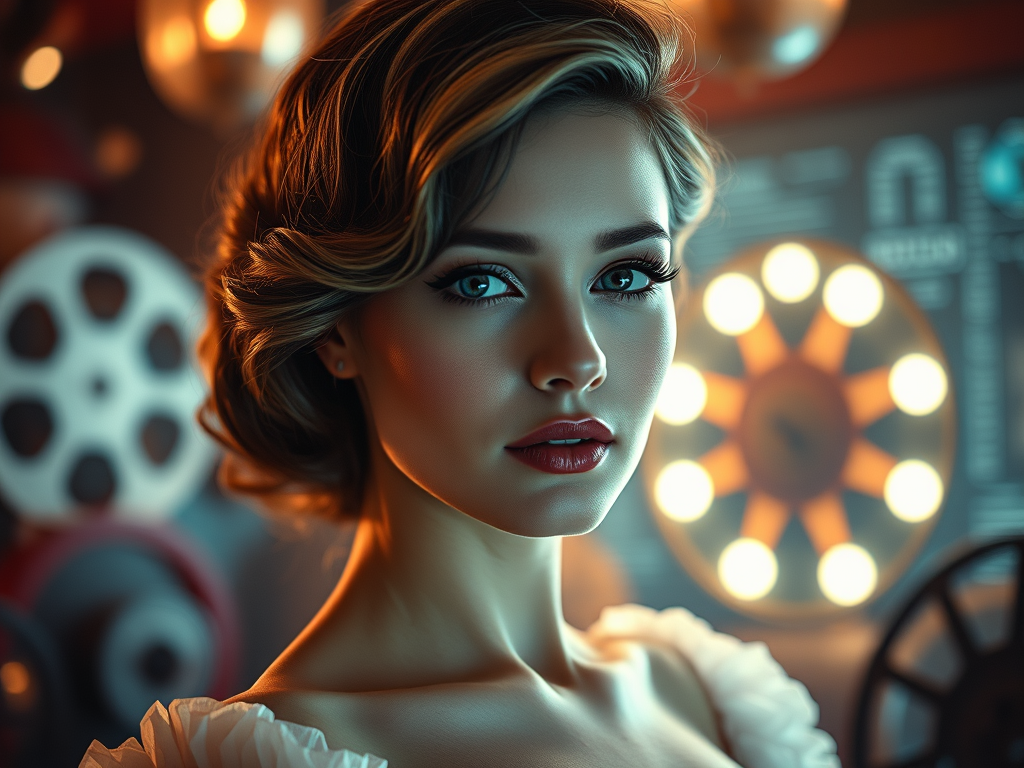
Have you heard of Tilly Norwood? She’s a beautiful young actress who is just starting to make her presence felt in Hollywood. She hasn’t been in much, but she’s already negotiating with talent agents to get bigger roles.

There’s just one major issue. Tilly Norwood isn’t a real person. She’s an entirely AI-generated persona.

Naturally, that doesn’t sit well with real life actors and unions. There is already a concerted effort to prevent Tilly Norwood from being cast in anything beyond your typical AI slop content. I completely understand this sentiment. I don’t blame anyone who works in Hollywood for being concerned about this. However, having covered the rise in AI for years, I’m comfortable making this prediction.

Tilly Norwood will eventually be cast in major movies and TV shows.

Other AI actors like her will be cast, as well.

Traditional actors and actresses will hate it. A sizable chunk of the audience will hate it as well. But this is going to happen. It was always going to happen the moment generative AI reached a certain level of refinement. A big reason for that involves money, as tends to be the case in Hollywood and most other industries. But there’s another reason that’s worth highlighting.

Dollar for dollar, movies and TV shows are getting more expensive to produce. This isn’t just due to inflation, unions, and the “personalities” that tend to comes with Hollywood. The logistics involved with making media has become bloated and inefficient. We’re no longer in an era in which media can only go through certain channels, be it TV and movie theaters. Thanks to streaming media, as well as online content like YouTube and Tiktok, the competition for eyeballs has never been greater.

Unless you’re a big budget blockbuster with a massive distribution network, such as Disney or Warner Bros., it’s harder to make content that turns a profit. The scale, resources, and personnel required to produce a movie or show is such that it’s limiting. Add to that the general enshitification of streaming media and the current model for producing content just isn’t sustainable.

Generative AI, as much as it is derided, offers a significant cost advantage. On top of that, an AI actor or actress is less likely to get accused of harassment, arrested for public intoxication, or go on some anti-sematic rant during a routine traffic stop. And for certain Hollywood agents, you can’t put a price on that kind of assurance.

But the question remains. Will audiences accept AI actors? Will the content they produce actually be worth watching?

A lot of people will probably refuse to watch anything with Tilly Norwood or anything like her out of principle. But what happens when AI gets to a point where it’s hard to tell if a person is AI generated? There are already AI tools like SORA and Veo3 that make extremely realistic videos of people who look and sound real. This is one element of AI that is not in the distant future. It’s here and it’s evolving fast.

It’s not yet clear what kind of career Tilly Norwood will have. She may never show up in anything mainstream. But like it or not, she marks the first step in a new trend with AI. We don’t know where it will lead. Hollywood is already undergoing significant change. Technology like this is only going to accelerate that change in ways we can’t imagine.
Leave a comment

Filed under Artificial Intelligence, movies, technology, television

Google Just Created An AI That Makes Videos And The World Will Never Be The Same

In recent years, it has become routine for tech companies to overhype up their latest artificial intelligence technology. Ever since the rise of ChatGPT, the market for this technology has expanded faster than anything I’ve ever seen in my lifetime. It’s not unreasonable to surmise that AI will be a multi-trillion-dollar industry in the coming decades.

But I’m also old enough to remember the dot-com bubble. I haven’t forgotten what happens when hype exceeds capabilities. And, as remarkable as these emerging AI systems are, their capabilities are still limited. Whether it’s large language models or image generators, these AI systems are a long way from becoming Skynet. They’re certainly part of the ongoing development to create Artificial General Intelligence, but that leap is not imminent. That would be like jumping from rotary phones to iPhones.

However, AI is different from the dot-com bubble or any other overhyped product for that matter. I’ve said before that AI has the potential to change the world in ways we literally cannot imagine. That potential is far from being realized, but there’s a good chance people my age will live long enough to see it play out.

Well, recently a bit more of that potential was realized. Google, a company that is very active in the development of AI, released a new generative AI tool called Veo3. Like other generative AI tools, this particular tool specializes in creating full videos from text prompts. It’s not the first tool of its kind. However, based on some of the videos that have come out from Veo3, it’s definitely a step forward in terms of quality. If you need proof, check these videos out.

Remember, the content in this video is entirely AI. It never happened.

I’m not gonna lie. I did not expect these videos to look this realistic. With other AI video generators, you can usually tell it’s not real. Between the glitchy movements and the uncanny valley effect, not many people would mistake those videos as real.

But Veo3 has taken it to another level. If I didn’t know ahead of time that this content was fake, I might have just shrugged and accepted it. And that’s a major threshold that we cannot uncross with this technology. Because when it suddenly becomes possible to create videos that look as real as anything taken in real life, how can we trust any video?

Make no mistake. This won’t just be used to flood the internet with advertisements and mindless entertainment. Someone is going to use this technology maliciously. There’s a good chance someone is already doing so as we speak.

At this very moment, you can use Veo3. It is expensive, as many advanced AI tools tend to be. But if you’re determined to make a certain video for a certain purpose, be it malicious or altruistic, is $250 really that high a price? I know people who have spent more on skins in Fortnite.

And Veo3 is not the apex of generative AI. It’s going to keep improving. The incentives are too strong. Google might have the best video generator now, but other multi-billion-dollar companies who want a piece of that AI market will fight to take that title.

Maybe OpenAI will upgrade Sora.

Maybe Microsoft will upgrade its Copilot AI.

Maybe a company like Apple will make a big leap, just like they did with smartphones years ago.

But no matter which company makes the next best AI video generator, the technology will improve. It’s going to become increasingly difficult to tell when something is real or fake. There are likely going to be laws and policies that attempt to regulate this kind of AI. But governments have been historically slow at keeping up with technology. And the advancement of AI is likely to accelerate.

I certainly don’t claim to know what kind of impact Veo3 will have in the short-term. I already make YouTube videos on my own. Will my kind of content become obsolete or unable to compete? Will video sites everywhere become overwhelmed or bloated because of content generated by Veo3?

Then, there’s the long-term impact. What happens to major studios once this technology allows them to make movies and shows faster, cheaper, and without paying actual people? That’s an issue I once thought was decades away. Now, it might be relevant within a few years.

Only time will tell what sort of changes this technology will incur. But if what Veo3 has demonstrated is any indication, these changes are coming a lot sooner than expected.

1 Comment

Filed under AI Art, Artificial Intelligence, YouTube