
Tag Archives: debt

Wondering If (Not When) I’ll Be Able To Retire

When I was a kid, my parents worked hard. Even at a young age, I could tell. My dad would wake up extra early, often before the sun rose, to prepare for work. My mother would do the same, often leaving just as my school bus arrived. They didn’t always work late, but they worked long enough days that required me to go to daycare or an afterschool program for many years. And even when I was old enough to be home alone after school, I was expected to help out and do a few chores before they got home.

It wasn’t until after high school that I came to appreciate how hard they worked to provide for their family. So, a few years back when they finally got a chance to retire, I gladly celebrated with them. They had more than earned the opportunity to stop working, enjoy their golden years, and dedicate their time to someone other than their employer.

Since then, I can’t deny they’ve made retirement look very enticing. My father, who once woke up at the crack of dawn every morning, now regularly sleeps in past 8:00 a.m. My mother, who spent decades working in an office and navigating rush-hour traffic, now spends her mornings in a bath robe drinking tea and reading the paper.

They don’t worry about what their clients, supervisors, colleagues, or customers will throw at them next.

They don’t worry about driving through rush-hour traffic, agonizing over deadlines, or dreading their next performance review.

Retired life is just life, as they see fit. And I’m glad they have a chance to enjoy it because not everyone gets that chance. And after a spike during the COVID-19 pandemic, fewer people are retiring. Their reasons for doing so vary, but each passing year seems to bring more challenges to retirement. There are even some influential voices who scoff at the very idea of retirement altogether.

In many ways, I consider myself lucky. Unlike many of my peers, I don’t have any student loan debt. I managed to pay that off by living at home during a good chunk of my 20s and basically dedicating over half my paychecks for my first job towards paying it down. That, alone, puts me in a very small percentile of people in my age range.

But even without my student loan debt, I’m not at all certain my current retirement plans will allow me to retire the same way my parents did. And even if I did, I’m not sure how long that plan would last for me when accounting for inflation, economic trends, and the never-ending political battle over social security.

If I were to retire at 67, which is the age in which Americans my age qualify for full social security benefits, I would probably be fine for a few years. The money I’ve saved, the lifestyle I enjoy, and the monthly costs in my general area would be manageable.

However, if there’s a major economic downturn, as there often in any given decade, or a significant bump in inflation, which happens regularly on a global scale, then my current retirement plan would not be sustainable after a number of years. I would either have to get more benefits from the government, spend more of my savings, or find another way to earn money.

None of those options are more than temporary solutions, nor are they as appealing as my parents’ retired life. At the moment, I don’t know and can’t know how viable my retirement plan is in the long run. I also have to assume that I’m not going to strike it rich at any point in the future. Short of winning the lottery, becoming a best-selling author, or seeing my YouTube channel explode in popularity, I just don’t think such wealth is in the cards for me.

I still have many productive years ahead of me. And I don’t doubt for a second the world will be a very different place by the time I’m nearing retirement age. For all I know, artificial intelligence will have completely reshaped the economy in ways I cannot begin to imagine.

Advances in biotechnology might ensure people like me don’t have to worry about the ravages of old age. Something like that is sure to further complicate any plans for retirement. I’m sure there are many wealthy, well-connected people who would love nothing more than to have workforce that stays young, healthy, and able to work for decades if not centuries on end. If that somehow becomes the norm by the time I reach retirement age, then something will have gone horribly wrong with the world and retirement would be the last thing on my mind.

But for now, I’m not going to work under the assumption that advanced AI or biotechnology will create a wholly utopian world where nobody has to work, no matter their age. And even if that technology does exist in some form, I’m not going to assume I’ll be in a position to take advantage of it before the rich and well-connected.

Again, I don’t know what the next 30 years has in store for the world. I don’t even know what things will be like 5 years from now. But I honestly would like to retire at some point. I would like to enjoy my golden years as much as my parents, not having to build a good chunk of my week around work. I’m currently planning and saving as best I can to give me that chance.

Will those plans ultimately pan out as I hope? Only time will tell.

I’m certainly hoping for the best and I’m working just as hard for it. But I’m also bracing for the worst. I just hope it doesn’t take the form of me working until my dying breath.
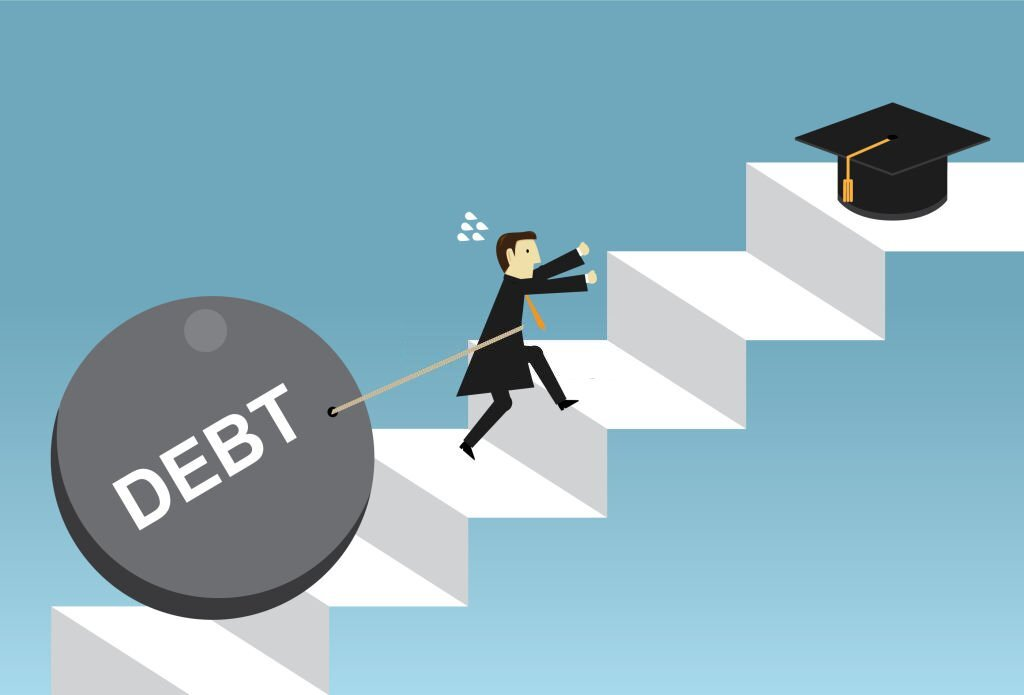
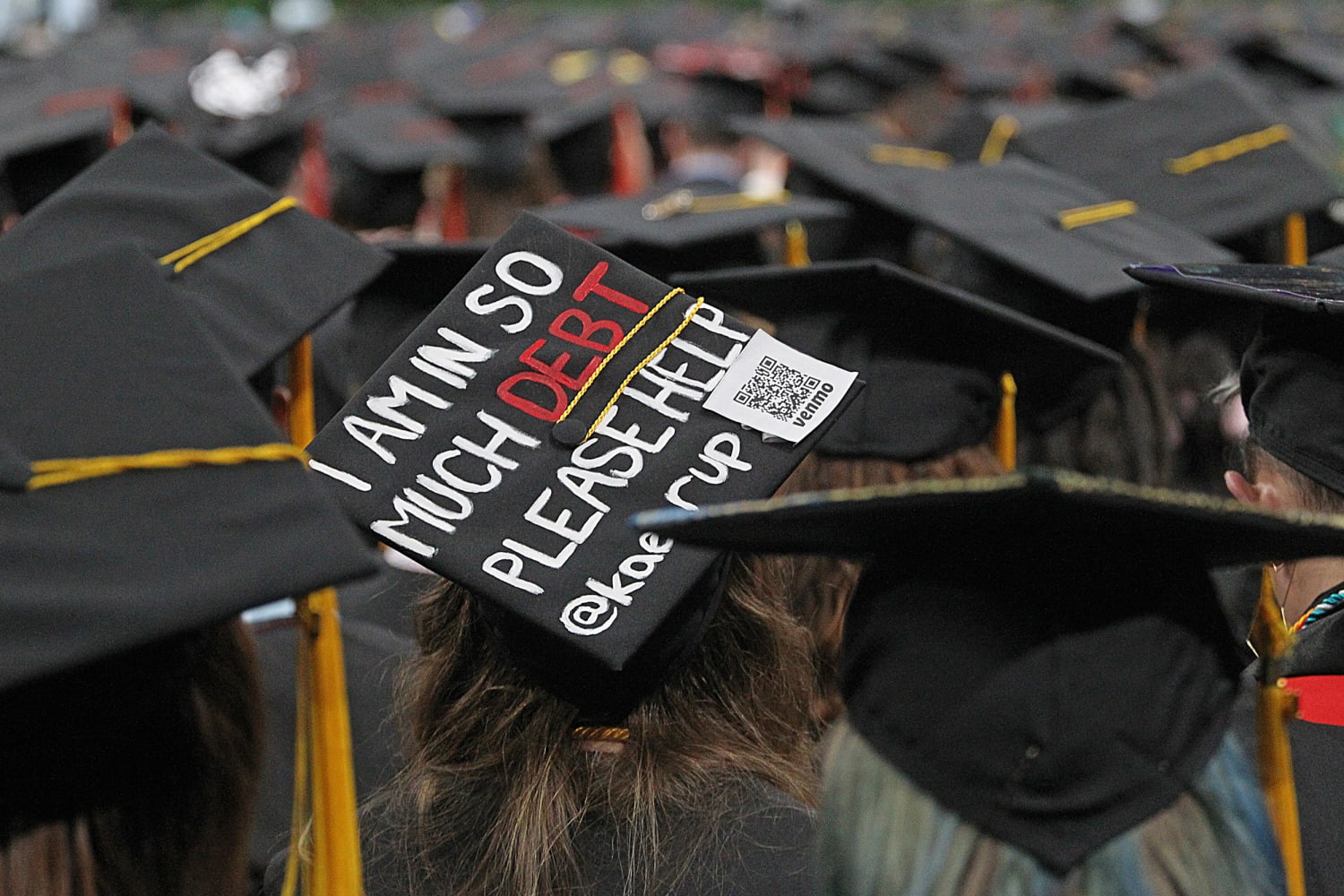
Leave a comment

Filed under Jack Fisher's Insights, politics

I Paid Off My Entire Student Debt Years Ago, But I Gladly Support Student Debt Forgiveness

When I was in grade school, I got beaten up by a bully. It was painful, humiliating, and left lasting scars that I would not want anyone to experience.

When I was still in college, I tried to put together my first website that I hoped would help me make a few extra bucks on the side. I even paid for this service that was supposed to help get my site listed on major search engines at the time. That turned out to be a scam and I lost $150 at a time when I couldn’t afford to loes that kind of money. I don’t want anyone to experience that, either.

We all have experiences in our lives that we don’t wish for others to experience. It’s a big reason why parents strive to create better lives for their children, especially if they themselves had a difficult upbringing. I’ve known people who had horribly abusive parents, but they made it a point to ensure their children got the love and kindness that she never got.

This is an objectively good and moral thing. It’s something most are inclined to celebrate and support. So, with all that in mind, why should forgiving student loan debt be any different?

It had been talked about and entertained a great deal during the 2020 Presidential Election. Some candidates even made it a central part of their platform. But earlier this week, it became official. President Biden announced that a sizable chunk of student loan debt for millions of Americans would be forgiven.

USA Today: ‘Debt and no degree’: Biden cancels as much as $20K in student loan debt: Recap

Now, I understand there are a lot of political machinations behind moves like this, none of which I’m smart enough to make sense of, let alone articulate. I also understand there are some real, logistical reasons as to why forgiving student loan debt is difficult and will likely incur a greater cost in the near and far future. I’m sure I’ll notice that cost personally at some point.

All that being said, I still strongly support this. I would even support more student loan debt forgiveness, especially for those who were hit hardest by the COVID-19 pandemic and the economic downturn it triggered. And I say that as someone who paid off every penny of his debt back in 2011.

I know that makes me a bit of an anomaly, especially when compared to my peers in my graduating class. I knew some people who had taken out as much as $100,000 in loans in order to go to college. It wasn’t because they were reckless or stupid. They just came from families who could not afford to save money for college without starving. They also didn’t qualify for grants or scholarships.

And for the record, many of these peers were not majoring in “useless degrees.” I didn’t know a single person majoring in gender studies, philosophy, or underwater basket weaving. Most majored in things like engineering, medicine, and computer science. They were smart people who had the skills to get quality jobs as soon as they graduated. But not all of them were able to find jobs and even those that did still had what amounted to a mortgage payment cutting into their salary every month.

This is not a tenable system.

It’s also not how other industrialized countries do higher education.

In general, sending young people to college is an investment in people. We, the tax paying public, understand that there’s social and economic value in educating people at a high level. It’s a critical component for a functioning, prosperous society. And we don’t do that society any favors by shackling them with a massive amount of debt that they can’t get rid of, even in bankruptcy.

Looking back on it, I probably could’ve moved forward in my life much faster if I didn’t graduate with the debt I had. Granted, my debt was considerably smaller than most, but it still ensured I had to live at home a number of years and couldn’t afford any major investments, be it retirement or a car. I can only imagine how much further it held back peers with far bigger debts.

On top of that, the cost of college has gotten considerably more expensive since I graduated. I even went back and checked the tuition from my old school. Even with in-state benefits, I would’ve paid more than twice the amount I paid for the same degree. And the job market after I graduated would be nowhere near what it was years ago.

Despite these circumstances, as well as the undeniable burdens that come with being shackled with so much debt, I still here a common complaint from those who oppose student loan debt forgiveness. It has similar themes, but it usually boils down to comments like this.

“You took out a big loan? Too bad! Get a job and pay it back, you lazy moochers!”

“I paid back all my debt years ago. Why should you get to avoid paying yours?”

“It’s not fair! I didn’t even get to go to college because I was too poor. Why should I pay for your degree?”

Now, first off, if you’ve ever said something like this out loud to another human being who is currently struggling to keep up with loan payments in a terrible job market still recovering from a pandemic, I have one thing to say to you.

Fuck you.

Seriously, fuck all the way off.

Second, if your opposition boils down to all these young people getting an advantage you never got when you were that age, know that that’s a total bullshit reason. Even if you paid all your debts off by hard work and sacrifice, who are you to force millions of young people to do the same? Their situation is different. Times have changed a great deal since you were in college. They’ve changed a great deal in the past five years alone.

These aren’t all the self-entitled brats you hear Bill Maher and Tucker Carlson whining about every week. Those people do exist, but they’re an extreme minority who just happen to whine the loudest. Most of the millions of students who will benefit from this program are genuine, hard-working young people trying to build better lives. They just can’t do that when they’re shackled with this kind of debt.

To ignore their plight because you think it’s unfair to those who paid off their debts isn’t just a dick move. It makes no sense. Think back to those incidents I mentioned earlier about enduring a hardship that I wouldn’t wish on others. Dealing with student loans is a serious hardship. And even if you got out of it, why condemn others to suffer?

That’s akin to opposing polio vaccines, antibiotics, and lead free paint because you had to deal with the world before all these terrible things. So you want others to deal with it too. That’s not fair. That’s not just. That’s just you being a cruel, sadistic prick to millions of your fellow Americans.

Again, fuck you.

I don’t care that I paid off all my loans already. I don’t care that many young people will get to skip the hardships I endured when I was younger. If anything, I will gladly cheer on those who benefit from this act. You have an opportunity I never enjoyed. I sincerely hope to make the most of it.

Leave a comment

Filed under Current Events, political correctness, politics

I Paid Off My Student Loans, But I Still Support Student Loan Forgiveness

After I graduated high school, I was a mess. I was not yet equipped to charge into the adult world and start a career. I didn’t even know what the hell I wanted to do with my life. I didn’t know where to begin.

That’s why I went to college. I didn’t go there thinking I would find all the answers, but it felt like the best decision for me at the time. In hindsight, that feeling was spot on. I really blossomed in college. I learned more my first year than I did in my past four years of high school. It’s there where I made new connections, developed my sub-par social skills, and started building my future.

For me, college was incredibly beneficial. At the same time, it was expensive. Even though my parents had saved up some money, I still had to take out loans in order to attend. I also had to work a summer job in order to help pay for it. Even after I graduated, I still had a sizable debt to pay off. I won’t say how large it was. I’ll just say I had to live at home for a while.

Eventually, I worked long enough and hard enough to pay it all off. Around 80 percent of my paycheck went just to paying down that debt. I didn’t have much money for anything else, but I sacrificed and my parents helped me every step of the way. By the time I moved out of my parent’s house, I was completely debt free.

I understand that makes me more than an exception to the ongoing student loan debt crisis. Some might say it makes me a freak, paying off my entire student debt before I was 26. I don’t deny my situation was unique and not everyone could’ve done what I did.

I personally know some people who attended college for the same years as I did, but graduated with way more debt. One girl in particular had over $100,000 in debt by the time she graduated, but it wasn’t because she was irresponsible. Unlike me, she had no major parental support. She was also going to med school, which is very expensive.

That kind of debt isn’t just big. It’s crippling. I can seriously impact your mental well-being. That’s not a trivial amount for college. That’s a goddamn mortgage for some people.

On top of that, we expect these kids to just start their lives and become productive members of society when they graduate? We expect them to do what their parents did, getting married and having kids despite the limitations of this debt and the cost of living going up?

Regardless of your politics or party affiliations, I ask you honestly. Is that reasonable?

I say it isn’t. In lieu of recent economic trends, I’d say it’s downright absurd. If that weren’t bad enough, there are still a bunch of older, less indebted people whining about how young people are too lazy and entitled. That is not a healthy dynamic.

That’s why I am totally in favor of large-scale student debt forgiveness.

I know that’s a politically charged statement these days. The idea of the government just canceling or forgiving a certain amount of student loan debt has become a legitimate political issue in recent years. Chances are, it will get worse.

Even with the recent global pandemic, the debt levels are increasing. As of this writing, the average loan debt per student is $37,500. That’s more than what I had and that’s from someone who had support from his family. I can’t even imagine how much harder it would be for those who come from poverty.

It’s not like canceling the debt would be that difficult. It might even be possible to do so by executive order. With a stroke of a pen, this financial burden could be lifted for millions of students.

Now, some might say that’s not fair to those who worked hard and paid off their debt. To that, I call bullshit. We’re not talking about forgiving the debt incurred from people who bought too many Beanie Babies in the late 90s. We’re talking about an entire generation who is trying to better themselves by going to college and getting an education.

Why not support them?

Why not make it just a little bit easier for them?

Would there still be a cost and consequence to canceling so much debt? Yes, of course it would. There’s always a larger impact to consider. I still believe the benefits outweigh the cost.

If ever there was a time to give a large swath of indebted students relief, it’s this. We’re coming out of the worst pandemic in over a century. We’re dealing with record levels of income inequality and a job market that is becoming increasingly limited. Doing nothing in a situation like this can be just as damaging as doing something wrong. I’m not a student anymore and I have no student loan debt, but I remember how relieved I was the day I paid it off. If we can share that feeling with millions of students in need of help, I say it’s worth doing.

Leave a comment

Filed under Current Events, Jack Fisher's Insights, real stories