Tag Archives: Buying Bitcoin

A Note/Warning To Anyone Investing In Cryptocurrency

A close relative once told me that investing in something you don’t understand is as irrational as hating something you don’t understand. To date, those words still ring true and time has only further vindicated them.

When it comes to a subject like cryptocurrency, which involves both money and mechanisms that are difficult to grasp, even a basic understanding is hard to come by. And when people don’t understand something, they’re inclined to make flawed judgements.

It’s why you have famous investors like Warren Buffet saying Bitcoin is completely worthless or notable publications like Forbes claiming all cryptocurrencies are Ponzi schemes.

This is hyperbole. It’s also a clear indication that these individuals don’t fully understand Bitcoin or what cryptocurrencies are. And getting that information isn’t the same as getting the secret investment strategies of famous investors. It’s an open-source program and you can read the white paper that helps explain it at any time for free, courtesy of this link.

It’s hard to understand because it involves math and encryption, two topics most people don’t know much about. But whether they understand it or not, they still use it. If they use a smartphone, a computer, or anything that connects to the internet, they are utilizing some of the same type of technology that goes into cryptocurrencies.

Now, I say all that because things in the cryptocurrency world have been pretty rocky this year. If you just look at the prices of most major cryptocurrencies, this has been a historically bad year. If you bought any crypto in January, there’s a good chance that investment has lost money by now. I know because I’m one of them.

I’ve noted before that I do own some cryptocurrency. I’ve also talked about it before as both an investment and a useful tool for the internet age. I won’t deny that while my investment in Bitcoin was very small, never exceeding more than a few hundred dollars, the returns this year have not been great. And I would never recommend anyone put all their savings or investments into Bitcoin, or any asset for that matter.

In addition, I would never advise anyone to invest their money in a way that would limit their control of said money. When you put your money in a bank, whether it’s in person or online, you’re trusting a system and the people within it to handle your money. By law and by the fine print of the contracts you sign, you have control over that money and they can’t take that control from you absent some very limited circumstances.

With that in mind, I think there’s an important lesson to learn from the recent collapse of FTX. If you’re at all involved with crypto, chances are you’re aware of this and have felt the impact. I certainly have. It helped make an already terrible year for cryptocurrency that much worse. Last I checked, my Bitcoin value went down a good 20 percent and will likely go lower.

It was a bad turn among many for cryptocurrency and it wasn’t even the first. Before FTX, other famous cryptocurrency exchanges like Mt. Gox also suffered a similar fate. It’s collapse is actually very similar to FTX. The issue was this.

A new institution or organization is set up to buy, sell, and store cryptocurrency.

It becomes successful by making cryptocurrency accessible to more people.

Due to greed and a lack of supervision or understanding of cryptocurrency, the organization begins skimming money while lying about how much actual cryptocurrency it has.

Ultimately, the scheme is either uncovered or it collapses like a Ponzi scheme when too many people try to withdraw their assets.

In both cases, the problem was the same. People were buying cryptocurrency on an exchange and keeping it on that exchange. They weren’t exactly owning any currency. They were essentially paying the exchange to stake a claim on a certain pool of currency that didn’t exist.

In that context, nobody should be that surprised that FTX and Mt. Gox crumbled. I get the appeal of investing in cryptocurrency without having to go through the trouble of storing or securing the coins on your own computers or devices. However, it’s worth remembering that these are not banks. These are not institutions that are subject to the same laws and regulations as banks.

That’s not to say all crypto exchanges are frauds, but fraud is just a lot easier for them than most.

So, if there’s one lesson to take away from FTX and the collapse of any exchange, it’s this. If you’re going to invest in cryptocurrency, make damn sure you actually own or possess the coins in some tangible medium. That’s what I’ve done with all my Bitcoins. I keep them all in a digital wallet that is not at all connected to any exchange. I also keep a backup to ensure that even if I lose one of my devices, I can still access my coins on another.

It’s not that hard to do. In fact, it’s easier now than it was back when Mt. Gox was still active. It’s even become a common refrain from those who still defend the value of cryptocurrency. The mantra is if the Bitcoins aren’t in your own wallet, then they’re not yours.

Exchanges still have their place in the world of cryptocurrencies and probably will for the foreseeable future. I also don’t expect cryptocurrencies to recover from these latest downturns anytime soon. But if you’re going to invest in cryptocurrency in any capacity, there’s a right and wrong way to do it. Even if you don’t understand the math and the science behind cryptocurrency, you’ll do better in the long run if you just do things the right way.

Don’t use exchanges.

Use digital wallets.

Here’s a list of some that I encourage others to look into before buying any crypto.
Leave a comment

Filed under Bitcoin, technology

Bitcoin Price Drop, Buying On The Dip, And How To Do It Responsibly

5 Cryptocurrencies That Ran Circles Around Bitcoin in 2021 | The Motley Fool

I’ve been following Bitcoin for many years now. I’ve seen it rise, fall, crash, rise, surge, crash again, and then rise. To say it’s a volatile product would be like saying Antarctica gets chilly in the winter. It’s volatility is one of its most notable features and it’s also why most consider it a risky investment.

As a result, this is not the kind of investment you treat like your typical blue chip stock. It’s not even the kind of investment you treat as a risky gamble in the mold of r/wallstreetbets. Bitcoin and many cryptocurrencies like it are an emerging technology that not enough people understand. The fact that so many don’t understand it or its utility have led some to call it an outright scam.

I don’t agree with this at all. Unlike actual scams, the math and mechanisms behind Bitcoin are not secret. You can look them up right now. Here’s a link to the original whitepaper made by its mysterious creator, Satoshi Nakamoto. The purpose of Bitcoin is right in the abstract. It’s a tool for sending money directly to people without the need for a financial intermediary.

That’s a technology that has legitimate value. In an increasingly connected world, that’s a value that will likely increase over time. For that reason, I ended up buying some Bitcoin for myself, which I documented on this very site. I plan on buying more down the line, provided I have the extra cash.

I also intend to maintain that plan, even though Bitcoin recently experienced a significant crash in price. Again, it’s a volatile product. It’s value will rise and fall erratically. Since 2010, I’ve seen it crash before. Back in 2013, Bitcoin’s price was around $1,000 and it crashed hard towards the end of the year. At one point, it went all the way down to $200.

At the time, people said that was the end of Bitcoin.

That was the end of cryptocurrencies.

They were wrong. Bitcoin recovered, went up even further, and continued to gain more and more acceptance.

At this point, predicting that Bitcoin will completely collapse any day now is like saying the internet is a passing fad. It’s absurd, short-sighted, and misses the bigger picture. Like it or not, Bitcoin and cryptocurrencies are here to stay. Entire countries like China can try to ban it, but the genie is out of the bottle now. There’s no going back.

On the other end of the spectrum are those who actually celebrate the crash in Bitcoin price, but not because they think it’s going to collapse. Instead, they see it as an opportunity to buy Bitcoin cheap and hold it until the price rises again. It’s not a new idea. That’s something skilled investors have been doing for years with stocks.

It doesn’t always work out. Sometimes, buying the dip means buying stock in a company that’s about to go bankrupt. Just ask anyone who bought stock in Bear Stearns. You can actually lose all your investment by buying the dip in a wrong company. For that reason, you should not see it as a viable trading strategy.

With Bitcoin, investors and speculators like to use Bitcoin’s ability to recover and continue despite many previous collapses as strength whenever they buy the dip. It’s not entirely misguided. Even I’ll wait for the price to dip a little before I buy new Bitcoin.

However, there’s a right way and a wrong way to buy into the dip of any asset. I say that as someone who is not the least bit qualified to give investment advice, but having followed Bitcoin for so long, I’ve seen more than a few people make the same mistakes.

They see the price dip and they either try to sell all their Bitcoins off or they try to buy as much as possible with whatever money they have. Both are byproducts of panic and anxiety. People don’t make wise decisions when they’re in that state of mind, especially when it comes to money. It’s why Warren Buffett is so successful. He stays calm when things are chaotic and doesn’t let knee-jerk reactions drive his decisions.

Even though Buffett himself is not a fan of Bitcoin, his strategy still holds true for Bitcoin. That means when you see the price sink, you shouldn’t panic and sell everything. You also shouldn’t take all your money and throw it into Bitcoin, either. Again, Bitcoin is volatile. You will lose money over time if you’re also volatile.

That’s why, whenever there’s a price drop in Bitcoin like this, I only buy a little extra. It’s not much. I just go to a Bitcoin ATM and buy about $100 to $200, depending on how much extra cash I have on hand. Most importantly, I never buy Bitcoin with money I can’t afford to lose. I only ever use excess cash I have on hand. It’s not something I put in my retirement portfolio.

Maybe that will change one day, but only if Bitcoin and other cryptocurrencies like it become less volatile. Since I don’t see that happening anytime soon, I’m content with just buying on the dip with whatever pocket money I have. Most of my money will still remain safely invested in index funds.

That would be my advice to anyone looking to “buy the dip” with Bitcoin or any investment. Do not put all your eggs in one basket. If you’re going to do it, only use money that you can afford to lose. The rest of your money should be in safe, low-cost index funds. That way, if Bitcoin ever tanks severely, you’re not wiped out.

Conversely, if Bitcoin rockets up in value, then you’ll just have some extra money on the side later on. Regardless of how close you are to retirement, that can only help.

1 Comment

Filed under Bitcoin, technology

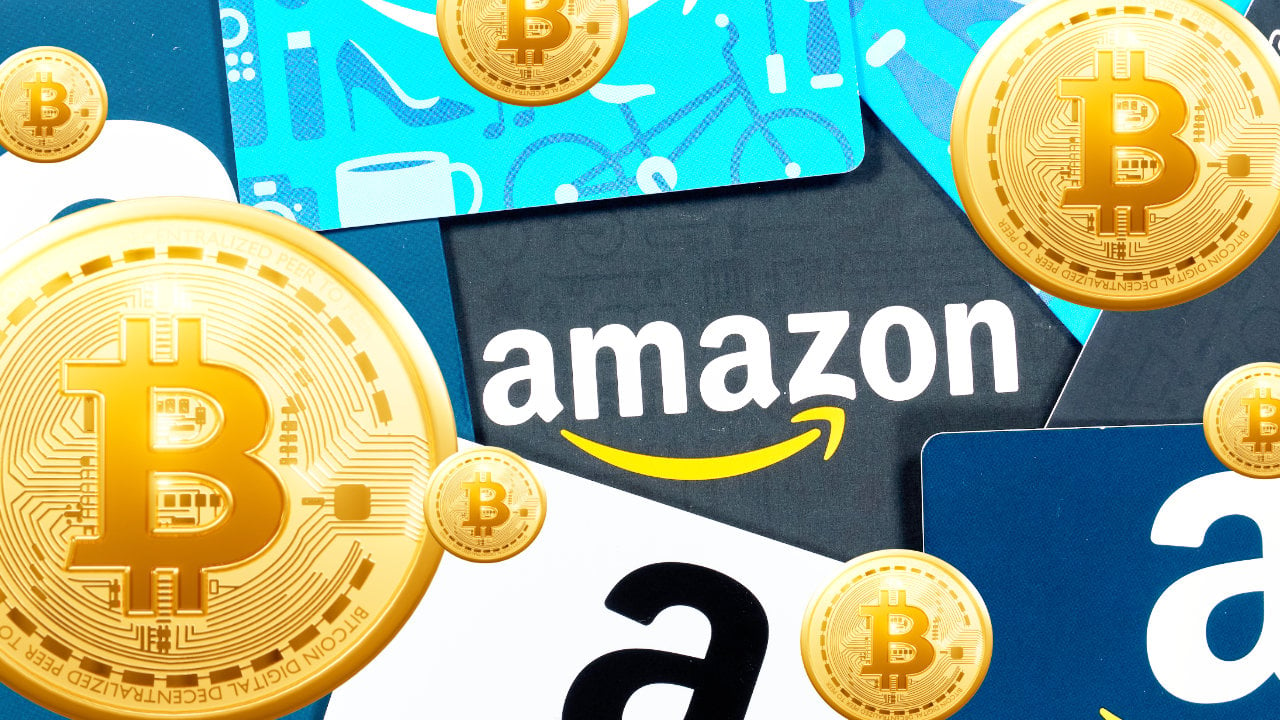
Why Amazon Accepting Bitcoin Would Be A Game Changer (And Why They Might NOT Do It)

Jeff Bezos Directs Amazon to Accept Bitcoin and Other Popular  Cryptocurrencies: Report – Bitcoin News

In all the years I’ve been browsing the internet, I’ve never seen something so divisive or so disruptive as cryptocurrencies. Yes, that includes both video games and internet porn. Crypto’s impact has been that profound. That impact is likely to continue in unexpected ways for years to come.

However, there is still plenty of uncertainty and confusion surrounding cryptocurrencies. I recently had dinner with my parents and my mother asked me to explain it to her. I tried. I’m pretty sure I failed. I tried to simply frame it as digital money, but that didn’t even come close to explaining what cryptocurrency is, how it works, and why it has become such a huge industry.

There are far smarter people than me who can explain what cryptocurrencies are and how they work. This video here does a decent job of explaining it to beginners who aren’t particularly tech savvy.

While I’ve been following the rise, fall, revival, and growth of cryptocurrencies for years, I didn’t actually buy any until very recently. I even wrote about my experience, which ended up being somewhat mundane. It was no different than using an ATM.

That’s somewhat illustrative of where cryptocurrencies are right now. Buying currencies like Bitcoin has never been easier. You can download any number of wallets for free on your phone. If you don’t want to link your bank account to it, then finding an ATM like I did is very easy.

If you have any spare change lying around, you can turn it into Bitcoin. That’s where we’re at now with cryptocurrencies.

The harder part at the moment is actually spending Bitcoins. While you can find numerous online merchants who take Bitcoins, you can’t exactly use them to pay your bills, buy your groceries, or just purchase something on a whim. That’s one of the biggest barriers to cryptocurrencies in general. Using it is more cumbersome than regular cash. That’s why most see Bitcoin as an investment asset rather than a usable currency.

That could change very soon, however. The reason for that change could come from the largest retail entity on this planet, Amazon. If ever there was a company that could completely change the way we see and use cryptocurrencies, it’s this one. It may ultimately make Jeff Bezos even richer than he already is, but let’s table that concern for a moment.

This isn’t just me speculating. There was a recent rumor among the business world that Amazon was looking to start accepting Bitcoins as a payment method. While Amazon ultimately shot down that rumor, they did not say they would never accept Bitcoins.

In fact, I would go so far as to say it’s only a matter of time before Amazon starts accepting cryptocurrencies in some capacity. There’s just too much money to be made from doing so and Amazon, like all big businesses, is always looking to grow. This would be one way of doing that and it’s impossible to overstate the larger impact that would have.

For one, it would send shockwaves through all currency markets, crypto and otherwise, more so than a million tweets by Elon Musk. Suddenly, this asset isn’t just an investment vehicle anymore. It’s a form of money with an actual use.

Amazon is already the biggest retailer in the world. It’s also becoming one of the largest grocery chains. It still has some competition, mostly through companies like Walmart. None of them accept Bitcoin yet, but you can be reasonably certain that as soon as one of them takes that leap, the others will follow.

Beyond just being a novel payment method, Amazon accepting Bitcoins could have a far broader change. One of the main driving forces behind the development of cryptocurrencies is that this is money that has no boarders. It doesn’t matter where you are in this world. You could be in America, China, or the middle of Africa. So long as you have an internet connection, you can access this currency.

For companies like Amazon, that means accessing a customer base that has been traditionally inaccessible. There are over a billion people in this world who have no bank accounts. In some parts of the world, their currency just isn’t usable for companies like Amazon. Converting them to other currencies is already a hassle. Bitcoin could change that.

By accepting Bitcoin, Amazon and other retailers like it have the potential to the entire world in ways that weren’t possible until recently. If they’re going to keep growing, they need those customers and, like it or not, these people need Amazon. Opening more people up to an accessible market can only help get goods to people who need them.

All that being said, I can also understand why Amazon and other large retailers might resist accepting cryptocurrencies. Beyond them just being too loosely regulated, their volatile nature could be a problem for large retailers.

I can attest to that volatility personally. When I bought my first Bitcoins, the price was around $35,000. Then, it shot up to over $60,000 for a while. A few months later, it crashed to the point where it was worth less than my initial investment. It eventually recovered, but that’s a lot of instability for a currency.

That’s something I’m sure Amazon is aware of. By taking Bitcoins as payments, they’re also accepting its wild volatility. All those Bitcoins that paid for all those goods could be worth a thousand dollars one day and worth a fraction of that the next. Even if Bitcoin represents only a small portion of payment, that’s sure to create some anxiety among investors.

Given the current state of the economy and the world, as a whole, I understand why Amazon would hold off on diving into cryptocurrencies. For a large, publicly traded company, anything that makes the stock price or the overall value of its assets less certain might just be too much to handle for now.

It may not happen this year. It may not even happen next year. However, I’m not among those who think all cryptocurrencies are a scam, a scheme, or a fad. These aren’t Pokémon cards or Beanie Babies. This is a valuable tool for the digital world that has the potential to open up exchange with everyone, regardless of where they live.

That tool still needs refinements. Bitcoin certainly has its flaws. That’s beyond dispute. Amazon is aware of those flaws, as well. As they are refined, currencies like Bitcoin will gain more acceptance. Amazon and other big retailers will be part of that process. When that day finally comes, expect a whole new world to emerge. I don’t claim to know what kind of world that’ll be, but I’m excited to see how it unfolds.

Leave a comment

Filed under Bitcoin, Current Events, futurism, technology

My Early Experiences With Bitcoin And Helpful Tips I’ve Uncovered

Recently, I finally took the plunge and bought some Bitcoin. I even wrote shared the experience. Overall, it wasn’t that groundbreaking. It didn’t involve a radical rethinking of how I used or thought about money. It was not that different from depositing money in a new account from an ATM. The account in this case just happened to be Bitcoin.

Since then, I’ve bought more Bitcoin. To date, I have a couple hundred bucks in my lone Bitcoin wallet. I’m still using BRD, which is one of the simplest wallets you can get. I have looked into getting others that have more features, but many of them seem to be more trouble than they’re worth.

That may change. I am quite interested in what BitPay has to offer with some of their services, but for now, I’m content to stick with BRD.

However, since I bought my Bitcoins, one issue has come up and I suspect it’s still the primary issue that most people face when they first get involved in this. It’s probably the same issue that prevents a lot of people from getting into it to begin with.

How do I spend my Bitcoins once I have them?

It’s the main issue that all these cryptocurrencies face. Getting them and securing them is challenging enough. Actually spending them like real money is still a challenge. While there are some noteworthy merchants that accept Bitcoin, most major retail outlets do not. You cannot use Bitcoin at Amazon or WalMart or even a standard grocery store just yet. Until that changes, its use will be limited.

This is what kept me from buying much of anything with my Bitcoins. Then, I discovered a useful tool that has helped make that easier and I think it’s worth sharing. While it’s true that companies like Amazon and Apple don’t accept Bitcoin directly, you can still use them. You just have to do it indirectly.

One way to do this is to use a site I found called Bitrefill. What it does is simple. You just use your Bitcoins to purchase digital gift cards for popular retail outlets. It works like this.

Step 1: Go to Bitrefill.com and browse the various gift card options, which includes the likes of Amazon and Walmart.

Step 2: Pick a gift card, choose an amount, and enter your Bitcoin account information for the desired amount, which is usually around $50 to $100.

Step 3: Complete the purchase and wait for the gift card code to come in via email. Then, just add the amount to your existing account.

For those who buy most of their stuff on Amazon, this is a quick way to turn your Bitcoins into something spendable. There are a few other workarounds, like Moon and Purse.io, but I’ve found this to be the easiest. There’s even a similar website called CoinsBee that allows you to do the same to your Apple iTunes account.

Basically, if you know how to send or spend gift cards, you can spend Bitcoin. Does it require a few extra steps from traditional cash? Yes, it does, but you can still spend it.

That may still raise the question as to why bother with Bitcoin in the first place. If it’s just adding an extra step between you and the retailers you prefer, then what’s the point? Well, this is where I’d like to share another part of my Bitcoin experience.

After buying my first batch, the price went up. I don’t know why, but it did. Suddenly, the first hundred bucks I put in was worth $125. That was great. It was downright thrilling. Granted, it did go down to around $103, but it was still impactful in a major way.

That’s because Bitcoin, unlike traditional money, fluctuates in value. Many see it as a reason why they don’t buy in. It’s just too volatile. I can understand that, but I also understand the impact of inflation.

If you go to your bank account right now and look at your money, you won’t see it change much in terms of value. However, inflation does ensure that its value goes down. It’s not a conspiracy. It’s just basic economics. Over time, most fiat currency loses value. That has been the trend for nearly a century.

With Bitcoin, it fluctuates. One day, it has more value. The other, it has less. You’ll win on some days, but lose with others. With regular cash, though, you always lose. You don’t lose nearly as much. Most of the time, it happens so slowly that you don’t even notice. Even so, losing is still losing.

The Bitcoins I have now may only be worth a few hundred bucks. By this time next year, they could be worth a lot more. That’s even more money I can convert to Amazon or WalMart gift cards. There’s also a chance the price could crash, as it has before, but given the finite nature of Bitcoin, there’s more incentive for its value to increase rather than decrease.

That doesn’t mean its value will always go up. There’s still a non-zero chance that Bitcoin’s value could stall or outright collapse, as other currencies have in the past. That’s why I’m not converting all my money into Bitcoin anytime soon.

For the time being, though, I’m satisfied and encouraged by my Bitcoin experience. I also encourage others to get into it as well, if only to get a feel for it. Hopefully, the sites I’ve listed here will help you get some use out of your Bitcoins. Money is a powerful force in this world. So long as Bitcoin and other cryptocurrencies keep operating as such, they’ll have a part in our future. Now is as good a time as any to carve your place in that future.

1 Comment

Filed under Bitcoin, Jack Fisher's Insights, technology