
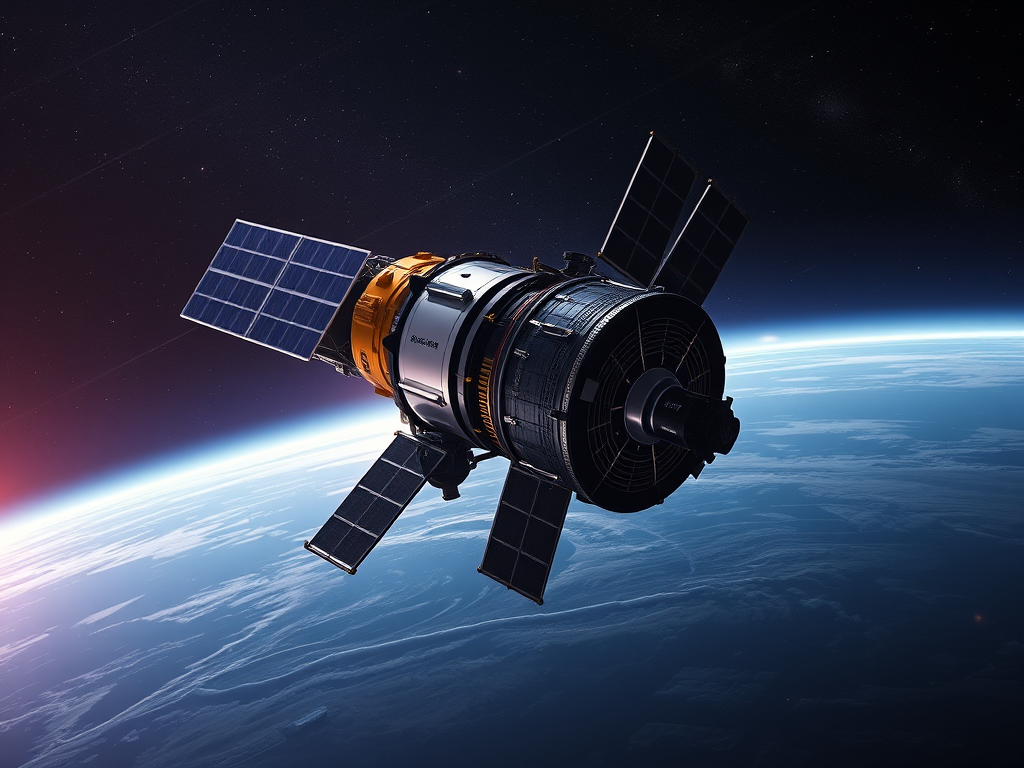
Even if you’re not an avid fan or regular consumer of science fiction, the prospect of discovering extraterrestrial life is intriguing. I believe that, on some level, we want to discover beyond any reasonable doubt that we’re not alone in the universe. Given the sheer size and breadth of the universe, the idea that we’re the only intelligent species just doesn’t sit well.
And it’s largely because of that same size and breadth that most scientists agree. The odds are very likely that there’s life in the universe beyond Earth. It’s not a total certainty. It’s largely derived from the law of averages. Since we started discovering extrasolar planets, the opportunities for life to emerge throughout the universe are vast. It’s just a matter of finding one other instance where the right circumstances were in place.
That effort has been frustrating and prone to plenty of cynicism. But thanks to better technology and tools, namely the James Webb Telescope, science finally has an effective means of studying extrasolar planets in greater detail. Given the vast distances, there’s an inherent challenge to gathering adequate data. But with each advancement and each discovery, we’re getting closer.
And in April 2025, the James Webb telescope discovered what might be the best evidence to date that life exists outside our planet. Granted, this evidence isn’t as cinematic as you’d get in a movie like “Contact.” But from a purely scientific standpoint, this is pretty damn compelling.
The planet in question is an explanet called K2-18b. It’s located approximately 124 light years from Earth, which is not that far in stellar terms. It’s also considerably bigger than Earth. In terms of mass, it’s over eight times larger and it orbits a red dwarf star, which are comparably smaller and cooler than our sun.
But it has been confirmed to be in the habitable zone of that star. It’s also suspected to be a hycean planet, which is basically an planet covered by oceans under a hydrogen atmosphere. Compared to any other planet in our solar system, this is truly an alien world.
And yet, the James Webb Telescope detected what appear to be chemical signatures for dimethyl sulphide and dimethyl disulphide, two chemicals only known to be produced by life. Now, that doesn’t mean that K2-18b is home to some advanced alien civilization. These chemicals are primarily produced by microbes. And at best, K2-18b could simply be an ocean world populated primarily by microbes.
Even if that ends up being the case, it’s still a remarkable discover. It’s still alien life that emerged entirely on another world. It would be definitive proof that life is not exclusive to Earth. And in terms of biological complexity, we are not alone.
Would this realization really shake humanity to its core?
Given the current state of the world, I think that’s expecting too much.
There’s no question that confirming that there’s life on another world would be an incredible discovery. It would definitely have some impact on how we see ourselves as a species. However, I think that impact would be very limited. Human beings barely understand the microbes that live in their gut or belly button. They probably wouldn’t give much thought to microbes on another planet.
It also wouldn’t confirm that there’s other intelligent life in the universe. It could very well be possible that microbial life is quite common in the universe. But intelligent life that’s on par or greater with humans is exceedingly rare or non-existant.
Personally, I don’t think that’s the case. I do believe there is intelligent extraterrestrial life in the universe. We just don’t have the tools, effort, or know-how to find it. Again, the universe is very big. We’ve barely searched our own galactic neighborhood, let alone the universe.
But discovering microbial life on another world might be a necessary step in that process. Simply confirming that life on other words is possible drastically increases the likelihood that intelligent life exists, as well. After all, Earth was once populated only by microbes. It took billions of years of evolution for humanity to evolve. And the universe has been around a lot longer than our solar system.
At the moment, this discovery hasn’t been confirmed. It may very well end up being wrong. But to date, this is the closest we’ve ever come to confirming life on other worlds. And even as our world feel like a chaotic mess, I think it provides a good and necessary perspective.


 Jack Fisher's Official Publishing Blog